 Save
Save The first time I arranged a Turkish meze platter, I was nervous—not about the cooking, but about the presentation. I'd spent an afternoon at a friend's kitchen in Istanbul, watching her mother lay out small bowls and platters with such unhurried grace that it seemed less like meal prep and more like creating a still life. She told me that meze wasn't just food; it was an invitation to slow down and talk. Years later, I realized she was right.
I made this platter for a casual dinner last spring when friends dropped by unannounced. Instead of panicking, I remembered that meze thrives on simplicity and abundance. Within half an hour, my small kitchen smelled of lemon and garlic, and the platter looked like it could feed twice as many people. That night taught me that the best meals aren't always planned—sometimes they're just an excuse to gather around something beautiful and eat with your hands.
Ingredients
- Chickpeas (1 can, drained): The foundation of silky hummus—draining them well makes a real difference, and a quick rinse removes any metallic taste.
- Tahini (2 tbsp): This is where hummus gets its soul; use the kind that's been sitting in your pantry long enough to have separation, as it tends to be fresher.
- Extra-virgin olive oil: Turkish platter demands good oil—taste matters here, and you'll notice the difference between the cheap bottle and one worth the splurge.
- Fresh lemon juice (2 tbsp): Bottled won't have the same brightness; a real lemon squeezed moments before changes everything.
- Garlic (1 clove, minced): One clove might sound shy, but in hummus it whispers rather than shouts, letting other flavors breathe.
- Ground cumin (1/2 tsp): The warmth that makes you wonder what you're tasting—it's there, but not loud.
- Dolmas (12 stuffed grape leaves): Store-bought saves time and tastes just as good when you choose brands with recognizable ingredients.
- Feta cheese (100 g, cubed): Salty and crumbly, it's the anchor that ties everything together on the platter.
- Beyaz peynir or extra feta (100 g): A milder cousin to feta that softens your palate between bites of sharp flavors.
- Kasseri or halloumi (100 g, sliced): This cheese has higher melting point—it stays firm and slightly springy even in warm rooms.
- Mixed Turkish olives (100 g): Green ones are briny and firm, black ones are mellow and buttery; get both if you can.
- Fresh parsley (2 tbsp, chopped): More than garnish—it brightens every bite and makes the platter feel alive.
- Cucumber and tomato: Summer flavors that balance the richness of cheese and oil.
- Warm pita or flatbread: The edible plate that turns meze from side dish into a complete meal.
Tired of Takeout? 🥡
Get 10 meals you can make faster than delivery arrives. Seriously.
One email. No spam. Unsubscribe anytime.
Instructions
- Blend the hummus:
- Drop chickpeas, tahini, olive oil, minced garlic, lemon juice, cumin, salt, and pepper into your food processor and let it run until creamy—about two minutes. You want it smooth but still with a tiny bit of texture; over-blending makes it gluey.
- Taste and adjust:
- A pinch more lemon? A whisper more garlic? Trust your mouth here; hummus forgives small tweaks.
- Transfer and dress:
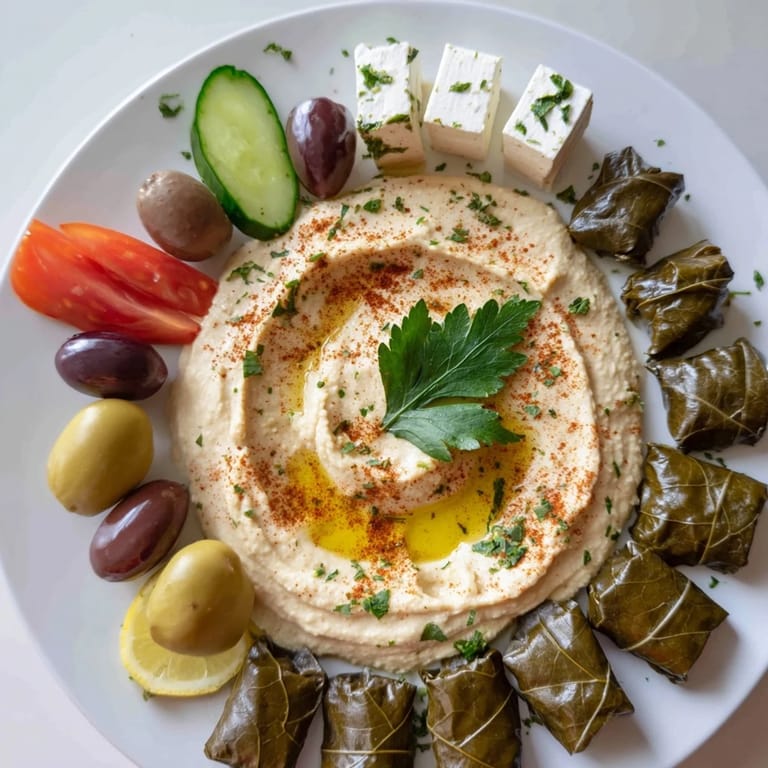
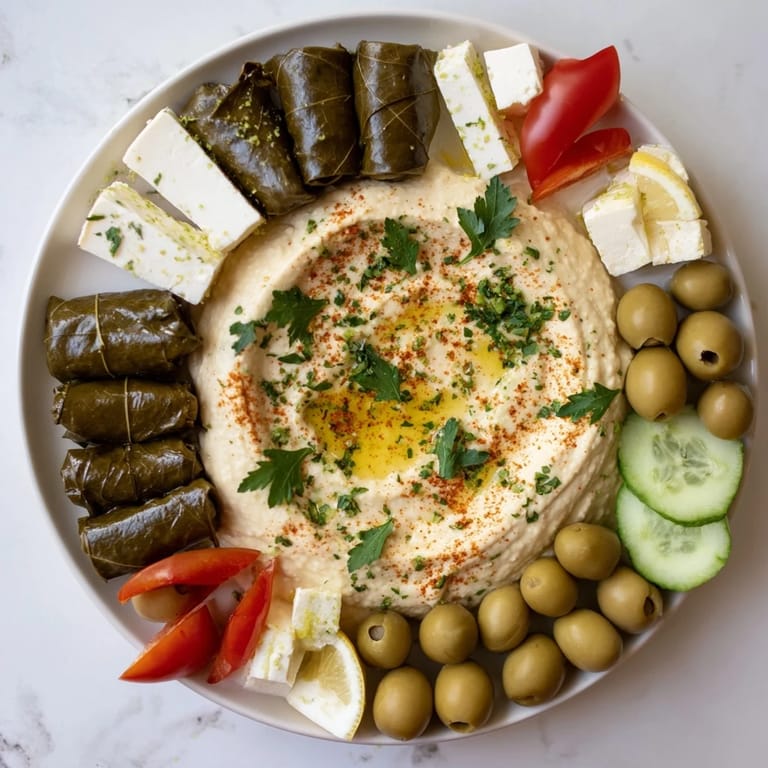
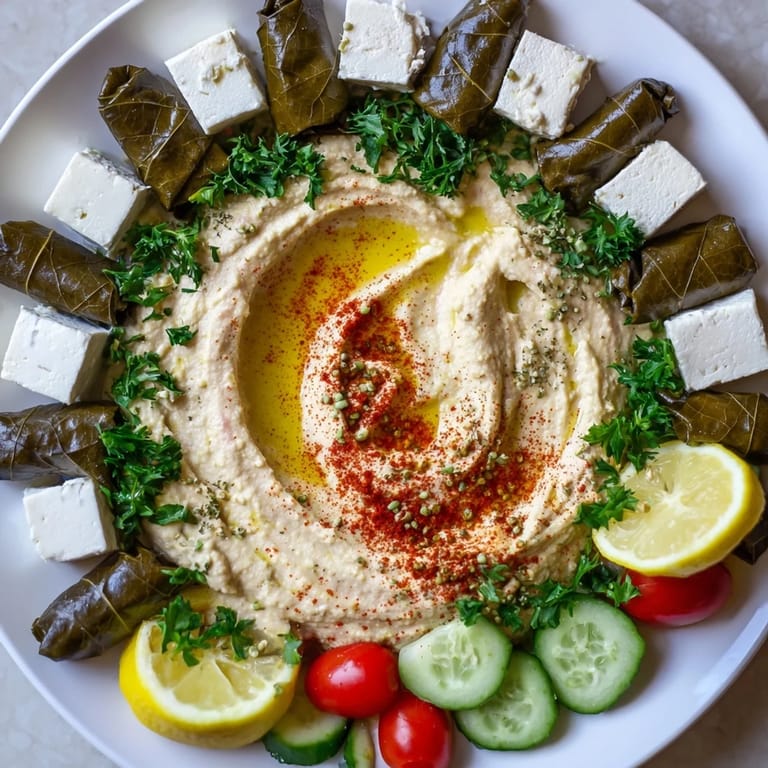
- Scoop hummus into a shallow bowl and use the back of a spoon to create a small well in the center, then drizzle with good olive oil and a pinch of paprika or sumac if you have it.
- Arrange the dolmas:
- Place stuffed grape leaves seam-side down in a gentle arc—they look better when they're not crowded, and it's easier to grab one without disturbing others.
- Group the cheeses:
- Cut each cheese type into bite-sized cubes or slices and create three small piles; the contrast of white feta next to golden kasseri looks intentional and inviting.
- Season the olives:
- Toss olives with good olive oil and a small pinch of dried oregano, then let them sit in a small bowl while you finish the rest.
- Add color with vegetables:
- Slice cucumbers into half-moons and tomatoes into wedges, scatter them around the platter with lemon wedges tucked between.
- Final flourish:
- Sprinkle fresh parsley over everything for green flecks that catch the light and make the whole thing shimmer.
- Warm the bread:
- Wrap pita in a clean kitchen towel and warm it just before serving so it's still steaming when people reach for it.
 Save
Save My most vivid memory of this platter isn't the eating—it's the quiet that falls when people gather around something beautiful and communal. There's a moment before anyone reaches for food where everyone just looks, and in that second you know you've done something right. Food that invites people to linger, to talk, to reach across each other without asking—that's what meze is really about.
Building Your Perfect Platter
The beauty of meze is that it's forgiving and flexible. You're not following a rigid formula—you're creating a landscape of flavors and textures that work together. Start with your hummus as the anchor, then build around it with contrasting elements: the soft, coiled dolmas; the crumbly, sharp feta; the buttery olives; the crisp vegetables. The platter should feel abundant but not chaotic, generous but with room for people to move things around as they please.
The Art of Timing
Meze is one of those rare dishes where you can prep everything hours in advance and it actually gets better as it sits. The hummus develops flavor depth, the olives absorb their dressing, the cheeses soften to exactly the right temperature. The only things you should do just before serving are warming the bread and adding fresh parsley—those final green notes remind everyone that this came from a real kitchen, not a store shelf.
Making It Your Own
Turkish meze is a starting point, not a rule. I've added roasted red peppers because they were good that week, swapped in labneh when I had it, scattered toasted walnuts across the top on a day when I wanted nuttiness. The core stays the same—creamy, salty, bright, fresh—but the details shift with seasons and what your market has that day.
- Try adding roasted eggplant slices brushed with garlic oil for a smoky depth.
- Scatter pomegranate seeds for tartness and a burst of color that catches the eye.
- Warm some kasseri in a small pan until the edges curl, then slide it onto the platter while still hot for textural contrast.
 Save
Save There's something magical about food that brings people together without fanfare. Meze does exactly that—it asks nothing except that you sit down, reach for something, and share a moment with the person next to you.
Recipe FAQs
- → What are the main components of a Turkish meze platter?
The platter includes hummus, stuffed grape leaves (dolmas), a selection of cheeses like feta and halloumi, marinated olives, and fresh garnishes such as cucumber and tomato.
- → How is the hummus prepared for this platter?
Chickpeas, tahini, olive oil, garlic, lemon juice, cumin, salt, and pepper are blended until smooth to create creamy hummus.
- → Can dolmas be made from scratch?
Yes, dolmas can be homemade by cooking rice with herbs and stuffing grape leaves, though store-bought versions work well for convenience.
- → What garnishes complement the Turkish meze?
Slices of cucumber, tomato wedges, fresh parsley, and lemon wedges add color and freshness to the platter.
- → What is a good pairing beverage for this spread?
A crisp white wine like Narince or traditional raki pairs beautifully with the variety of flavors on the platter.
- → Are there any common allergens in this dish?
Yes, it contains sesame (in tahini), dairy (from cheeses), and may contain gluten if served with regular pita bread.