 Save
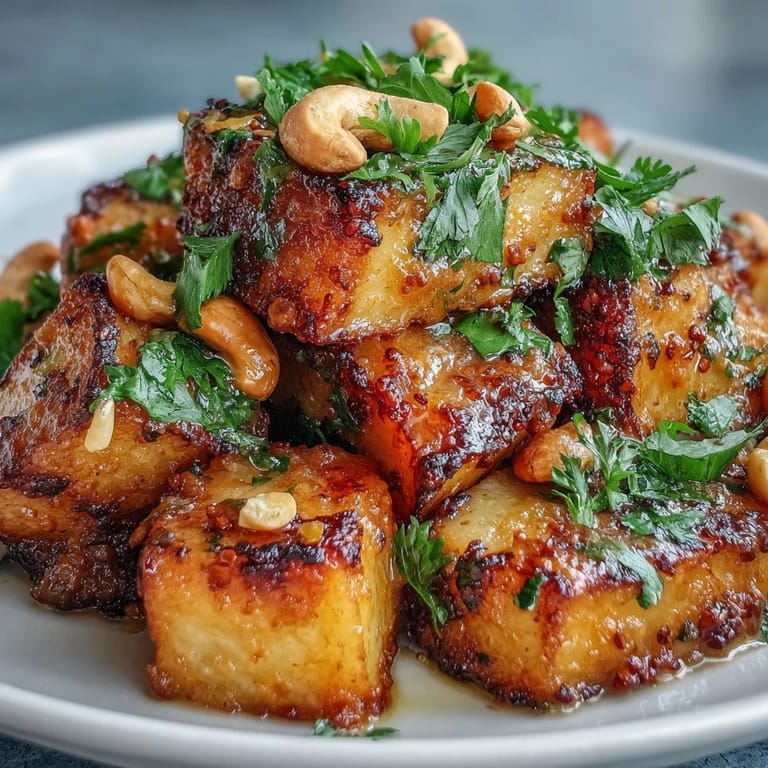
Save One gray November evening, I found myself staring at a knobby celeriac in my vegetable drawer, wondering what possessed me to buy it. I'd been drawn to its odd, lunar surface at the market, but now it sat there like a culinary dare. On a whim, I decided to treat it like potatoes, roasting it until golden, then drowning it in the curry spices I always keep within arm's reach. The kitchen filled with warmth and fragrance, and that strange root transformed into something I now crave when the weather turns cold.
I made this for a small dinner party once, and my friend who claimed to hate celeriac had three servings. She kept insisting it couldn't be the same vegetable she remembered from childhood, all watery and bland in soups. The golden cubes, coated in thick coconut curry, had none of that sad boiled quality. By the end of the night, she'd taken a photo of the recipe card I scribbled for her, and I felt like I'd won a tiny culinary victory.
Ingredients
- Celeriac: This gnarly root becomes sweet and tender when roasted, with a subtle celery flavor that absorbs curry spices beautifully. Peel it thickly to remove all the rough skin.
- Onion: The foundation of the sauce, softened slowly to release its natural sweetness and create a silky base for the spices.
- Garlic and ginger: These two create the aromatic backbone; fresh is essential here as dried versions lack the bright punch this dish needs.
- Curry powder: Choose medium or hot based on your heat tolerance, and look for a blend with complexity beyond just turmeric and cumin.
- Cumin and turmeric: Layering these alongside curry powder deepens the warmth and gives the sauce that golden glow.
- Chili flakes: Optional but recommended for a gentle background heat that builds with each bite.
- Olive oil: Used both for roasting and sauteing, it carries the spices and helps the celeriac caramelize.
- Coconut milk: The creamy element that rounds out the spices and clings to every celeriac cube; use full fat for the richest result.
- Vegetable stock: Thins the sauce just enough to let it simmer and meld without becoming too heavy.
- Fresh cilantro, toasted nuts, lime: These garnishes add brightness, crunch, and acidity that lift the whole dish at the end.
Tired of Takeout? 🥡
Get 10 meals you can make faster than delivery arrives. Seriously.
One email. No spam. Unsubscribe anytime.
Instructions
- Roast the celeriac:
- Preheat your oven to 200°C and toss the celeriac cubes with olive oil, salt, and pepper on a baking sheet. Roast for 25 to 30 minutes, flipping halfway, until the edges turn golden and the flesh is fork tender.
- Build the aromatic base:
- Heat olive oil in a large pan over medium heat and cook the onion for about 5 minutes until it softens and turns translucent. Stir in the garlic and ginger, letting them sizzle for just a minute until your kitchen smells incredible.
- Toast the spices:
- Add the curry powder, cumin, turmeric, and chili flakes to the pan, stirring constantly for about a minute. This step wakes up the spices and releases their essential oils.
- Create the sauce:
- Pour in the coconut milk and vegetable stock, stirring to combine, then bring the mixture to a gentle simmer. Let it bubble quietly while the celeriac finishes roasting.
- Marry everything together:
- Add the roasted celeriac to the simmering sauce and let it cook uncovered for 8 to 10 minutes, stirring occasionally. The sauce will thicken and cling to the celeriac as the flavors deepen and meld.
- Finish and serve:
- Taste the curry and adjust the salt and pepper as needed, then transfer to a serving dish. Scatter fresh cilantro, toasted nuts, and a squeeze of lime over the top just before bringing it to the table.
 Save
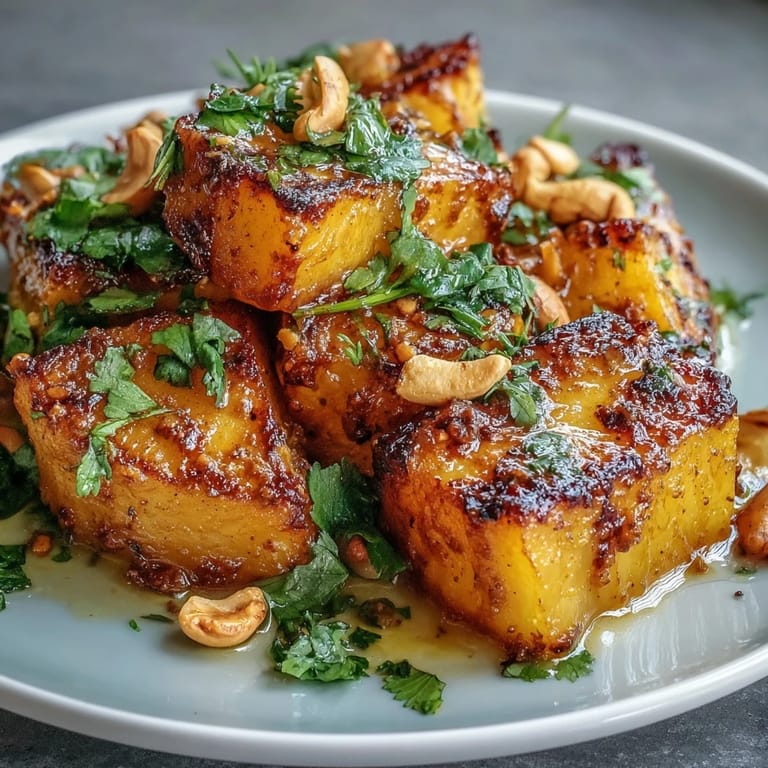
Save There's a moment when you stir the golden celeriac into the bubbling sauce and watch it all come together, the ivory cubes turning glossy and amber. It feels like magic every time, this humble root becoming something you'd happily order at a restaurant. I've served this to skeptics and converts alike, and it always sparks the same question: what is this, and how do I make it?
Making It Your Own
If celeriac isn't available or you're simply not ready to wrestle with its knobby exterior, parsnips or sweet potato work beautifully in its place. I've also stirred in a can of drained chickpeas during the final simmer when I needed extra protein, turning this into a more substantial main dish. Sometimes I add a handful of spinach right at the end, letting it wilt into the sauce for a pop of green and a bit more nutrition without changing the flavor profile.
Serving Suggestions
This curry begs to be scooped up with warm naan or spooned over steamed basmati rice, the grains soaking up every bit of that coconut sauce. I've also served it alongside roasted chicken for guests who wanted meat, and it held its own as the star of the plate. For a lighter approach, try it over quinoa or with a simple cucumber raita on the side to cool down the spices.
Storage and Reheating
Leftovers keep beautifully in the fridge for up to four days, and the flavors actually deepen overnight as the celeriac continues to absorb the curry. Reheat gently on the stovetop with a splash of stock or water if the sauce has thickened too much. I've even frozen portions in airtight containers for up to two months, thawing them in the fridge overnight before warming through on the stove.
- Add the fresh garnishes only after reheating, never before storing, so they stay bright and crunchy.
- If freezing, slightly undercook the celeriac so it doesn't turn mushy when reheated.
- A squeeze of fresh lime right before serving revives the flavors and makes leftovers taste just made.
 Save
Save This dish has become my answer to cold evenings and last minute dinner guests, proof that a strange looking vegetable and a well stocked spice drawer can turn into something truly special. I hope it warms your kitchen the way it has mine.
Recipe FAQs
- → Can I use a different root vegetable instead of celeriac?
Yes, parsnip or sweet potato work wonderfully as substitutes. Adjust roasting time slightly as needed depending on the vegetable's density and moisture content.
- → How can I make this dish spicier?
Increase the chili flakes to 1/2 teaspoon or use hot curry powder instead of medium. You can also add fresh chopped green chilies with the garlic and ginger for extra heat.
- → Can I prepare this ahead of time?
Absolutely. The dish reheats beautifully and the flavors deepen overnight. Store in an airtight container in the refrigerator for up to 3 days and reheat gently on the stovetop.
- → What can I serve with curried celeriac?
Steamed basmati rice, warm naan bread, or quinoa make excellent accompaniments. For a complete meal, add a side of raita or cucumber salad to balance the warm spices.
- → How do I know when the celeriac is properly roasted?
The celeriac should be golden brown on the edges and tender when pierced with a fork. This typically takes 25-30 minutes at 200°C, but check at the 20-minute mark if your pieces are smaller.
- → Can I add protein to make this more substantial?
Yes, chickpeas are an excellent addition. Stir in a drained can of chickpeas along with the roasted celeriac for extra protein and texture without altering the flavor profile.