 Save
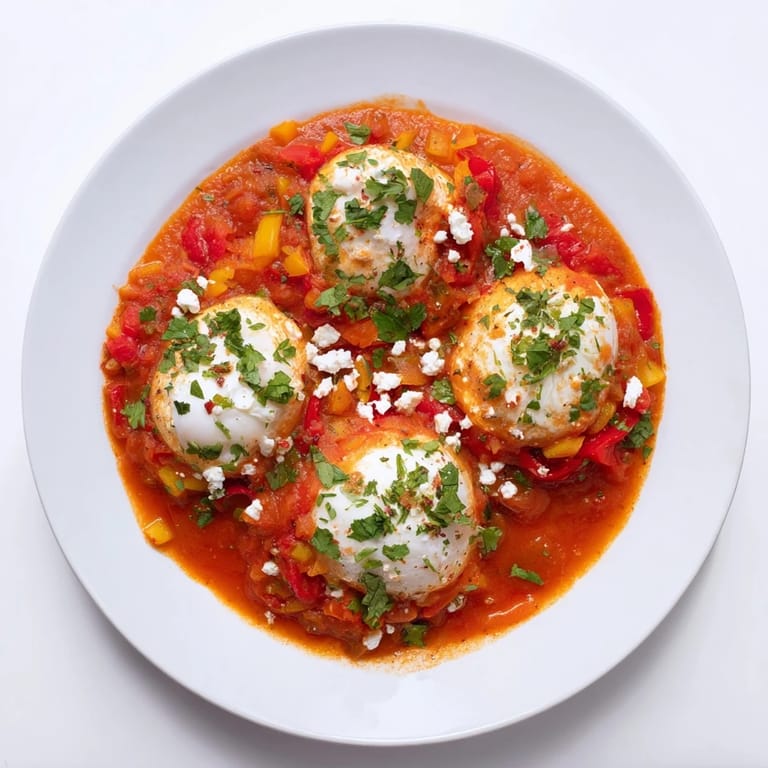
Save The first time I made shakshuka, I was trying to impress someone by cooking something beyond my usual rotation of pasta and roasted chicken. I'd eaten it at a small restaurant in Tel Aviv years ago, but the memory had stuck with me—that moment when you crack into a runny yolk and it mingles with the spiced tomato sauce, creating something both comforting and exciting. I remember standing in my kitchen on a Sunday morning, a bit uncertain about poaching eggs in sauce rather than water, but something about the dish felt right. It turned out to be one of those happy accidents where you take a risk and everything just works.
I made this for a friend who was visiting from out of town, and I still remember how she tilted the bowl toward her face to smell the steam rising off it before even tasting it. That moment—where a dish makes someone pause before eating—is when you know you've done something right. We tore pieces of pita bread and used them to scoop up the sauce and egg, sitting at my kitchen counter talking about absolutely nothing important. Food that brings people into a moment like that is worth making again and again.
Ingredients
- Olive oil: Use a good-quality one if you have it; this isn't the time to use the sad bottle hiding in the back of your cabinet.
- Yellow onion and red bell pepper: Together they create a sweetness that balances the acidity of the tomatoes and prevents the sauce from tasting one-note.
- Garlic and red chili: The chili is optional but honestly transforms the dish from pleasant to memorable—start with half if you're cautious.
- Crushed tomatoes and fresh tomatoes: Fresh tomatoes add brightness; canned provides body and consistency, so use both if you can.
- Tomato paste: Just a teaspoon deepens the flavor without making it taste canned or flat.
- Ground cumin, paprika, cayenne, and coriander: These spices work together to create warmth and depth; don't skip the coriander even though it's subtle.
- Eggs: Use the freshest eggs you can find—they hold their shape better and taste noticeably better when poached.
- Fresh parsley, cilantro, and feta: These are your finishing notes, turning a good dish into something that feels special.
Tired of Takeout? 🥡
Get 10 meals you can make faster than delivery arrives. Seriously.
One email. No spam. Unsubscribe anytime.
Instructions
- Build your sauce foundation:
- Heat olive oil in your skillet and let it get properly warm—you want it to shimmer slightly. Add the onion and bell pepper, and don't rush this step; they need those 5 to 7 minutes to soften and start releasing their sweetness into the oil.
- Wake up the aromatics:
- Once the vegetables are soft, add garlic and chili, stirring constantly for about a minute. You'll smell the shift in your kitchen immediately—that's when you know the garlic is activated and ready to flavor everything.
- Create the sauce:
- Pour in your crushed tomatoes, add the fresh chopped tomatoes, and stir in the tomato paste. The mixture will look loose at first, but as it simmers for 10 to 12 minutes, it transforms into something thicker and more concentrated.
- Season with confidence:
- Sprinkle in your spices—cumin, paprika, cayenne if you're feeling brave, and coriander. Taste as you go; you can always add more salt and pepper, but you can't take it out.
- Make wells for the eggs:
- Using the back of a spoon, gently create four small indentations in the sauce, spacing them evenly around the pan. These wells help the eggs stay in place rather than floating around.
- Poach your eggs:
- Crack an egg into each well, keeping the yolk intact. Cover the pan immediately and lower the heat to medium-low; the eggs need gentle, even heat to cook properly without the sauce boiling too vigorously around them.
- Watch and wait:
- After 6 to 8 minutes, peek under the lid—the egg whites should be set and opaque, but those yolks should still jiggle slightly when you move the pan. That's the sweet spot.
- Finish and serve:
- Remove from heat, scatter parsley and cilantro over everything, add crumbled feta if you like, and serve immediately while everything is still steaming and the yolks are still soft.
 Save
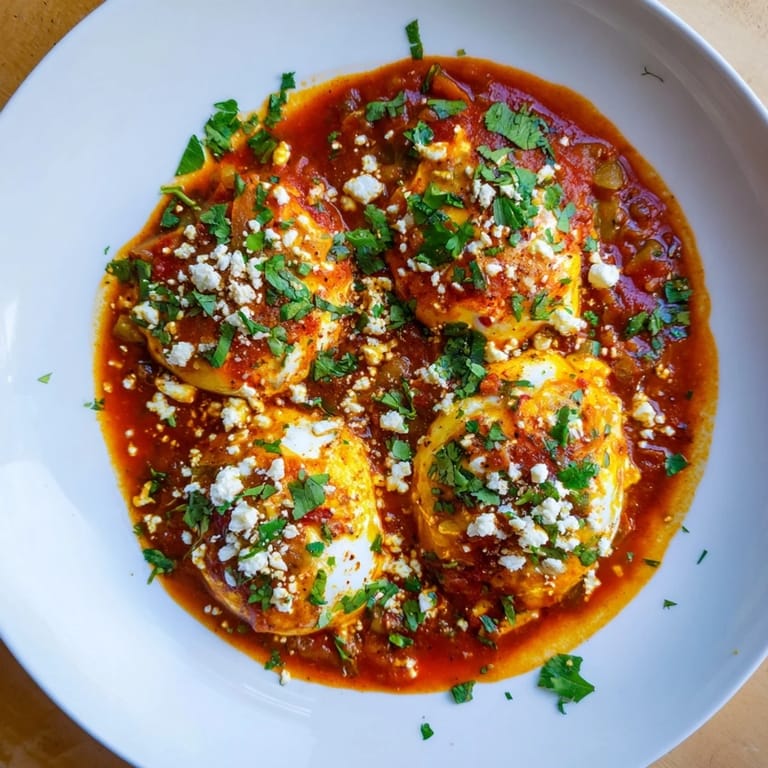
Save There was one morning when I made this for myself on a day when everything felt a little gray and ordinary, and I remember being genuinely surprised by how much comfort came from such a small bowl of food. It wasn't fancy, but sitting at my kitchen window eating it slowly felt like permission to take care of myself in a quiet way. That's when I realized shakshuka had become more than a recipe to me—it became a moment I could create whenever I needed something warm and intentional.
Building Your Own Flavor Profile
This recipe is a starting point, not a rulebook. The first few times I made it, I followed the recipe exactly, but after that I started playing with it. I've added a pinch of smoked paprika for a campfire-like depth, experimented with different peppers, and once even threw in some sautéed spinach because it was in my fridge and felt like it belonged. The beauty of shakshuka is that it's forgiving—it wants you to adjust it to your taste and your mood. Trust your instincts more than you trust the recipe.
The Cast-Iron Advantage
If you have a cast-iron skillet, use it for this. The pan retains heat beautifully, which means the eggs cook evenly and the sauce stays at a gentle, consistent simmer. A regular stainless steel or nonstick pan works fine, but cast iron feels right for this dish—it's old-fashioned and reliable in a way that matches the recipe's roots. Plus, serving shakshuka straight from the skillet on the table looks undeniably impressive.
Serving and Storage Wisdom
Serve this immediately while everything is hot and the eggs are still soft—waiting even five minutes lets the yolks set too much and you lose that silky, saucy magic. If you have leftovers, which is rare in my house, reheat gently over low heat; high heat will turn the eggs into rubber. This dish is at its best fresh and warm, shared with someone or enjoyed as a moment to yourself with good bread and no agenda.
- Pair it with warm pita, crusty bread, or even toasted flatbread to scoop up every bit of sauce.
- A dollop of labneh or Greek yogurt on the side adds creaminess and cuts through the richness beautifully.
- Make this on weekend mornings or quiet weeknight dinners when you have time to enjoy it without rushing.
 Save
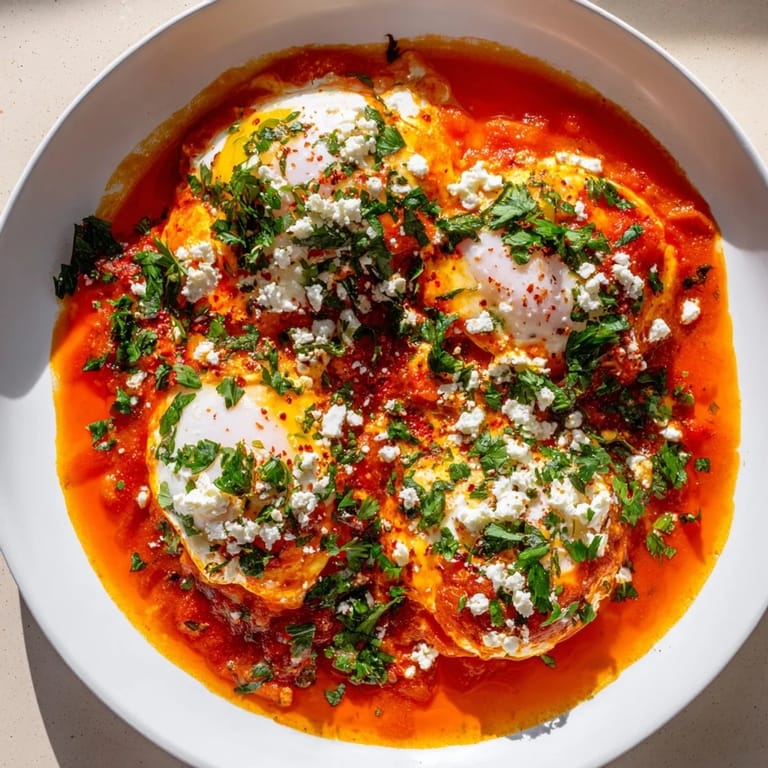
Save Making shakshuka has taught me that the best recipes are the ones that feel easy enough to make on a Tuesday night but special enough to serve on a Friday with guests. It's the kind of dish that reminds you why cooking matters.
Recipe FAQs
- → What type of pan is best for cooking this dish?
A large skillet or cast-iron pan with a lid works best to evenly cook the sauce and poach the eggs gently.
- → Can I adjust the spice level in this dish?
Yes, increase or reduce the amount of chili and cayenne pepper to suit your preferred heat level.
- → What can I use as garnishes?
Fresh parsley, cilantro, and crumbled feta cheese add brightness and creaminess as finishing touches.
- → Are there good variations to try?
Try adding sautéed spinach or eggplant for extra texture and flavor. Smoked paprika adds a deeper smoky note.
- → What should I serve this dish with?
Warm pita bread, crusty bread, labneh, or Greek yogurt complement the rich sauce and eggs beautifully.