 Save
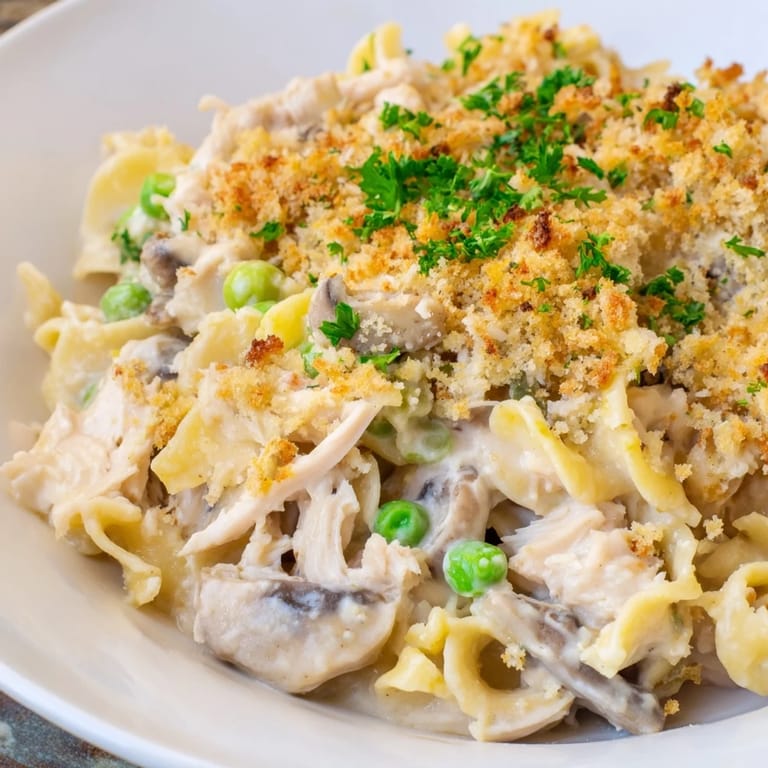
Save My mom's tuna noodle casserole lived in a worn recipe card in her kitchen drawer, but I didn't really understand it until I made my own version one rainy Wednesday night, realizing that the magic wasn't in following her steps exactly—it was in treating the sauce like something alive, something that needed patience and a little cream to become silky and real. That's when I knew this dish deserved better than canned soup shortcuts.
I made this for my brother's first night back home after college, and he sat there quietly eating until he looked up and said the vegetables actually tasted like something—which is when I knew the update had worked. Comfort food doesn't have to mean shortcuts; it just means feeding someone something that makes them feel cared for.
Ingredients
- Egg noodles: Use 12 oz and cook them just until al dente; they'll keep cooking in the oven, so resist the temptation to make them soft.
- Solid white tuna: Two cans drained properly—press the lid into the can and let the water really escape, or your casserole will be watery.
- Frozen peas: Thaw them first so they're not icy nuggets; a quick rinse helps too.
- Cremini mushrooms: Slice them thin enough to cook through in the skillet; they add umami depth that makes people ask what your secret is.
- Yellow onion and celery: This is your aromatic foundation, so don't skip it or rush it.
- Garlic: Fresh, minced—one of those small ingredients that changes everything about how this tastes.
- Unsalted butter: Use real butter; it matters in the sauce and the topping.
- All-purpose flour: This makes your roux, the thickener that turns broth into something creamy.
- Broth and milk: Low-sodium chicken or vegetable broth paired with whole milk creates that rich sauce texture.
- Sour cream: Adds tanginess and silkiness; stir it in off heat so it doesn't break.
- Dijon mustard: A quiet flavor that brightens everything without making it taste like mustard.
- Panko and parmesan: The topping—keep it crispy by mixing it with melted butter and baking until golden.
Tired of Takeout? 🥡
Get 10 meals you can make faster than delivery arrives. Seriously.
One email. No spam. Unsubscribe anytime.
Instructions
- Set your oven and prepare:
- Heat your oven to 400°F and lightly grease a 9x13-inch baking dish while you gather everything else. Having your workspace ready means you won't be scrambling when things start moving fast.
- Cook the noodles:
- Boil salted water, add noodles, and cook until just al dente—you're aiming for that tender but still slightly firm texture. Drain and set aside; they'll finish cooking in the oven.
- Build your vegetable base:
- Melt butter in a large skillet over medium heat, then add onion and celery. Let them soften for about 3 minutes, listening for the quiet sizzle that means they're breaking down.
- Add mushrooms and garlic:
- Once the onion is translucent, add sliced mushrooms and let them brown slightly for 4 minutes; this deepens their flavor. Stir in minced garlic and cook just 1 minute more—you want it fragrant, not burnt.
- Make your roux:
- Sprinkle flour over the vegetables and stir constantly for about 1 minute, coating everything evenly. This raw flour taste needs to cook out before you add liquid.
- Create the sauce:
- Gradually pour in broth while stirring to avoid lumps, then add milk and bring everything to a gentle simmer. Keep stirring for 3 to 4 minutes until the sauce thickens enough to coat the back of a spoon.
- Finish with creaminess:
- Remove from heat and stir in sour cream, Dijon mustard, salt, and pepper. Off-heat is key so the sour cream stays silky instead of curdling.
- Combine everything:
- Fold in the drained tuna, thawed peas, and cooked noodles with a gentle hand; you're combining, not mashing.
- Transfer to the baking dish:
- Pour the entire mixture into your prepared dish, spreading it evenly with a spatula.
- Make the topping:
- Mix panko, grated parmesan, and melted butter in a small bowl until it looks like damp sand, then sprinkle it evenly over the casserole.
- Bake and finish:
- Bake for 20 to 25 minutes until the topping is deep golden and you see bubbles at the edges. Let it rest 5 minutes, scatter fresh parsley on top if you have it, and serve while it's still warm.
 Save
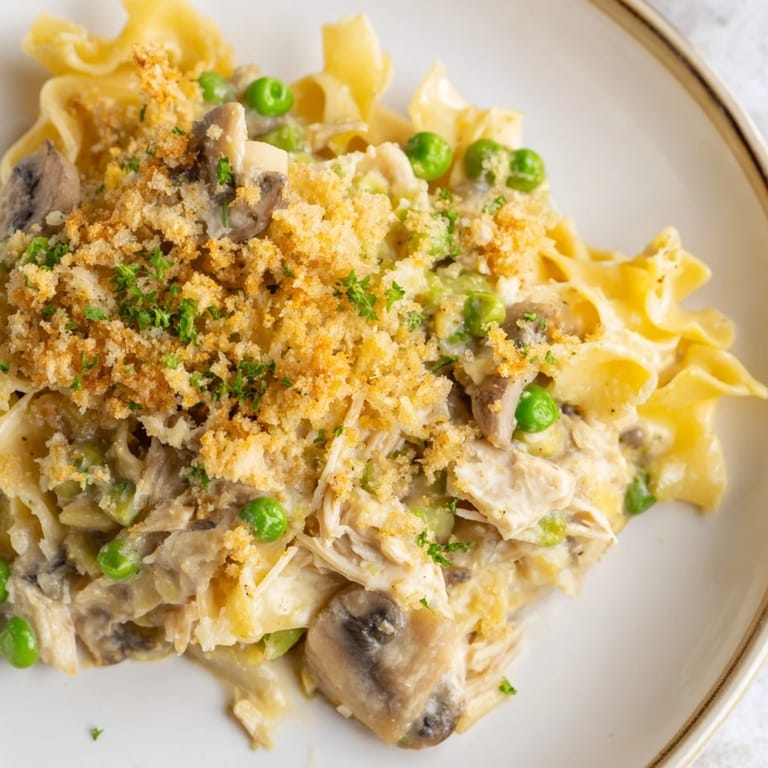
Save I remember plating this for a small dinner party and watching everyone go quiet for that first bite, the way they do when food actually tastes like care and intention. That's when I realized comfort food isn't about simplicity—it's about making something familiar feel brand new.
Why Fresh Vegetables Matter Here
The original casserole uses canned cream soup, which is convenient but also masks the actual ingredients you're cooking with. By building a real sauce and using fresh vegetables, you taste what you're eating—the earthiness of mushrooms, the sweetness of caramelized onion, the snap of peas. One time I tried to rush and used overcooked mushrooms from the day before, and the whole dish tasted mushy and flat. Fresh vegetables take five extra minutes to prep but change the entire character of the meal. They remind you that you're cooking real food, not just heating up a casserole.
The Sauce is Everything
A proper béchamel-based sauce transforms this from a one-note dish into something nuanced and creamy. The flour-and-butter roux is the foundation, the broth and milk build the body, and the sour cream adds that subtle tang at the end. I learned this the hard way when I once skipped the sour cream thinking it was optional—the result was bland and one-dimensional. That tangy richness is what makes people want a second serving. It also carries all the other flavors forward, letting the mustard, garlic, and tuna become part of one cohesive whole instead of separate ingredients competing for attention.
Making It Your Own
This recipe is a foundation, not a rulebook. I've added shredded gruyère to the sauce for extra nuttiness, swapped sour cream for Greek yogurt when I wanted something lighter, and even mixed in a handful of frozen corn one night when that's what I had on hand. The structure stays solid, but the details can bend to your pantry and your mood. A crisp white wine like Sauvignon Blanc pairs beautifully with the richness, though honestly, a cold glass of anything works when you're eating something this comforting.
- Shredded cheddar or gruyère stirred into the sauce adds another layer of flavor.
- Greek yogurt can replace sour cream for a lighter version without losing the creamy texture.
- Leftover cooked vegetables, roasted broccoli, or steamed spinach fold in just as easily as peas.
 Save
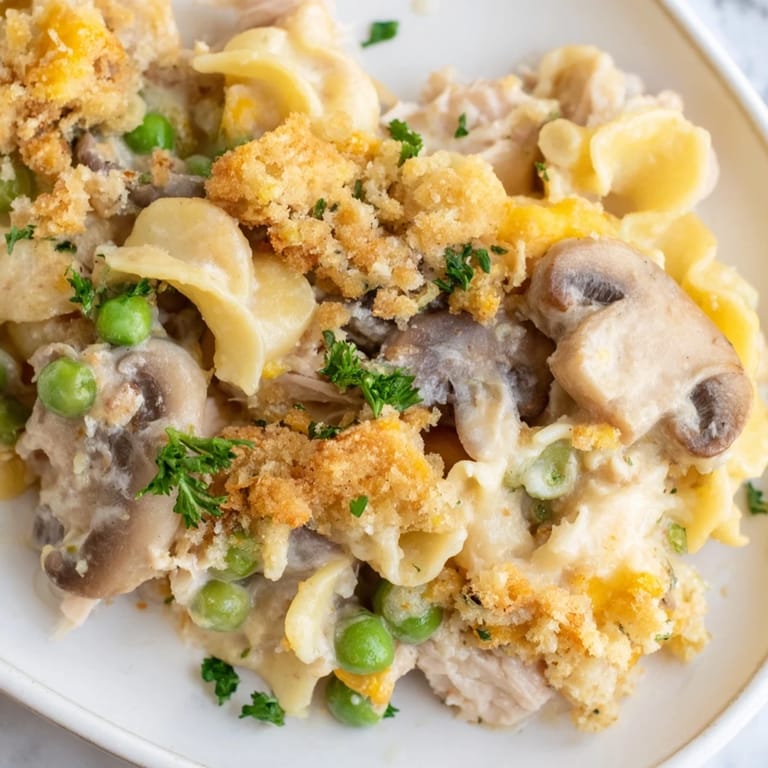
Save This casserole sits at that perfect intersection of effort and ease—it feels like you've done something real, but you're only in the kitchen for about 50 minutes. That's the modern comfort food promise: something homemade that actually tastes like home.
Recipe FAQs
- → What type of noodles works best?
Egg noodles are preferred for their tender yet firm texture that holds up well to the creamy sauce.
- → Can I use fresh vegetables instead of frozen?
Yes, fresh peas and mushrooms can be used; just adjust sautéing time to ensure they are tender.
- → How do I get a crispy topping?
Mix panko breadcrumbs with parmesan and melted butter, then sprinkle over the dish before baking for a golden crust.
- → Is there a way to lighten the sauce?
Substituting Greek yogurt for sour cream can reduce richness while keeping creaminess.
- → What wine pairs well with this dish?
A crisp white wine like Sauvignon Blanc complements the creamy and savory flavors beautifully.