 Save
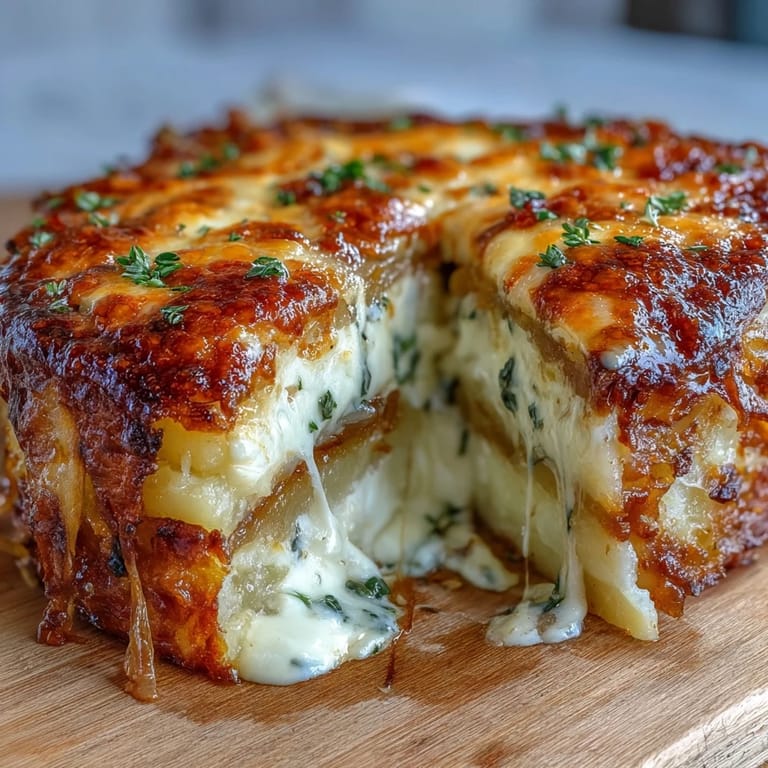
Save The smell of Gruyère melting into hot cream is what pulled my flatmate out of her room that first autumn evening I tested this pie. She appeared in the doorway, sniffed twice, and asked if I was trying to ruin her diet. I wasn't, but I did end up making it three more times that month because she kept inviting people over without telling me. There's something about layers of buttery potatoes and sharp cheddar that turns a quiet Tuesday into an occasion.
I made this for my mum's birthday once, and she spent the entire meal trying to guess what made it taste so rich. She kept saying it was the butter, then the cream, then maybe I'd added cheese to the potatoes before baking. When I finally told her it was just nutmeg and Dijon mustard in the cream mixture, she wrote it down on the back of a receipt and tucked it into her purse. That's how I know a recipe works.
Ingredients
- Floury potatoes: Maris Piper or Yukon Gold break down just enough to soak up the cream without turning to mush, and slicing them thin helps them cook evenly.
- Onions and garlic: Softening them in butter first brings out their sweetness and keeps them from tasting raw or sharp in the finished pie.
- Gruyère cheese: It melts into creamy, nutty pools that make the whole dish taste expensive, and it doesn't get greasy like some cheddars can.
- Mature cheddar cheese: The sharpness cuts through the richness of the cream and adds that familiar, comforting flavour everyone recognizes.
- Double cream and whole milk: The combination gives you enough richness without making the pie feel heavy, and it helps the layers bind together as they bake.
- Dijon mustard: Just a teaspoon adds a subtle tang that keeps the dish from feeling one note, and most people can't even tell it's there.
- Nutmeg: Freshly grated nutmeg has a warm, slightly sweet flavour that makes cream and cheese taste even more luxurious.
- Butter: Use unsalted so you can control the seasoning, and make sure it's soft enough to coat the onions without burning.
- Fresh chives: They add a pop of colour and a mild oniony freshness that balances the richness right before serving.
Tired of Takeout? 🥡
Get 10 meals you can make faster than delivery arrives. Seriously.
One email. No spam. Unsubscribe anytime.
Instructions
- Get the oven ready:
- Preheat to 190°C (375°F) and butter your dish generously so nothing sticks later. Use a 2 litre ovenproof dish, something deep enough to hold all those layers.
- Soften the onions:
- Melt the butter in a large saucepan over medium heat, then add the onions and garlic and cook gently for 6 to 8 minutes until they're soft and translucent. You want them sweet and tender, not browned or crispy.
- Mix the cream base:
- In a bowl, whisk together the double cream, milk, Dijon mustard, nutmeg, salt, and pepper until smooth. This is what makes every bite creamy and flavourful.
- Build the first layer:
- Arrange half the potato slices in the bottom of the dish, overlapping them slightly like roof tiles. Spoon over half the onion mixture, then sprinkle half of each cheese on top.
- Repeat the layers:
- Add the remaining potatoes, then the rest of the onions, and finish with the remaining Gruyère and cheddar. Press down gently with a spatula so everything sits snugly together.
- Pour and press:
- Pour the cream mixture evenly over the top, making sure it seeps down between the layers. Press down again gently to compact everything and help the liquid distribute.
- Bake covered:
- Cover the dish tightly with foil and bake for 40 minutes so the potatoes steam and soften without the top burning. The foil traps the moisture and helps everything cook through evenly.
- Finish uncovered:
- Remove the foil and bake for another 20 minutes until the top is golden, bubbling, and slightly crisp around the edges. Let it rest for 10 minutes before serving so the layers settle and don't slide apart when you scoop.
 Save
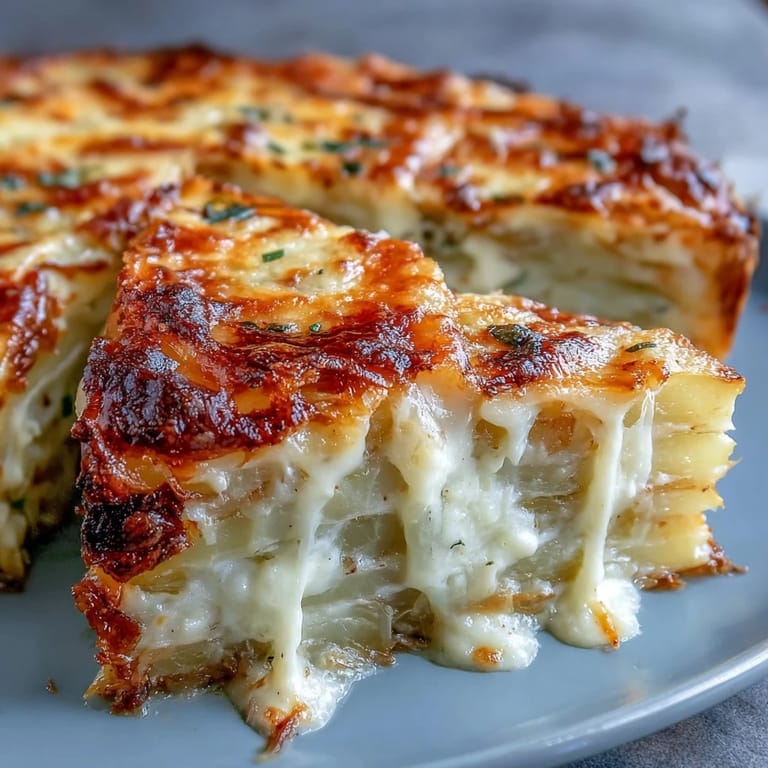
Save One winter evening, I brought this to a friend's dinner party, still warm in the dish wrapped in a tea towel. Someone asked if it was a gratin, and before I could answer, another guest said it was better than any gratin they'd ever had. I didn't correct anyone, I just watched people go back for seconds and thirds. That's when I realized this pie doesn't need a fancy name, it just needs to be on the table.
Making It Your Own
You can swap Gruyère for Emmental or a sharp Swiss cheese if that's what you have, and the pie will still taste rich and satisfying. I've also added a pinch of smoked paprika to the cream mixture when I wanted a subtle smoky edge, and it worked beautifully. If you like a bit of green, try tucking some wilted spinach or kale between the layers, it adds colour and makes the whole thing feel a little less indulgent, even though it absolutely still is.
Storing and Reheating
Leftovers keep covered in the fridge for up to three days, and they reheat really well in a low oven or even the microwave if you're in a hurry. I usually cover the dish with foil and warm it at 160°C (325°F) for about 20 minutes, just until it's hot all the way through. The cream might look a little separated when cold, but it comes back together beautifully once it's warm again.
Serving Suggestions
This pie is rich, so I like to serve it with something sharp and fresh to balance it out. A crisp green salad with a lemony vinaigrette or some lightly steamed green beans work perfectly. If you're feeding a crowd, it sits happily on a buffet table and people can help themselves without you having to stand there serving.
- Garnish with fresh chives or parsley right before serving for a pop of colour and flavour.
- Pair it with a dry white wine or a light ale to cut through the richness.
- Let it cool for a full 10 minutes before slicing, trust me, it makes all the difference.
 Save
Save This pie has become my answer to cold evenings, last minute guests, and those nights when I just want something warm and satisfying without a lot of fuss. I hope it finds a spot in your kitchen the way it has in mine.
Recipe FAQs
- → Can I prepare this dish ahead of time?
Yes, you can assemble the pie up to 24 hours in advance. Cover tightly with foil and refrigerate. Add 10-15 minutes to the covered baking time when cooking from cold.
- → What type of potatoes work best?
Floury potatoes like Maris Piper, Yukon Gold, or Russets are ideal as they become tender and creamy when baked. Waxy potatoes won't achieve the same soft texture.
- → Can I substitute the cheeses?
Absolutely. Emmental or Swiss cheese works well in place of Gruyère, while sharp white cheddar can replace mature cheddar. Just maintain the total cheese quantity for best results.
- → How do I know when the pie is fully cooked?
The top should be golden brown and bubbling, and a knife inserted into the center should easily pierce through the potato layers with no resistance.
- → What can I serve alongside this pie?
A crisp green salad with vinaigrette, steamed green beans, roasted Brussels sprouts, or buttered peas complement the richness beautifully.
- → How should I store leftovers?
Cover and refrigerate for up to 3 days. Reheat individual portions in the microwave or warm the entire dish covered in a 160°C (320°F) oven for 20-25 minutes.