 Save
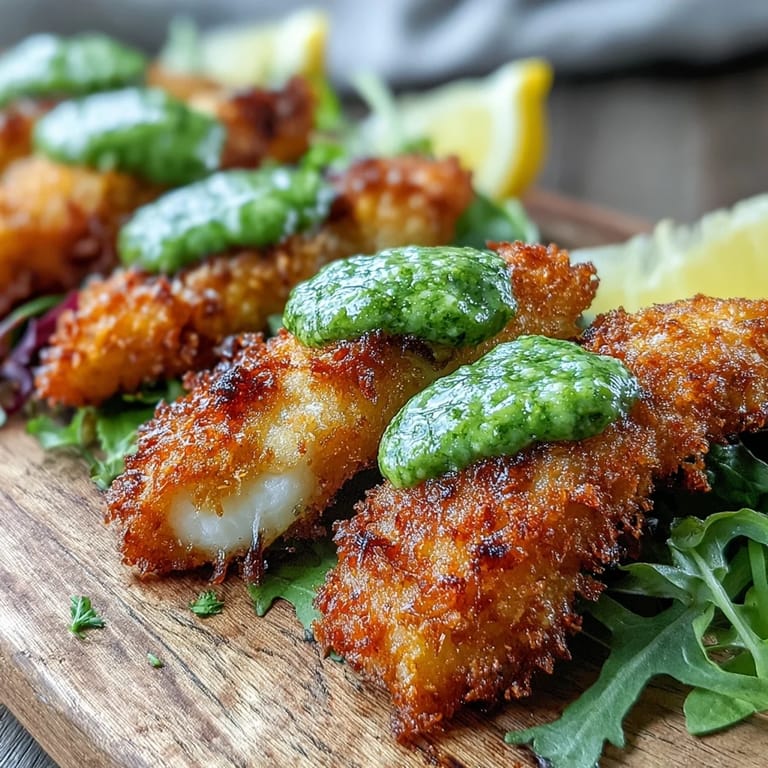
Save The smell of toasted Parmesan hitting hot air is what hooked me on this recipe. I was trying to make something more interesting than plain baked fish, and I had a wedge of Parmesan that needed using. The crust turned so golden and crisp that my partner wandered into the kitchen asking what restaurant I'd ordered from. That's when I knew this was going straight into regular rotation.
I made these for a small dinner party once, and everyone assumed I'd been cooking all day. The truth is I prepped the pesto in the morning and breaded the fish while people were arriving. The oven did the rest. One friend asked for the recipe three times before dessert even arrived, which is always the best compliment.
Ingredients
- Haddock fillets: Haddock has a delicate flake and mild flavor that doesn't fight the Parmesan, though cod or pollock work beautifully too if that's what your fishmonger has fresh.
- Plain flour: This first layer helps the egg stick and creates a dry base so the coating doesn't slide off during baking.
- Eggs: Beaten eggs act like glue for the breadcrumb mixture, and I've learned that letting excess drip off prevents clumping.
- Panko breadcrumbs: Japanese panko gives a lighter, crunchier texture than regular breadcrumbs, and it's worth seeking out for this recipe.
- Parmesan cheese: Finely grated Parmesan adds a nutty, salty punch and helps the crust turn that irresistible golden brown.
- Black pepper, sea salt, smoked paprika: Simple seasonings that wake up the coating without overpowering the fish, and the paprika adds a subtle warmth.
- Frozen peas: Frozen peas are sweeter than fresh in most seasons, and they blend into a silky pesto with hardly any effort.
- Fresh basil leaves: Basil brings that classic pesto fragrance, and I always tear a few extra leaves to scatter on top when serving.
- Garlic clove: One small clove is enough for a gentle background hum without making the pesto too sharp.
- Pine nuts: They add richness and a slight sweetness, but sunflower seeds work perfectly if you need a nut-free version.
- Extra-virgin olive oil: Good olive oil makes the pesto glossy and smooth, and it carries all the other flavors together.
- Lemon juice: A squeeze of lemon brightens everything and keeps the pesto from tasting flat or heavy.
Tired of Takeout? 🥡
Get 10 meals you can make faster than delivery arrives. Seriously.
One email. No spam. Unsubscribe anytime.
Instructions
- Prep the oven and baking sheet:
- Preheat your oven to 200°C (180°C fan) or 400°F, and line a baking sheet with parchment paper. This keeps the goujons from sticking and makes cleanup so much easier.
- Set up your coating station:
- Arrange three shallow bowls in a row: one with plain flour, one with beaten eggs, and one with panko mixed with Parmesan, pepper, salt, and smoked paprika if using. It feels like an assembly line, and it really speeds things up.
- Coat the haddock strips:
- Take each haddock strip and dust it in flour, shake off the excess, dip it into the egg, then press it into the Parmesan-panko mixture until well coated. Lay each one on the prepared baking sheet without crowding.
- Bake the goujons:
- Lightly spray or drizzle the coated fish with a little olive oil to help the crust crisp up. Bake for 15 to 20 minutes, flipping them halfway through, until they're golden and crunchy on the outside.
- Make the pea pesto:
- While the fish bakes, blanch the peas in boiling water for two minutes, then drain and run them under cold water to keep their bright green color. Toss them into a food processor with basil, Parmesan, garlic, pine nuts, olive oil, and lemon juice, then blitz until mostly smooth but still a bit textured.
- Season and serve:
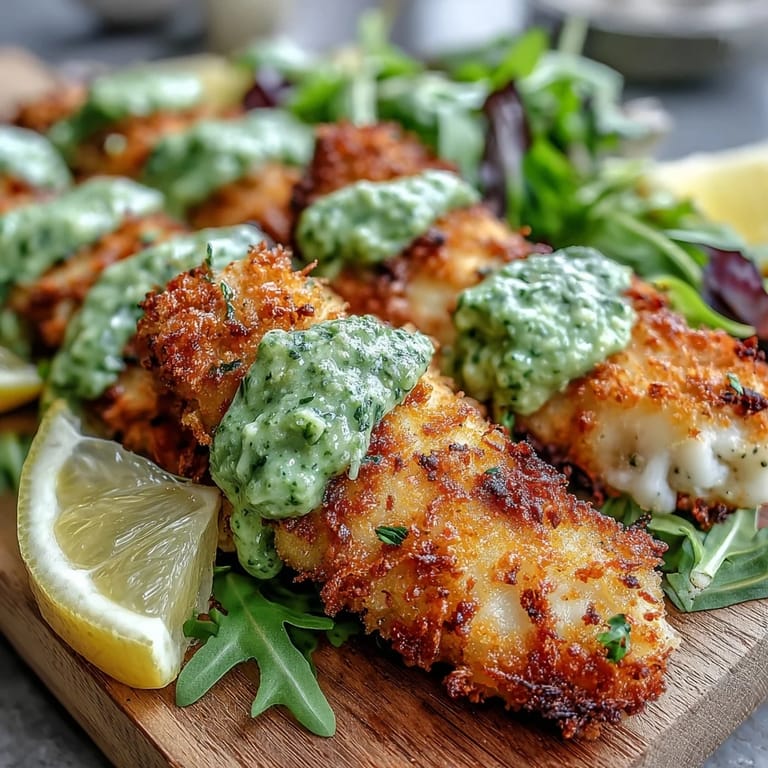
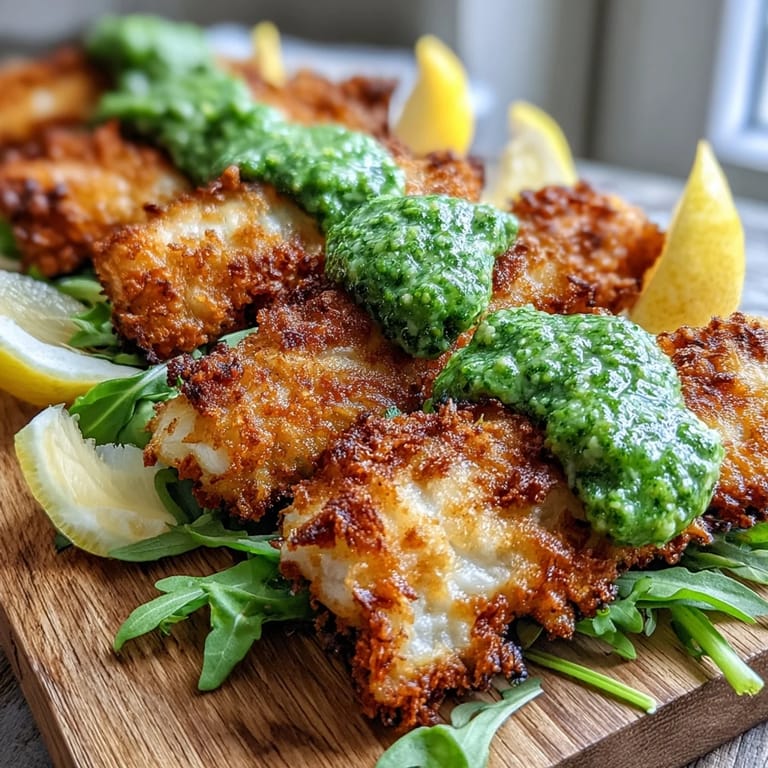
- Taste the pesto and adjust with salt, pepper, or more lemon juice if needed. Serve the hot goujons with a generous spoonful of pesto, lemon wedges, and some salad leaves if you like.
 Save
Save The first time I served this to my nephew, he declared it the best fish he'd ever eaten, which is high praise from a seven-year-old. He didn't even realize he was eating peas until I told him afterward. Now he asks for the green sauce every time we have fish, and I love that this recipe quietly introduced him to something new without any fuss or drama.
Getting the Crispiest Crust
The secret to a really crunchy coating is making sure each haddock strip is dry before you start breading. I pat them with paper towels first, because any moisture makes the flour turn gummy. Also, pressing the panko mixture onto the fish instead of just rolling it through makes a thicker, more even crust that bakes up beautifully golden.
Making the Pesto Ahead
Pea pesto keeps well in the fridge for up to three days, and I often make a double batch because it's brilliant stirred through pasta or spread on toast. Just press a piece of plastic wrap directly onto the surface before sealing the container to stop it from browning. You can also freeze it in ice cube trays and pop out a portion whenever you need a quick, vibrant sauce.
Serving Suggestions
These goujons are wonderful with a simple green salad dressed in lemon vinaigrette, or alongside roasted new potatoes for something more filling. I've also served them as a starter with the pesto as a dip, and they disappear faster than I can refill the plate.
- Try them in a soft roll with lettuce and a smear of pesto for an elevated fish finger sandwich.
- Pair with a crisp Sauvignon Blanc or a dry sparkling wine for a relaxed weekend lunch.
- Leftovers reheat surprisingly well in a hot oven for about eight minutes if you have any.
 Save
Save This dish always reminds me that simple ingredients can feel special when you treat them with a little care. I hope it becomes one of those recipes you reach for when you want something comforting but a bit more interesting than the usual midweek routine.
Recipe FAQs
- → Can I use a different type of fish instead of haddock?
Yes, cod or pollock work excellently as substitutes. Choose firm white fish fillets that will hold their shape when cut into strips and won't fall apart during coating and baking.
- → How do I prevent the coating from falling off during baking?
Ensure each strip is thoroughly coated at every stage: pat the fish dry first, press firmly into the flour, allow excess egg to drip off, and press the breadcrumb mixture firmly onto all sides. Let coated strips rest for 5 minutes before baking.
- → Can I make the pea pesto in advance?
Absolutely. The pesto can be prepared up to 2 days ahead and stored in an airtight container in the refrigerator. Drizzle a thin layer of olive oil on top to prevent browning, and stir well before serving.
- → What can I serve alongside these goujons?
These pair wonderfully with crispy oven chips, steamed new potatoes, or a fresh mixed salad. For a complete meal, add roasted vegetables or coleslaw. The pea pesto also works as a dip for the accompaniments.
- → How can I make this dish gluten-free?
Simply swap the plain flour for gluten-free flour and use certified gluten-free breadcrumbs or crushed gluten-free cornflakes. The rest of the ingredients are naturally gluten-free, making this an easy adaptation.
- → Can I freeze the prepared goujons?
Yes, freeze the coated but unbaked goujons on a tray until solid, then transfer to freezer bags. Bake from frozen at the same temperature, adding 5-7 minutes to the cooking time. The pesto also freezes well for up to 3 months.