 Save
Save The first time I watched someone flip a maqluba, I thought they'd lost their mind—spinning an entire pot of rice and meat upside down onto a platter felt like culinary roulette. But when that golden dome landed perfectly, intact and beautiful, I understood why this dish commands such reverence in Palestinian kitchens. There's something almost magical about the drama of it, the way layers that stayed hidden during cooking suddenly become the star of the table. My neighbor taught me that maqluba isn't just about feeding people; it's about creating a moment worth remembering.
I made this for a potluck once, convinced something would go wrong during the flip, but I brought it anyway because the dish demanded to be shared. When I inverted that pot and the whole thing slid out in one perfect, steaming cylinder, the entire room went quiet for a second before erupting in applause. That's when I realized maqluba isn't just a recipe—it's a conversation starter, a moment when cooking feels like performance art.
Ingredients
- Lamb shanks or chicken pieces (900 g): Bone-in cuts give the broth deeper flavor and the meat becomes incredibly tender; if you're short on time, boneless thighs work but use them wisely since they cook faster.
- Basmati rice (2 cups): Long-grain basmati stays separate and fluffy—the real secret is rinsing it until the water runs clear, which removes starch and prevents mushiness.
- Eggplants and potatoes: Roasting these separately before layering prevents the dish from becoming soggy and gives them a chance to develop caramelized edges.
- Tomato slices: They go on the bottom and create a flavorful barrier between the rice and pot, plus they break down into a subtle sauce.
- Allspice, cinnamon, turmeric, cumin: These warm spices are the soul of maqluba—don't skimp or substitute; they create the aromatic backbone that makes this dish unmistakable.
- Almonds or pine nuts, toasted: Toasting them yourself makes all the difference; store-bought toasted nuts are fine, but fresh toasted ones add a nuttier depth.
- Broth (3-4 cups): Homemade is better, but good-quality store-bought works—just taste it first since some broths are quite salty.
Tired of Takeout? 🥡
Get 10 meals you can make faster than delivery arrives. Seriously.
One email. No spam. Unsubscribe anytime.
Instructions
- Prepare your rice:
- Rinse the basmati under cold water, rubbing the grains between your fingers, until the water runs completely clear—this takes about 5 rounds and removes the starchy coating that would make your rice clumpy. Soak it for 30 minutes, then drain; you'll notice the grains are already starting to soften slightly.
- Season and sear the meat:
- Pat your lamb or chicken dry, coat it generously with black pepper, allspice, cinnamon, and salt—really let those spices cling to the surface. Heat oil in your large pot over medium-high heat and sear the meat until deeply browned on all sides, which takes about 8–10 minutes total and builds flavor.
- Build your broth base:
- In the same pot with the browned meat still inside, toss in your onion slices and let them soften and turn golden. Pour in enough broth to just cover everything and let it simmer gently for 30–40 minutes until the meat is nearly cooked through but still has a bit of resistance when you cut it.
- Roast your vegetables:
- While the meat cooks, brush your eggplant and potato slices lightly with oil and spread them on baking sheets in a single layer. Roast at 200°C (400°F) for 20–25 minutes, shaking the pan halfway through, until they're golden and just tender with slightly crispy edges.
- Layer with intention:
- This is where the magic happens—in your large, heavy pot, arrange tomato slices first to cover the bottom completely. Next comes a layer of roasted potatoes, then eggplant, then your cooked meat and onions from the broth, and finally the drained rice pressed gently on top—each layer sets up the eventual presentation.
- Season your liquid and pour:
- Stir turmeric, cumin, and salt into your reserved broth, then pour it slowly over the rice until it just covers the top layer. The rice will absorb this as it cooks, so don't oversaturate.
- The gentle compression:
- Place a smaller heatproof lid or plate directly on top of the rice—this keeps everything compact during cooking and helps the layers stay together. Cover the whole pot with its lid to trap steam.
- Simmer low and patient:
- Bring everything to a gentle simmer over medium heat, then immediately reduce to low and don't touch it for 35–40 minutes. You want quiet, steady heat that cooks the rice through without burning the bottom; listen for a gentle sizzle, not aggressive bubbling.
- Rest before the reveal:
- Turn off the heat and let the whole pot sit, still covered, for 15 minutes—this allows residual steam to finish cooking the rice and helps everything hold together for the flip.
- The dramatic moment:
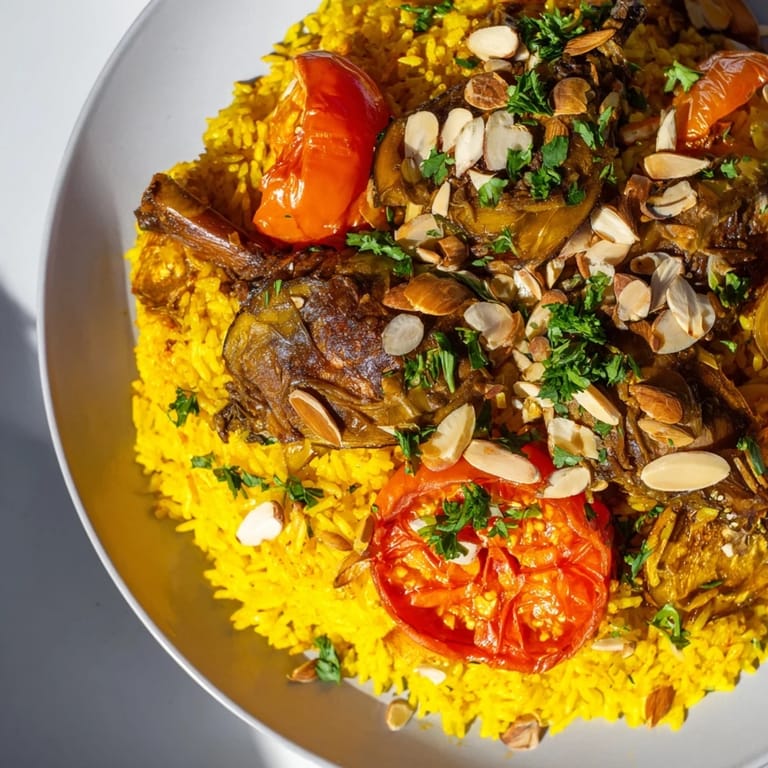
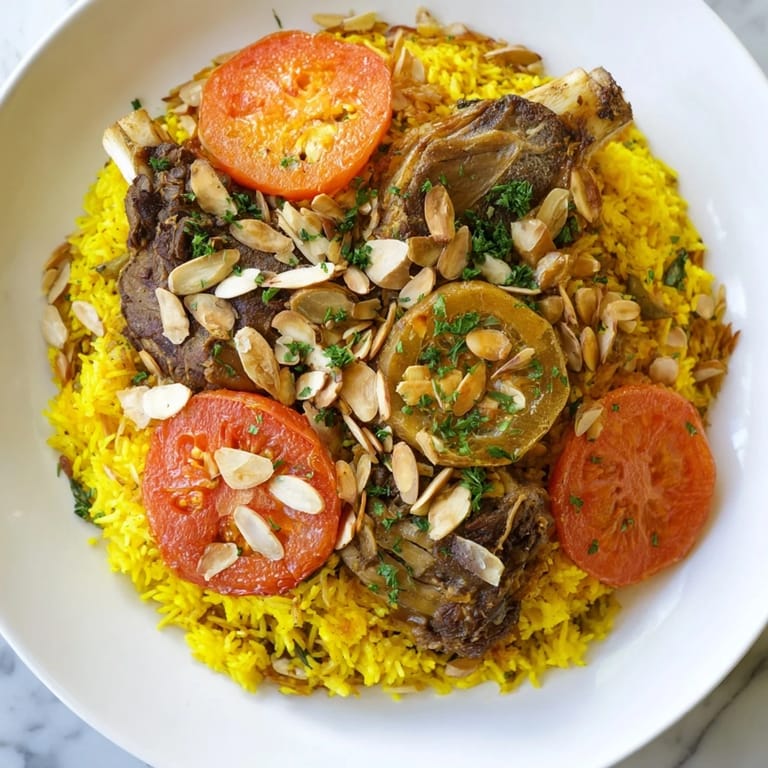
- Take a large, flat serving platter, place it upside down over the pot, and with confidence (and maybe a little prayer), flip the whole thing in one swift motion. Let it sit for a moment before carefully lifting the pot away to reveal your golden, layered dome.
- Finish and serve:
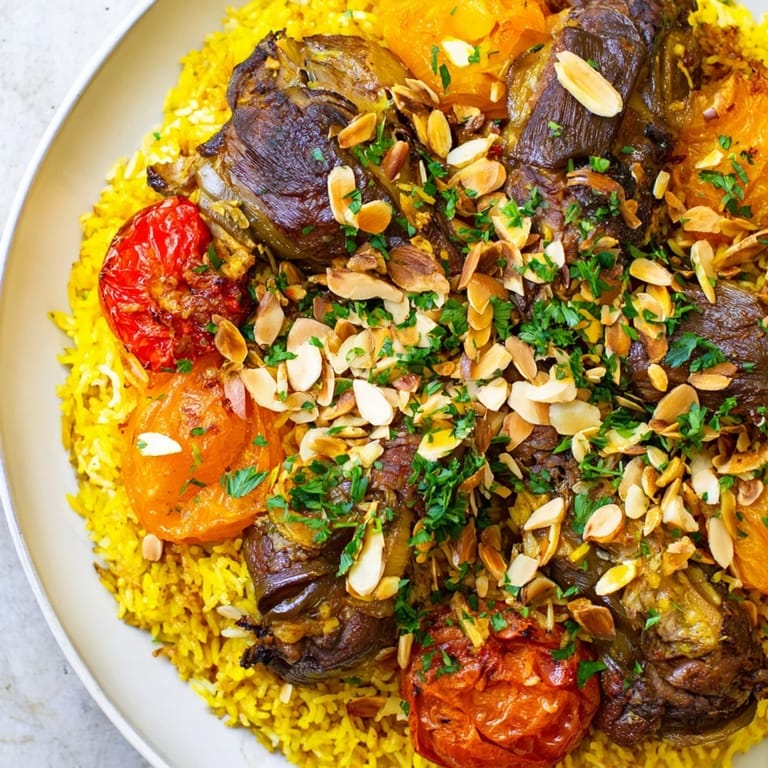
- Scatter toasted nuts and fresh parsley over the top while it's still warm, then bring it to the table with yogurt or a crisp salad on the side.
 Save
Save My cousin once told me that her grandmother made maqluba without fussing over technique—she just layered things in the right order and trusted her instincts. That advice freed me from worrying about perfection and let me focus on the simple pleasure of feeding people something warm and substantial. The dish itself does most of the work; you just have to show up and flip it.
The Art of the Layers
Every time I make this dish, I'm reminded that the order of the layers matters as much as the ingredients themselves. The tomatoes on the bottom aren't just flavor—they're protection, creating a cushion so the rice doesn't stick to the pot. The vegetables roasted separately stay crispy where they touch the heat, then soften in the steam. The meat simmers in the broth long enough to become tender but not so long it falls apart. When you understand why each step happens in sequence, the dish stops feeling like magic and starts feeling like something you can own.
Timing and Temperature
Low heat is your friend here; a pot that's too hot will burn the bottom while the rice on top stays undercooked. I learned this the hard way by trying to rush the cooking process, which resulted in crunchy, bitter rice and a pot I had to scrub for an hour. Now I set a gentle simmer, reduce to the lowest flame, and sometimes even place a heat diffuser under the pot if my stove runs hot. The 35–40 minutes of cooking might feel long, but that slow, even heat is what lets everything cook through without disaster.
Variations and Substitutions
This recipe is flexible enough to welcome creativity while staying true to its roots. Roasted cauliflower works beautifully instead of eggplant if you prefer something lighter, and I've made successful versions with boneless chicken thighs, which cut the total time down significantly. Saffron water instead of turmeric gives a different but equally delicious flavor profile, and some families use ghee in place of vegetable oil for a richer taste. The best version is the one that makes sense for your kitchen and your crowd.
- Cauliflower, zucchini, or even thinly sliced carrots can substitute for eggplant without changing the technique.
- Boneless, skinless chicken thighs reduce cooking time from 30–40 minutes down to 15–20 minutes in the broth.
- A splash of pomegranate molasses stirred into the broth adds brightness that cuts through the richness beautifully.
 Save
Save Maqluba teaches you something important about cooking: sometimes the most impressive dishes come from patience and layering simple things the right way. Make this when you have time to be present, when you want to fill your home with fragrance, and when feeding people feels like an act of care rather than a chore.
Recipe FAQs
- → What type of meat works best for Maqluba?
Bone-in lamb shanks or chicken pieces provide the best flavor and tenderness for this dish. Boneless chicken thighs can be used for quicker prep.
- → How should the vegetables be prepared?
Eggplant and potato slices are brushed with oil and roasted until golden and tender, adding depth and texture to the layered dish.
- → What spices are essential for flavoring?
Black pepper, allspice, cinnamon, turmeric, and cumin create the warm, aromatic profile that defines this dish.
- → Why is the dish inverted after cooking?
Flipping the pot reveals the beautifully layered ingredients, creating an impressive presentation with distinct layers of meat, vegetables, and rice.
- → Can I substitute any vegetables?
Cauliflower florets can replace eggplant for a different flavor and texture while maintaining the dish's essence.
- → How do I keep the layers compact during cooking?
Placing a heatproof lid or plate smaller than the pot on top of the rice before covering helps compress the layers for better presentation.