 Save
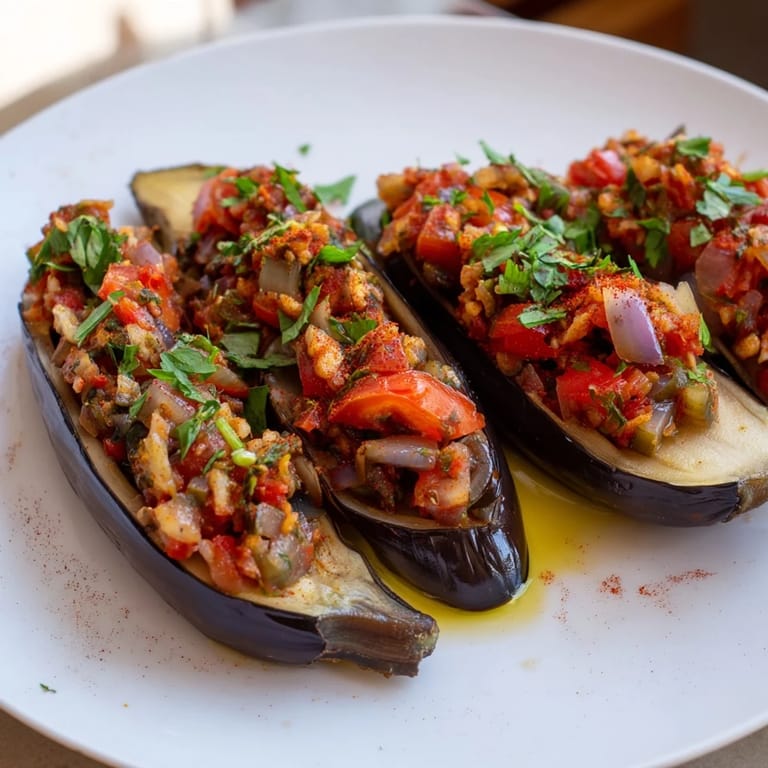
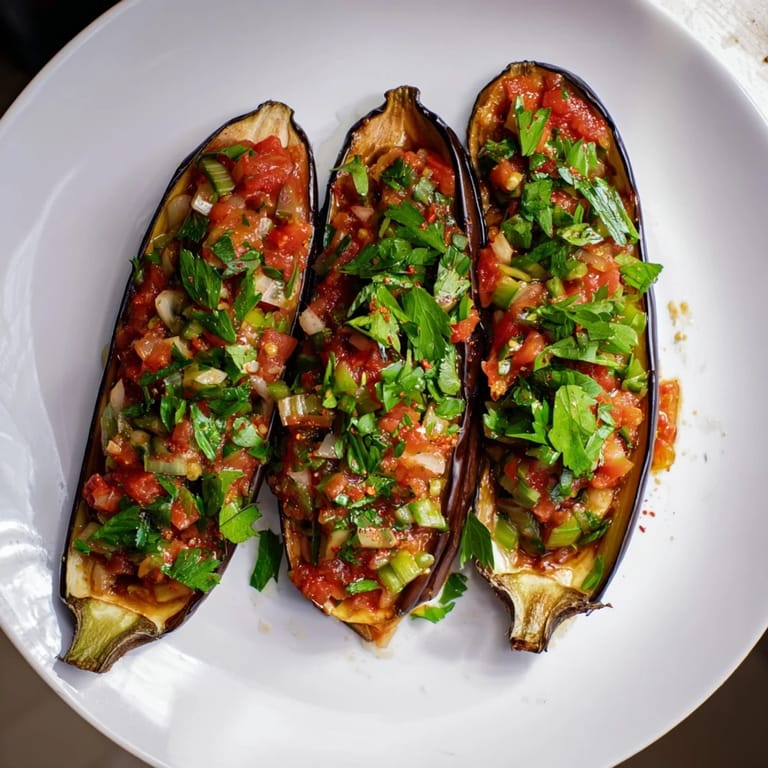
Save The first time I made Imam Bayildi, I was standing in a bustling Istanbul spice market, watching an elderly woman select eggplants with the care of someone choosing gemstones. She explained that the dish's name means the imam fainted—supposedly from sheer delight at its richness. I left determined to recreate that magic, and what emerged from my kitchen was silky, fragrant, and absolutely worth the legend. This Turkish classic has since become my answer to almost every dinner party question: what's vegetarian, elegant, and actually gets better when made ahead?
I served this to a friend who swears by meat and somehow convinced her to try it—she went back for seconds before I'd even finished plating. That moment changed how I thought about cooking for people: great food doesn't announce itself as virtuous; it just tastes undeniably good. Now whenever someone asks what to bring to a potluck, this is my confident answer.
Ingredients
- Eggplants: Medium ones (about 250 g each) cook evenly without becoming watery; they're the canvas for everything else.
- Onions: Three medium, thinly sliced—they melt into sweet submission and build the filling's foundation.
- Tomatoes: Four ripe ones, peeled and diced, give you that fresh acidity that balances the eggplant's richness.
- Garlic: Four cloves, minced, but honestly add more if you love it like I do.
- Green bell peppers: Two seeded and finely chopped, adding a gentle brightness without heat.
- Flat-leaf parsley: A generous bunch, chopped fresh at the end—this isn't optional if you want authentic flavor.
- Extra virgin olive oil: 120 ml total, divided; use something you'd actually taste on bread.
- Water: 120 ml to create a gentle, savory steam while baking.
- Lemon juice: From half a lemon, finishing the dish with a whisper of brightness.
- Sugar: Just 1 teaspoon to gently round out the tomato's edges.
- Sea salt: 1½ teaspoons plus more to taste; this is where your hand matters.
- Black pepper: ½ teaspoon, freshly ground if you can manage it.
- Paprika: Optional, but a teaspoon adds warmth and a hint of smokiness.
Tired of Takeout? 🥡
Get 10 meals you can make faster than delivery arrives. Seriously.
One email. No spam. Unsubscribe anytime.
Instructions
- Heat your oven and prepare the eggplants:
- Set the oven to 180°C (350°F). Wash your eggplants and peel them in alternating lengthwise stripes—this isn't just for looks; it lets them cook more evenly while keeping structure. Cut a careful slit lengthwise down each one, leaving the ends intact like little pockets waiting to be filled.
- Draw out the bitterness:
- Sprinkle the eggplants generously with salt and let them sit for 20 minutes. This old trick pulls out moisture and any lingering harshness, making them sweeter. Rinse and pat them completely dry with paper towels.
- Build the filling base:
- Heat half your olive oil in a large skillet over medium heat and add your sliced onions. Let them soften and turn translucent, about 8 minutes—you're building sweetness here, so don't rush it.
- Add aromatic depth:
- Stir in your minced garlic and chopped bell peppers, cooking for about 3 minutes until fragrant. This is when your kitchen starts smelling like something special.
- Simmer the tomato mixture:
- Add your diced tomatoes along with the sugar, salt, pepper, and paprika if using. Let this simmer for 10 minutes, stirring occasionally, until it thickens slightly and the flavors marry. Taste and adjust seasoning—this filling carries the entire dish.
- Finish with fresh parsley:
- Remove from heat and stir in your chopped parsley. The brightness of fresh herbs will wake up everything.
- Gently fry the eggplants:
- In a clean skillet, heat your remaining olive oil over medium-high heat. Working carefully so you don't break them, fry the eggplants on all sides until lightly browned and starting to soften, about 8 minutes total. They should feel tender when you press them gently.
- Stuff and arrange:
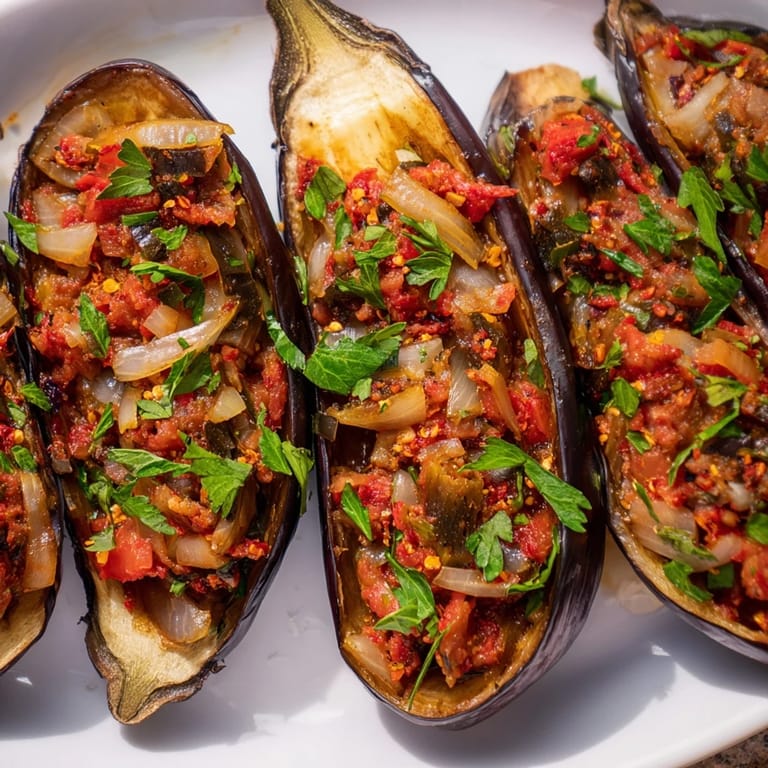
- Place your fried eggplants in a baking dish and carefully open each slit wider. Spoon the tomato-onion filling generously into each eggplant, letting it overflow slightly—this filling is too good to waste.
- Add liquid for braising:
- Drizzle the lemon juice over everything, then carefully pour the water around the eggplants (not on top, so you don't wash away the filling). The liquid will create steam and keep everything moist.
- First bake covered:
- Cover the dish tightly with aluminum foil and bake for 35 minutes. The eggplants should be very tender by now, and the filling will have started to caramelize slightly at the edges.
- Final uncovered bake:
- Remove the foil and bake for another 10–15 minutes until the eggplants are completely tender and the filling is bubbling slightly at the edges. You want a gentle color on the surface, not deep browning.
- Cool before serving:
- Let the dish cool to room temperature—this is actually when the flavors settle and become most balanced. Imam Bayildi isn't meant to be piping hot; that room-temperature serving is tradition for a reason.
 Save
Save I once made this for a dinner where I was nervous about feeding vegetarians alongside everyone else. By the end of the meal, no one was thinking about protein or categories anymore—they were just asking for the recipe and planning to make it again. That's when I understood this dish transcends dietary labels; it's simply delicious.
Why Room Temperature Matters
This dish doesn't follow the typical hot-plate rules. The eggplants' texture stays silkier and the flavors taste fresher when it cools. Serving it warm or at room temperature lets you actually taste each element—the sweetness of the eggplant, the depth of the filling, the brightness of the lemon—instead of everything blending into soft heat. If you do want to serve it warm, that's completely fine; just know you're getting a slightly different experience, more melded and cozy.
Making It Ahead
This is one of those rare dishes that honestly improves when you make it a day or two early. The flavors deepen and settle, the eggplants soak up more of the filling's essence, and everything becomes more cohesive. You can store it covered in the refrigerator for up to 3 days and simply pull it out 30 minutes before serving to bring it back to room temperature, or warm it gently if you prefer.
Variations Worth Trying
Once you've made it the traditional way, you'll start seeing possibilities everywhere. A pinch of cinnamon or allspice in the filling adds a warm spice note that feels both unexpected and right; some cooks add a finely chopped green chili if they want a whisper of heat. I've experimented with adding a small spoonful of pomegranate molasses for tartness, or swapping half the water for vegetable broth for deeper flavor.
- Cinnamon and allspice are optional but create a Middle Eastern warmth that some people find irresistible.
- Fresh green chili added to the filling brings gentle heat without overpowering the dish.
- Pomegranate molasses or a touch of balsamic vinegar deepens the filling's complexity beautifully.
 Save
Save This dish has become my answer to almost every occasion: a quiet dinner alone, feeding friends, impressing skeptics about vegetarian cooking. It asks for patience and care, but rewards you with something genuinely memorable.
Recipe FAQs
- → How do I remove bitterness from eggplants?
Sprinkle sliced eggplants with salt and let them rest for about 20 minutes to draw out excess moisture and bitterness, then rinse and pat dry before cooking.
- → Can I prepare the filling in advance?
Yes, the tomato and onion filling can be made ahead and stored refrigerated; assembling and baking just before serving preserves freshness.
- → What oil is best for baking Imam Bayildi?
Extra virgin olive oil enhances the dish’s flavor and richness while keeping it authentic and healthy.
- → Is it necessary to fry eggplants before baking?
Lightly frying the eggplants softens them and adds depth of flavor, helping them hold their shape during baking.
- → How can I add a spicy kick to Imam Bayildi?
Incorporate chopped green chili into the filling for a subtle, warming heat without overpowering the other flavors.