 Save
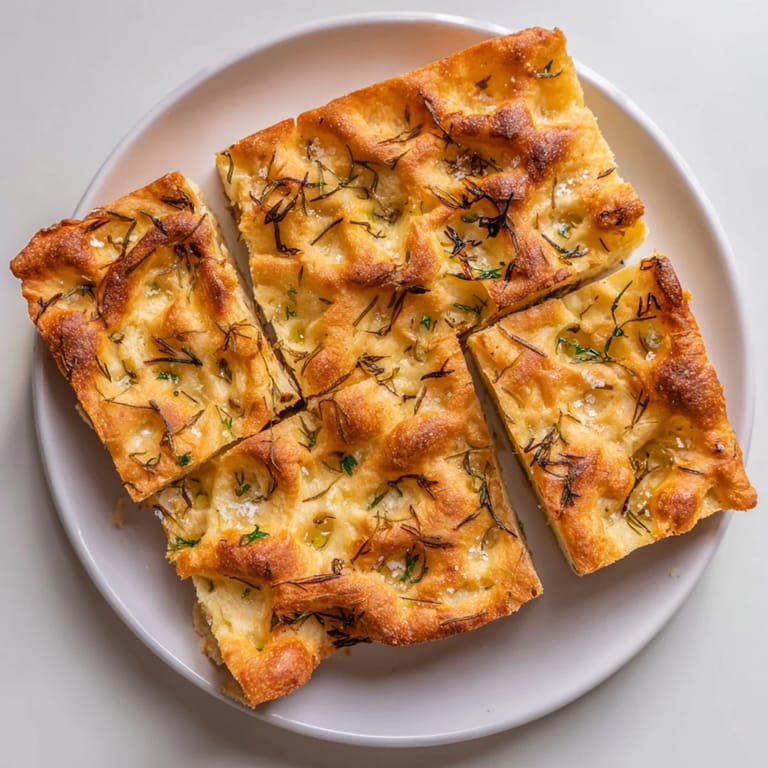
Save I baked my first focaccia on a rainy Sunday when the grocery store had run out of bread. The dough felt impossibly sticky at first, clinging to my fingers like wet sand, but after a few minutes of kneading it turned smooth and alive under my palms. When it came out of the oven, golden and dimpled, the kitchen smelled like a bakery in Genoa. My neighbor knocked on the door just to ask what I was making. We ate half the pan standing at the counter, still warm, with nothing but olive oil for dipping.
I started making focaccia for weekend lunches when friends would stop by unannounced. One time I forgot to set a timer and left it in the oven an extra five minutes while I was on the phone. The edges turned deeply golden, almost caramelized, and everyone said it was the best batch I'd ever made. Now I always bake it a little longer than I think I should. It became our ritual: warm bread, cold wine, and conversations that stretched into the evening.
Ingredients
- Bread flour: Higher protein than all-purpose, it gives focaccia that chewy, airy crumb you want. If you only have all-purpose, it will still work, just a bit softer.
- Instant dry yeast: No need to proof it first. Mix it straight into the flour and let it wake up as the dough comes together.
- Fine sea salt: This goes into the dough for structure. Save the flaky salt for the top where you can actually taste it.
- Extra virgin olive oil: Use the good stuff. It soaks into the dough and crisps the bottom in the oven. You will taste the difference.
- Lukewarm water: Too hot and it kills the yeast. Too cold and nothing happens. Aim for warm bathwater.
- Fresh rosemary: Strip the leaves from the stem and chop them coarsely. Dried rosemary will work, but fresh has that piney brightness.
- Flaky sea salt: The crunchy finish that makes every bite exciting. Regular table salt will just disappear.
Tired of Takeout? 🥡
Get 10 meals you can make faster than delivery arrives. Seriously.
One email. No spam. Unsubscribe anytime.
Instructions
- Mix the dry ingredients:
- Whisk together the flour, yeast, and fine salt in a big bowl so everything is evenly distributed. This way the yeast doesn't clump and the salt doesn't kill it on contact.
- Form the dough:
- Pour in the oil and water, then stir with a wooden spoon until it looks shaggy and sticky. Don't worry if it seems wet; focaccia dough is supposed to be soft and a little messy.
- Knead until smooth:
- Turn it out onto a lightly oiled counter and knead for eight to ten minutes. You'll feel it transform from sticky and rough to smooth and springy under your hands.
- Let it rise:
- Put the dough in an oiled bowl, cover it with a damp towel, and leave it somewhere warm. In about an hour it should puff up to twice its size, soft and full of air.
- Prep the pan:
- Line your baking sheet with parchment and drizzle it with a tablespoon of olive oil. This keeps the bottom from sticking and helps it get crispy.
- Stretch and rest:
- Press the dough gently into the pan with your fingertips, coaxing it toward the edges. Cover it again and let it rest for thirty minutes so it relaxes and fills the pan completely.
- Preheat the oven:
- Set it to 220°C (430°F) while the dough is resting. A hot oven is what gives focaccia that golden crust and airy interior.
- Dimple and season:
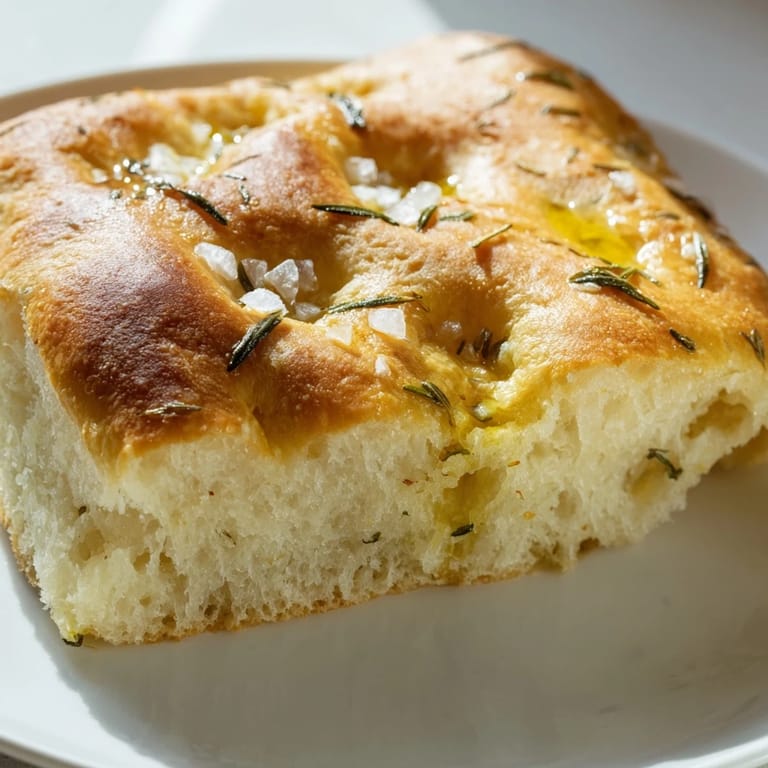
- Press your fingers all over the dough to create deep dimples. Drizzle generously with olive oil, then scatter the rosemary and flaky salt across the top.
- Bake until golden:
- Slide it into the oven and bake for twenty to twenty-five minutes. The top should be golden, the edges crisp, and the smell absolutely irresistible.
- Cool and serve:
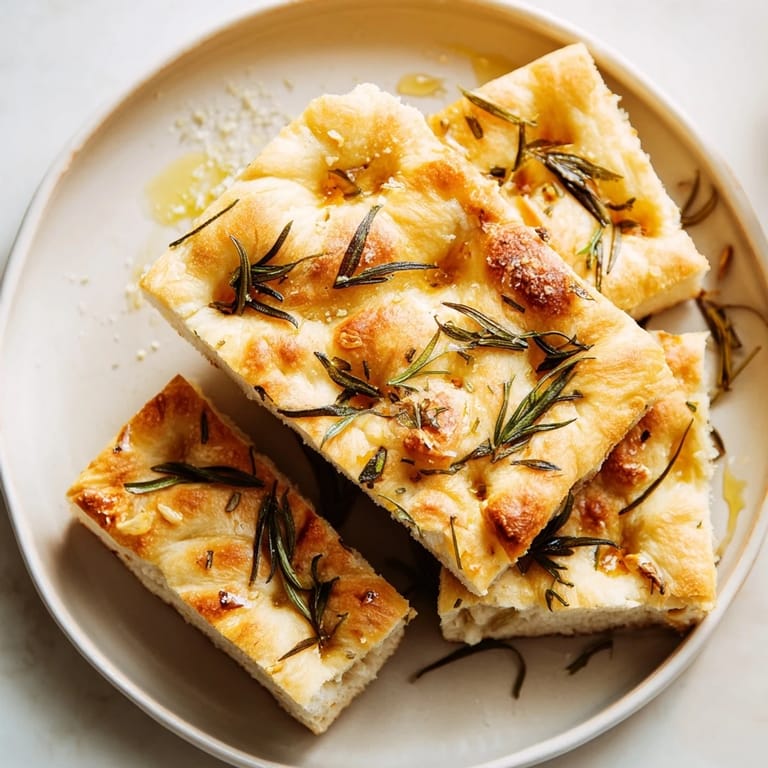
- Let it cool for a few minutes on the pan, then slice it into squares. Serve it warm or at room temperature with more olive oil on the side.
 Save
Save The first time I brought focaccia to a potluck, someone asked if I'd bought it from an Italian bakery. I didn't correct them right away. It felt good to know that something I made with my own hands, in my small kitchen, could taste like it came from somewhere special. That's the magic of this bread. It doesn't need to be perfect to feel like a gift.
What to Do with Leftovers
Focaccia is best the day you bake it, but if you have any left, wrap it in foil and warm it in a low oven for ten minutes. It comes back to life, crisp on the outside and soft in the middle. I've also torn it into chunks and tossed it with olive oil, garlic, and cherry tomatoes for a lazy panzanella. Sometimes I just eat it cold, standing at the counter in the morning with coffee.
Ways to Change It Up
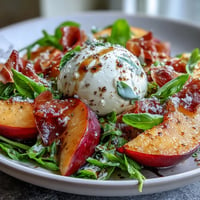
Once you've made this a few times, you'll start seeing focaccia as a blank canvas. I've pressed halved cherry tomatoes into the dough before baking, scattered it with thinly sliced red onion and thyme, and even topped it with grapes and a drizzle of honey for something sweet and savory. My favorite version has sliced olives and a sprinkle of chili flakes. Every time, it works. The dough is that forgiving.
Serving Suggestions
Focaccia shines on its own, but it's even better with company. Serve it alongside soup, especially tomato or minestrone, where you can use it to soak up every last drop. It's perfect with cheese and charcuterie, or as the base for sandwiches filled with mozzarella, prosciutto, and arugula. I've also sliced it horizontally and used it for panini. The dimpled surface grills beautifully and holds onto all the melted cheese.
- Pair it with a simple green salad dressed in lemon and olive oil.
- Use it to mop up pasta sauce or the juices from roasted vegetables.
- Serve it warm with whipped ricotta, a drizzle of honey, and cracked black pepper for an appetizer that disappears in minutes.
 Save
Save There's something deeply satisfying about pulling a pan of focaccia from the oven, hearing the crackle of the crust as it cools, and knowing you made it from scratch. It's the kind of recipe that makes you feel capable, even on days when nothing else goes right.
Recipe FAQs
- → What is the best flour for focaccia?
Bread flour works best due to its higher protein content, which helps develop gluten for a chewy texture.
- → How long should the dough rise?
The dough should rise about 1 hour initially until doubled, then another 30 minutes after shaping to ensure lightness.
- → Can I add other toppings besides rosemary?
Yes, ingredients like halved cherry tomatoes or sliced olives make great additions before baking.
- → What oven temperature is ideal for baking focaccia?
Preheating the oven to 220°C (430°F) helps achieve a golden crust with a soft interior.
- → How should I store leftover focaccia?
Store at room temperature wrapped in foil or plastic for up to two days, or refresh in a warm oven before serving.