 Save
Save Last December, as frost painted my windows with delicate patterns, I found myself craving something light yet comforting after weeks of heavy holiday meals. The kitchen was quiet except for the soft bubbling of broth as I first experimented with this miso ginger soup. Steam rose from the pot carrying the aromatic scent of ginger, immediately clearing my sinuses and lifting my spirits. Something about the simplicity of this soup felt like exactly what my body needed.
I made this soup for my neighbor who had been battling a stubborn cold for weeks. Standing at her door with a steaming container, I watched her face light up at the first spoonful. She called the next morning to say it was the first night she slept through without coughing. Now it has become our unspoken winter ritual, a soup that appears on doorsteps throughout our building whenever someone looks a bit under the weather.
Ingredients
- Miso paste: This fermented soybean paste is the quiet hero of the recipe, providing both gut-friendly probiotics and that deeply satisfying umami foundation that makes you feel like youre eating something much more complex than you actually made.
- Fresh ginger: Dont even think about substituting powdered ginger here, as the fresh root releases oils that create that distinctive warming sensation and respiratory-clearing magic that makes this soup so restorative.
- Shiitake mushrooms: Their meaty texture transforms what could be a thin broth into something substantial, and they absorb the ginger and garlic flavors like little flavor sponges.
- Vegetables: The combination of carrots for sweetness, greens for nutrients, and green onions for brightness creates a balanced bowl that feels intentional rather than like a refrigerator cleanout.
- Sesame seeds: These tiny seeds add a surprising textural element and nutty finish that elevates the soup from medicinal to craveable.
Tired of Takeout? 🥡
Get 10 meals you can make faster than delivery arrives. Seriously.
One email. No spam. Unsubscribe anytime.
Instructions
- Create the aromatic base:
- In a large saucepan, bring your vegetable broth to a gentle simmer over medium heat, then add those thin slices of ginger and garlic. The kitchen will start filling with a fragrance that clears your head almost immediately.
- Infuse the broth:
- Let everything bubble gently for about 10 minutes, allowing the broth to extract all those healing compounds from the ginger and garlic. Your kitchen will smell like a spa by this point.
- Add the hearty vegetables:
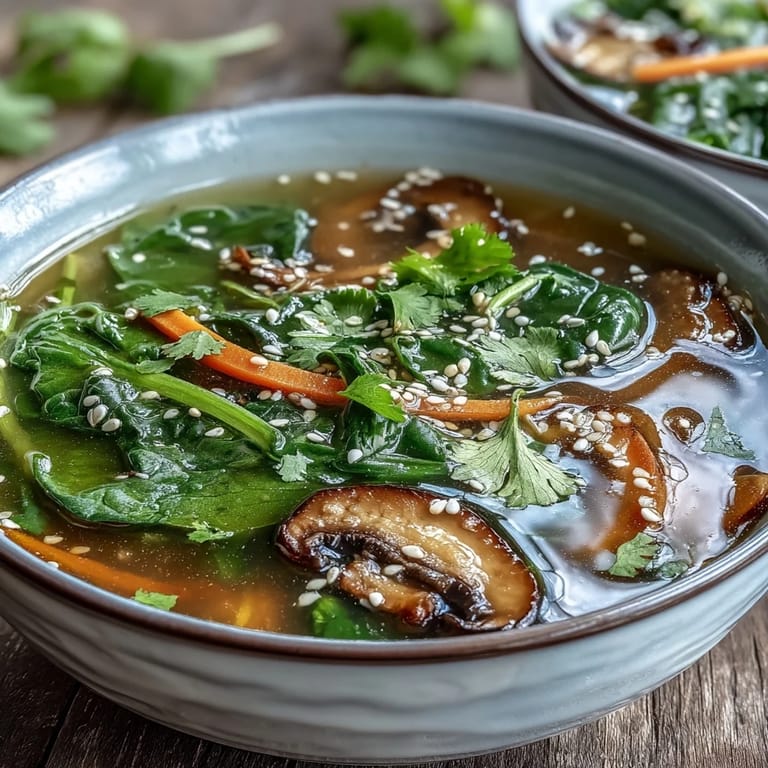
- Drop in your mushrooms and carrots, watching as they slowly sink and begin to soften. The mushrooms will gradually darken as they absorb the golden broth.
- Prepare the miso mixture:
- This step is crucial for preserving those beneficial probiotics. Take a ladleful of hot broth and whisk it with your miso paste in a small bowl until you have a smooth mixture with no lumps.
- Incorporate the miso:
- Lower your heat to prevent boiling, then stir the miso mixture back into the pot. The broth will instantly transform, becoming slightly cloudy and more complex in flavor.
- Add the delicate ingredients:
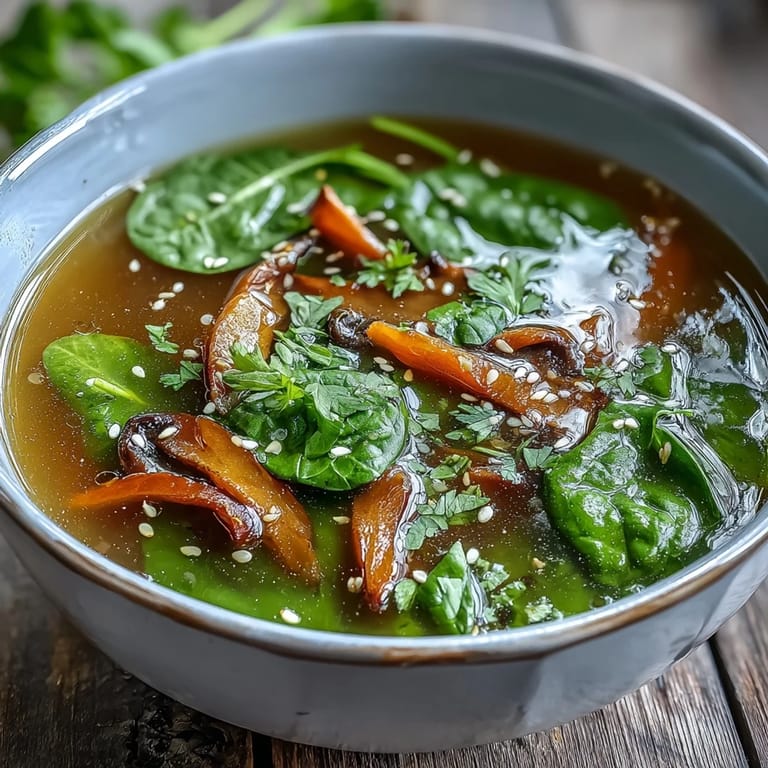
- Gently fold in your spinach or bok choy and green onions, watching as they wilt and turn vibrant green against the golden broth. They need just about a minute to soften while maintaining their nutrients.
- Adjust the seasoning:
- Take a small taste and decide if you need more depth from additional miso or perhaps a tiny splash of soy sauce. Trust your instincts here, as the soup should taste clean but satisfying.
- Serve with intention:
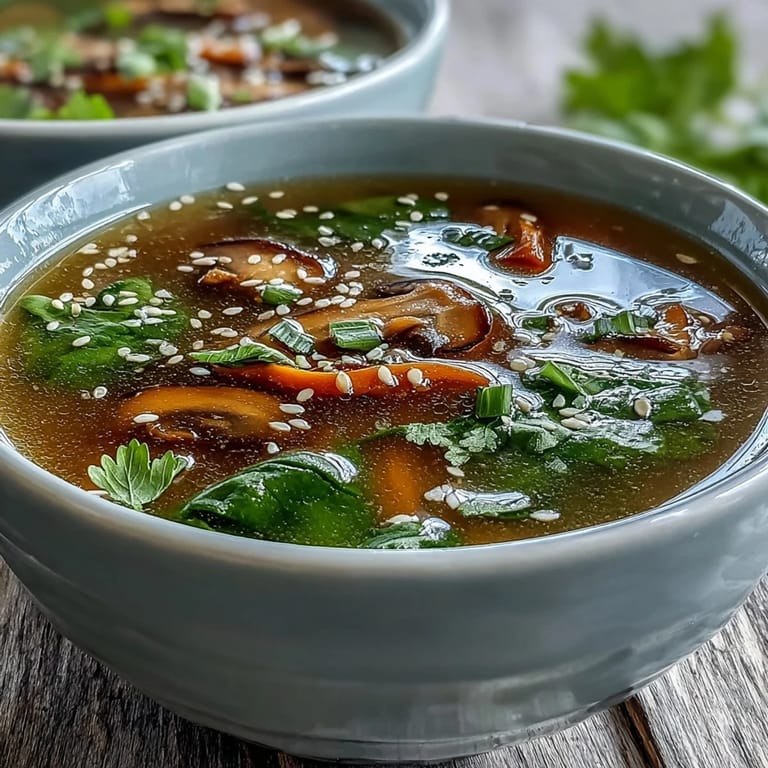
- Ladle the steaming soup into wide bowls and sprinkle with sesame seeds, perhaps adding cilantro and a few drops of chili oil if youre in the mood for brightness and heat. The final presentation should look as nurturing as it tastes.
 Save
Save I remember making this soup during a particularly harsh snowstorm when delivery services were suspended and the roads were impassable. My partner and I sat cross-legged on the living room floor, cradling warm bowls as snow piled against our windows. We didnt talk much, just listened to the wind and occasional clink of spoons against ceramic. That quiet moment of nourishment amid chaos somehow became the benchmark for what comfort food should feel like in our home.
Seasonal Adaptations
While this is fundamentally a winter soup, Ive discovered it morphs beautifully with the seasons. In spring, I add tender asparagus tips and fresh peas. Summer calls for corn kernels and cherry tomatoes that burst with sweetness. Fall brings cubes of kabocha squash that slowly melt into the broth, creating natural thickness. The miso and ginger backbone remains constant, but the soup evolves alongside whats fresh and available, making it a year-round companion.
Making It a Complete Meal
The base recipe offers a light, cleansing experience, but when were truly hungry, I transform it into a full meal. Adding cooked soba noodles creates a more substantial texture, their nutty flavor complementing the umami-rich broth perfectly. Cubed silken tofu adds protein without heaviness, while a soft-boiled egg with its creamy yolk mixing into the broth creates a richness that feels indulgent yet still nourishing. Even my most skeptical dinner guests have been converted by this souped-up version.
Storage and Reheating
This soup develops even deeper flavors overnight as the ginger continues to infuse the broth, making it perfect for batch cooking and weekly meal prep. I often make a double batch and store portions in glass containers, keeping the greens separate until just before eating to preserve their bright color and nutrients.
- If storing for meal prep, wait to add the spinach or bok choy until youre reheating the portion youll eat immediately.
- When reheating, use gentle heat and stop just short of boiling to preserve the miso benefits.
- The soup keeps beautifully in the refrigerator for up to 4 days, though the mushrooms will continue to soften and darken over time.
 Save
Save This miso ginger soup has become my kitchen equivalent of a reassuring hug or a warm blanket. When life feels complicated, theres profound comfort in the simple alchemy of turning humble ingredients into something that nourishes both body and spirit.
Recipe FAQs
- → Can I use different types of miso paste?
White or yellow miso works best for a lighter flavor, but red miso creates a deeper, more intense taste. Avoid using hatcho miso as its strong flavor may overpower the delicate vegetables.
- → Why shouldn't I boil the soup after adding miso?
Boiling destroys the beneficial probiotics in miso paste. Always reduce heat to low and stir gently after incorporating the miso mixture to preserve its health benefits.
- → Can I make this soup ahead of time?
The broth base can be prepared in advance and stored for 2-3 days. Add the miso and fresh greens just before serving to maintain optimal texture and probiotic content.
- → What vegetables work best in this soup?
Shiitake mushrooms, carrots, spinach, and bok choy complement the flavors beautifully. You can also add snap peas, cabbage, or kale based on preference and seasonal availability.
- → How can I add more protein to this soup?
Cubed silken tofu absorbs the miso flavor beautifully while adding plant-based protein. Edamame, cooked chickpeas, or even shredded chicken also work well if you prefer.