 Save
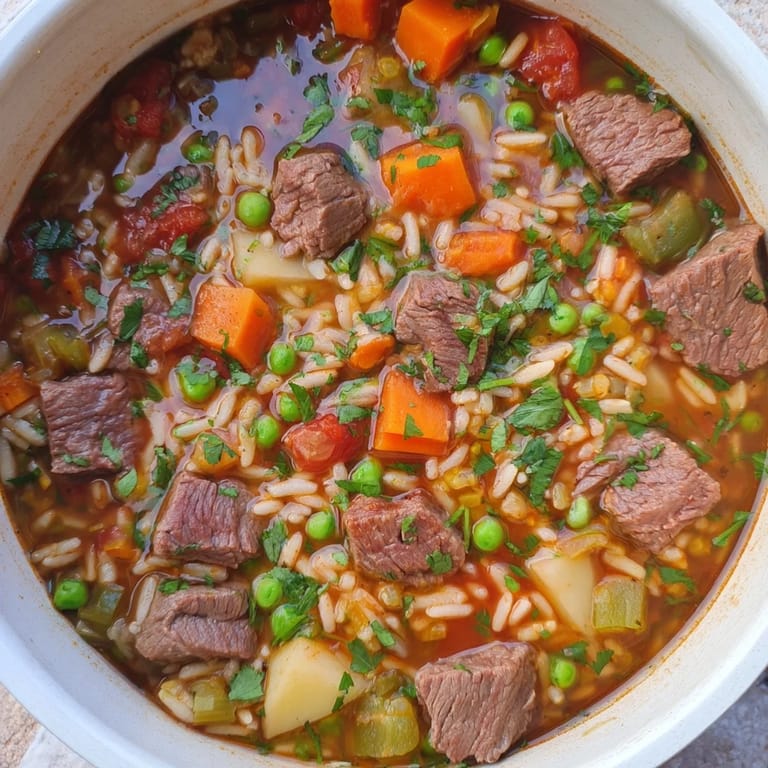
Save I threw this together on a rainy Sunday when the fridge was looking bare and the pantry felt like a challenge. My partner walked in halfway through, sniffed the air, and said it smelled like his grandmother's kitchen. That's when I knew the barley was doing its job—it has this earthy, comforting scent that fills the whole house. The beef browned up beautifully, and I remember thinking I should have made a double batch.
The first time I served this, I had friends over who were supposed to stay for an hour. They ended up camping out at the table for three, scraping their bowls and debating whether seconds were acceptable. One of them texted me the next morning asking for the recipe. I've made it at least a dozen times since, and it never gets old.
Ingredients
- Beef stew meat: Look for chunks with a little marbling—they turn fork-tender after simmering and give the broth serious depth.
- Olive oil: Just enough to get a good sear on the beef, which locks in flavor and creates those caramelized bits on the bottom of the pot.
- Onion: I use a large one because it melts into the soup and adds sweetness that balances the savory broth.
- Carrots: Slice them thick so they hold their shape and give you something hearty to bite into.
- Celery: Adds a subtle crunch and that classic soup base flavor you don't notice until it's missing.
- Garlic: Three cloves might sound like a lot, but they mellow out beautifully and make the whole pot smell incredible.
- Russet potato: It breaks down just a little, thickening the broth naturally without any flour or cream.
- Frozen peas: Toss them in at the end so they stay bright green and pop with freshness.
- Diced tomatoes: The juices add acidity and brightness, cutting through the richness of the beef.
- Pearl barley: Rinse it first to get rid of excess starch, then let it soak up all that beefy goodness.
- Beef broth: Use the best quality you can find—it's the backbone of the soup.
- Water: Loosens everything up and keeps the soup from getting too salty.
- Bay leaves: They add a subtle woodsy note that makes the soup taste like it's been simmering for hours.
- Dried thyme and oregano: These two herbs are magic together and taste like home.
- Black pepper and salt: Season generously, then taste and adjust at the end.
- Fresh parsley: A handful on top makes it look restaurant-worthy and adds a bright, clean finish.
Tired of Takeout? 🥡
Get 10 meals you can make faster than delivery arrives. Seriously.
One email. No spam. Unsubscribe anytime.
Instructions
- Brown the beef:
- Heat the olive oil over medium-high heat until it shimmers, then add the beef in a single layer. Let it sit undisturbed for a couple minutes so it gets a deep golden crust, then flip and brown the other sides. Pull it out and set it aside—those crispy bits stuck to the pot are pure gold.
- Soften the vegetables:
- Toss in the onion, carrots, and celery, and let them cook in the beef drippings until they start to soften and smell sweet. Stir in the garlic and cook just until it releases its fragrance, about a minute.
- Build the soup:
- Add the beef back in along with the potatoes, tomatoes, barley, bay leaves, thyme, oregano, salt, and pepper. Pour in the broth and water, then crank up the heat until everything starts to bubble.
- Simmer low and slow:
- Turn the heat down to low, cover the pot, and let it simmer for about an hour and a half. Stir it every now and then to keep the barley from sticking to the bottom.
- Finish with peas:
- In the last 10 minutes, stir in the frozen peas. Taste the broth and add more salt or pepper if it needs it, then fish out the bay leaves before serving.
- Serve hot:
- Ladle the soup into big bowls and sprinkle fresh parsley over the top. Serve it with crusty bread for dipping.
 Save
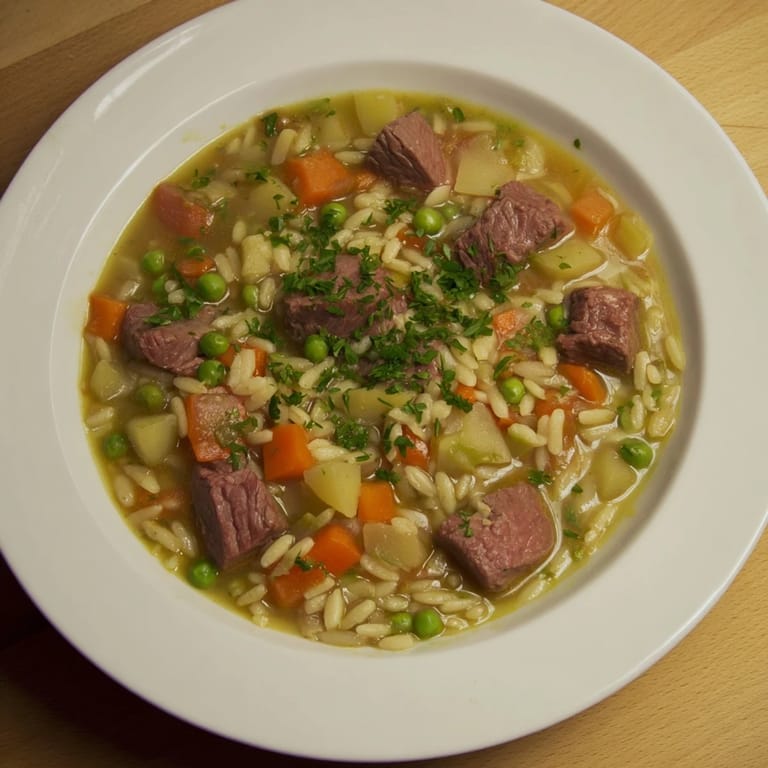
Save There's something about the way this soup fills the kitchen with steam and makes everyone gravitate toward the stove. My kid, who usually picks at dinner, ate two bowls without complaining once. That felt like a small miracle, and I've been chasing that feeling ever since.
Make It Your Own
I've swapped the barley for brown rice when a gluten-free friend came over, and it worked beautifully. You can also add a splash of Worcestershire sauce or a squeeze of lemon at the end for an extra layer of flavor. If you like heat, a pinch of red pepper flakes while the vegetables are cooking does wonders.
Storage and Leftovers
This soup keeps in the fridge for up to three days and freezes like a dream. I portion it into containers and pull one out on nights when I'm too tired to think. Just reheat gently on the stove, adding a little water if it's thickened up overnight.
What to Serve Alongside
I love this with a crusty baguette or a simple green salad dressed with lemon and olive oil. The soup is hearty enough to stand on its own, but the bread is perfect for soaking up every last drop.
- Warm sourdough or whole grain rolls work great too.
- A light arugula salad with shaved Parmesan balances the richness.
- Keep napkins handy because it's the kind of soup you'll want to slurp to the bottom.
 Save
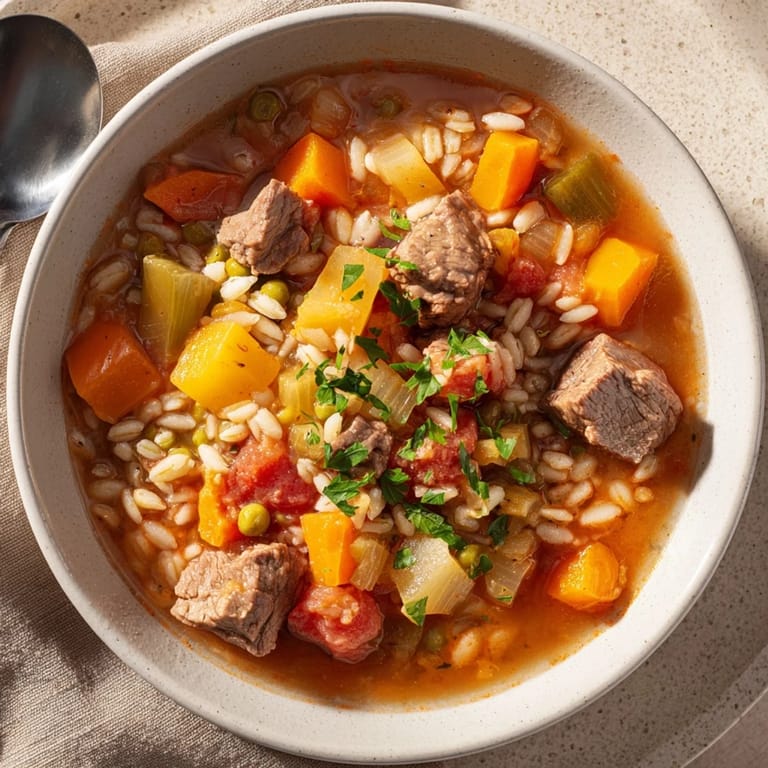
Save This soup has become my go-to when the weather turns cold or when I need to feed a crowd without fuss. I hope it becomes one of those recipes you reach for again and again.
Recipe FAQs
- → What cut of beef works best for this dish?
Beef stew meat cut into 1-inch cubes is ideal as it becomes tender during slow simmering.
- → Can I substitute barley for a gluten-free option?
Yes, brown rice or quinoa can replace barley for a gluten-free alternative without sacrificing texture.
- → When should I add frozen peas during cooking?
Add frozen peas during the last 10 minutes to keep their color and texture vibrant.
- → How can I deepen the flavor of the broth?
A splash of Worcestershire sauce added before simmering enhances the savory depth.
- → What sides pair well with this hearty soup?
Crusty bread or a fresh green salad complement the rich flavors and provide balance.