 Save
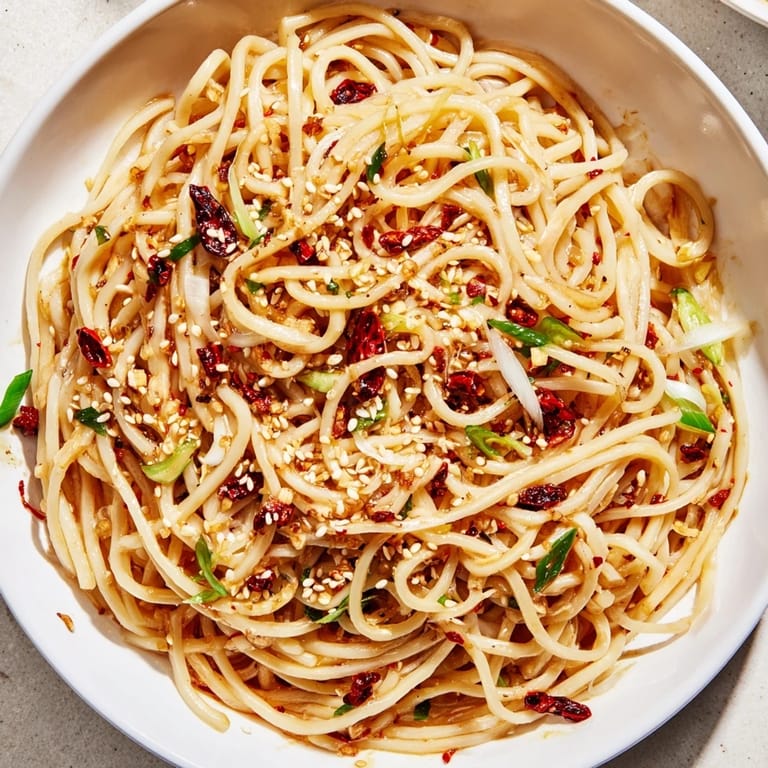
Save There's something about the smell of garlic hitting hot oil that makes you stop whatever you're doing. One weeknight, I had three ingredients in my pantry and twenty minutes before I needed to eat something, so I grabbed some noodles and started that familiar sizzle. What came together was so bold and so simple that I've made it countless times since—it's become the dish I turn to when I want maximum flavor with minimum fuss.
I made this for a friend who claimed they didn't like spicy food, and watching their face change from the first bite to realizing they were already reaching for seconds told me everything. The heat builds gently, the garlic rounds it out, and somehow it doesn't feel aggressive—it feels like a flavor that's been simmering in your mouth the whole time.
Ingredients
- Wheat noodles (200 g): Chewy noodles that hold onto the oil are essential—avoid thin varieties that'll clump together.
- Garlic (4 cloves, finely minced): The fresher and more finely minced, the better it blooms when the hot oil hits it.
- Scallions (2, sliced): White parts go into the chili oil for warmth, green parts finish the dish for brightness and color.
- Toasted sesame seeds (1 tablespoon): These add texture and a nutty depth that anchors all the heat.
- Chili flakes (2½ tablespoons): Sichuan or Korean varieties have the most character; regular red pepper flakes work but feel generic by comparison.
- Sichuan peppercorns (½ teaspoon, optional): These create that numb, tingling sensation that makes the heat feel sophisticated rather than just spicy.
- Ground white pepper (¼ teaspoon): It contributes a sharper, more delicate heat than black pepper.
- Sugar (½ teaspoon): A tiny amount rounds out the heat and prevents the oil from tasting one-dimensional.
- Salt (½ teaspoon): Adjustable based on your soy sauce preference.
- Neutral oil (3 tablespoons): The temperature of this oil matters more than the type—it needs to be hot enough to bloom the spices but not smoking.
- Light soy sauce (1½ tablespoons): The backbone of the sauce, adding umami and saltiness.
- Chinese black vinegar (1 tablespoon): This isn't just acid; it's deep and malty, which regular vinegar can't replicate.
- Dark soy sauce (1 teaspoon, optional): Adds color and a slightly sweeter note if you want the finish to be less bright.
- Toasted sesame oil (½ teaspoon): Use sparingly—it's powerful and should feel like a whisper, not a shout.
Tired of Takeout? 🥡
Get 10 meals you can make faster than delivery arrives. Seriously.
One email. No spam. Unsubscribe anytime.
Instructions
- Boil and drain the noodles:
- Cook them to just tender, then drain into a colander, saving that starchy water—it's going to help the sauce cling to every noodle. Pat them lightly with a paper towel if they're very wet.
- Build your spice base:
- Combine garlic, white scallion parts, chili flakes, peppercorns, white pepper, sugar, salt, and sesame seeds in a heatproof bowl. This is where you're setting up the flavor before the oil arrives to wake it all up.
- Heat the oil carefully:
- Watch for that shimmer across the surface—that's when you know it's ready. You want it hot enough to sizzle when it hits the spices, but not so hot that the garlic burns before it can bloom.
- The bloom moment:
- Pour the hot oil slowly and carefully over the mixture, listening for that satisfying sizzle. It'll smell incredible and look alive as everything starts infusing together.
- Mix the sauce components:
- Whisk light soy sauce, black vinegar, dark soy sauce, and sesame oil together in a large serving bowl, then add the reserved noodle water. This creates the liquid foundation everything else will coat.
- Bring it together:
- Add warm noodles to the sauce bowl, then pour the fragrant chili oil over top. Toss with chopsticks or tongs until every noodle is glistening and evenly colored.
- Finish and serve:
- Scatter the green scallion parts and extra sesame seeds over the top, mix once more, and eat immediately while the heat is still singing.
 Save
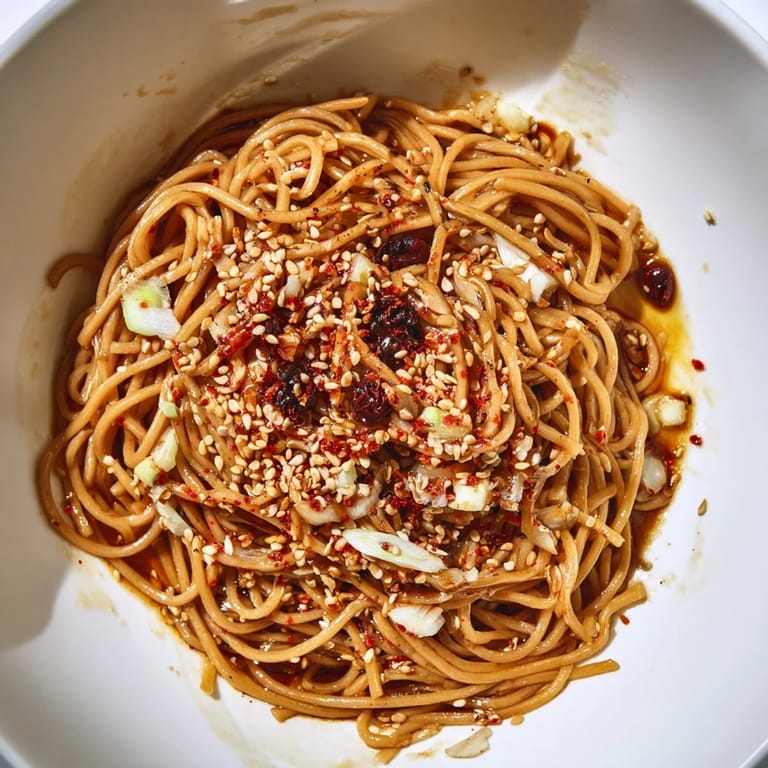
Save The first time I got the oil temperature exactly right, I understood why people become obsessed with building chili oils from scratch. There's a moment of controlled alchemy happening in that bowl, and the payoff is a dish that feels fancy but cost less than a coffee.
Customizing the Heat Level
Start with less chili flakes than you think you need—you can always add more next time, but you can't undo a bowl that's too spicy. If you like real heat, go all 2½ tablespoons or even add a few Sichuan peppercorns if you want that numbing, tingling sensation that lingers pleasantly. For milder palates, try 1½ tablespoons of chili flakes with no peppercorns, and the heat becomes more of a warm background note than a main character.
Making It a Full Meal
These noodles are satisfying on their own, but they also play well with others. Sauté some bok choy or broccoli while the noodles cook and fold it in at the end for vegetables and texture, or crumble some crispy tofu into the bowl for protein without weighing anything down. Even shredded rotisserie chicken works if you want something heartier—the chili oil doesn't care, it'll make whatever you add taste better.
Pairing and Storage Tips
Serve this with something cold and crisp—a beer, a ginger ale, or jasmine tea if you want to soothe the heat while letting the flavors keep talking. Leftovers will keep in an airtight container for two days, and they're actually better as the flavors meld together, though you might need to add a splash of extra sesame oil to bring back the glossy finish.
- Make a double batch of the chili oil and keep it in a jar for drizzling over eggs, soup, or avocado toast all week.
- If the noodles seem dry the next day, toss with a teaspoon more sesame oil and a splash of warm water.
- Swap in whatever noodles you have—ramen, udon, even spaghetti works if wheat noodles aren't around.
 Save
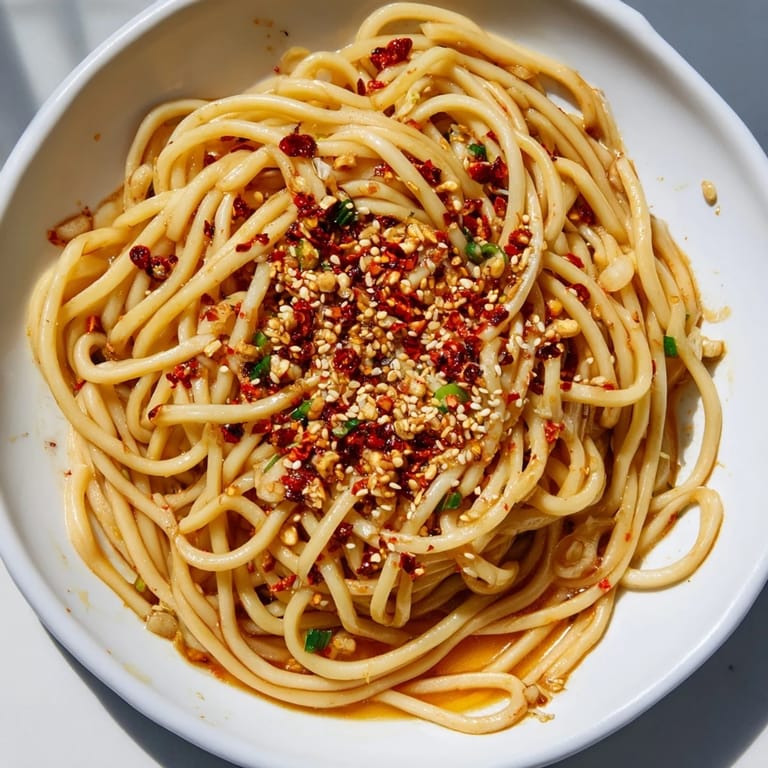
Save This dish reminds me that some of the best meals come from working with what you have and trusting that simplicity and heat can say everything worth saying. Make it, taste it, adjust it to yourself.
Recipe FAQs
- → What type of noodles works best?
Wheat noodles such as Chinese wheat noodles or linguine are ideal for their chewy texture and ability to hold the sauce well.
- → Can I adjust the spiciness level?
Yes, modify the amount of chili flakes to increase or decrease heat according to preference.
- → How to make the chili oil fragrant?
Pour heated neutral oil over garlic, scallions, and chili flakes to release their aroma and flavors effectively.
- → Are there alternative proteins to add?
Sautéed vegetables, tofu, or shredded chicken can be added to enrich the dish with extra protein.
- → What beverage pairs well with this dish?
A cold, crisp beer or jasmine tea complements the spicy and aromatic notes perfectly.