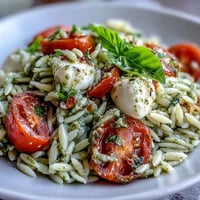
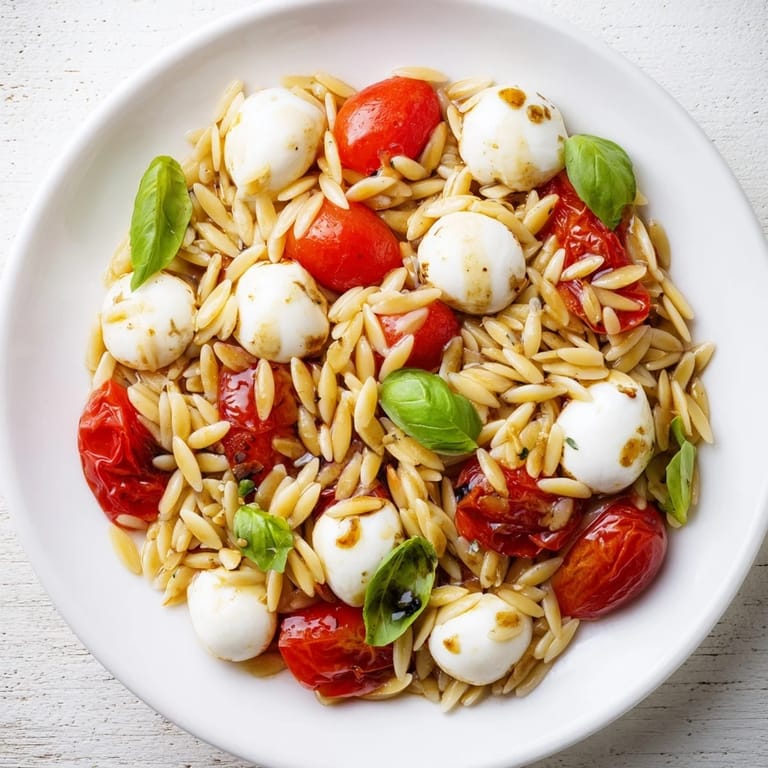
 Save
Save There's something about the first warm day of the season that makes me want to abandon the stove entirely. A few summers ago, I was invited to a potluck at a friend's backyard, and I realized I had maybe an hour to put something together. I opened the fridge, found a handful of cherry tomatoes starting to glow that deep red, remembered the fresh mozzarella I'd picked up at the market, and suddenly this salad came together in my head. It was the kind of dish that felt effortless but tasted like I'd been planning it for days.
I've made this salad countless times now, but I remember one afternoon in particular when my neighbor stopped by just as I was tossing it together. The smell of fresh basil had drifted over her fence, and she admitted she'd been following her nose. We ended up sitting on my porch with bowls of this salad, cold wine sweating in our glasses, and we didn't say much—we just ate and watched the light change across the garden. That's when I knew this recipe was special.
Ingredients
- Orzo pasta: Look for a good quality bronze-cut orzo if you can find it—it has a slightly rougher texture that holds the dressing beautifully instead of sliding right off.
- Cherry tomatoes: Choose ones that still smell sweet and give slightly when you squeeze them gently; the flavor difference is everything.
- Fresh mozzarella balls: These delicate little spheres are meant to be halved and scattered, not chopped into submission; handle them gently and they'll reward you with creamy pockets throughout.
- Fresh basil: Tear it by hand rather than cutting with a knife—there's real truth to this one, as bruised basil turns dark and bitter, while torn leaves stay bright and aromatic.
- Extra-virgin olive oil: This isn't the time to save money; a good, fruity olive oil makes the dressing taste like you actually know what you're doing.
- Balsamic vinegar: Real balsamic is syrupy and complex, but honestly, the regular stuff works fine here—just avoid anything labeled 'balsamic condiment' which is basically sweetened vinegar.
- Dijon mustard: Just a teaspoon acts as an emulsifier, helping the oil and vinegar actually hold together instead of separating into two lonely layers.
- Garlic: One small clove minced fine; too much and it bullies all the other subtle flavors right off the plate.
Tired of Takeout? 🥡
Get 10 meals you can make faster than delivery arrives. Seriously.
One email. No spam. Unsubscribe anytime.
Instructions
- Boil the orzo until just tender:
- Get your water salty—it should taste like the sea—then add the orzo and watch it carefully as it cooks. You want it soft enough to eat easily but still with a tiny bit of resistance when you bite into it, which usually takes about 8 to 10 minutes depending on your brand.
- Cool it down properly:
- After draining, run it under cold water while stirring gently with your fingers to stop the cooking and break up any clumps. This is the moment where people often skip a step, but warm orzo will wilt your mozzarella, so don't rush it.
- Build the salad base:
- Combine the cooled orzo with tomatoes, mozzarella, and basil in a large bowl, being gentle enough that you're not squishing anything. At this point, it's just components waiting to become something better.
- Make the dressing:
- Whisk the olive oil, balsamic vinegar, mustard, minced garlic, salt, and pepper together in a small bowl or jar until the mixture looks slightly thicker and emulsified—about 30 seconds of actual whisking. If you're using a jar, just cap it and shake vigorously for a few seconds; this works just as well and feels more casual.
- Bring it all together:
- Pour the dressing over the salad and toss gently, using a wooden spoon and letting your hand guide it through rather than aggressively flipping. A light touch here keeps everything intact instead of turning your beautiful components into mush.
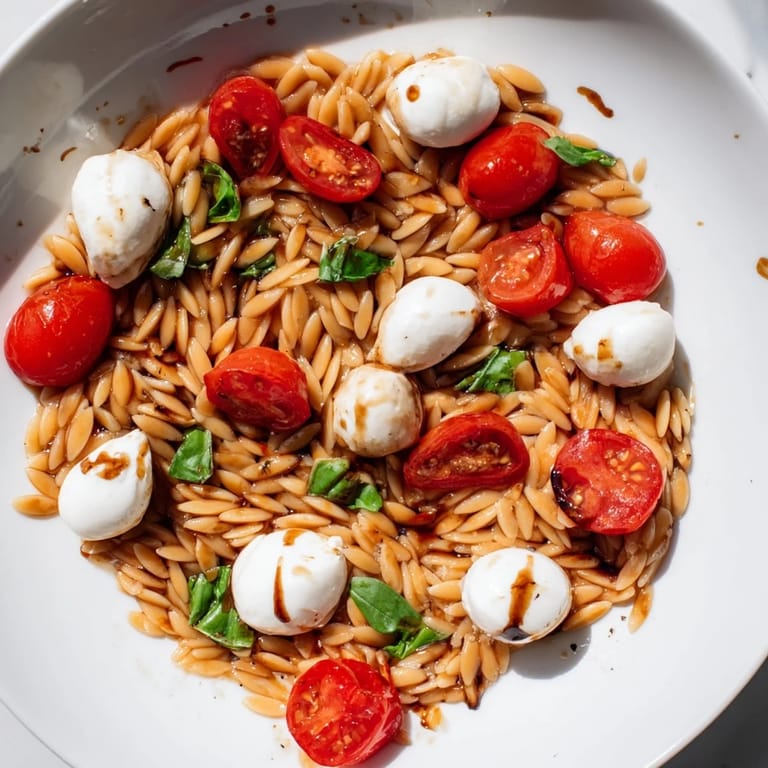 Save
Save One evening, I made this for a dinner party and set it out as people arrived, thinking I'd plate it later. Instead, everyone just kept coming back to it throughout the night, and it disappeared in a way that made me feel oddly proud of something so simple. That's when I realized that good food doesn't need to be complicated—it just needs to be honest.
Why Orzo Works Better Than You'd Expect
Orzo is one of those pastas that people overlook, assuming it's just tiny versions of the long stuff, but it actually behaves differently in a salad. Because of its small size and slightly curved shape, it holds onto dressing in a way that spaghetti or penne never could, coating evenly without getting weighed down. The pasta also cools quickly and completely, which means you can actually finish this salad in the time you said you would instead of waiting for something to cool on the counter.
The Art of Timing
Caprese is all about balance—warm against cool, soft against firm, salty against sweet—and the moment you dress it, the clock starts ticking on how long those contrasts stay interesting. I've learned that making it 30 minutes before you serve it is the perfect window; it's cold enough to taste refreshing but the flavors have had time to actually introduce themselves. If you're making it for a potluck or gathering, the salad will hold beautifully for a few hours before it starts looking tired.
Customizing Your Way
The skeleton of this recipe is solid, but it's also forgiving enough that you can bend it toward your own tastes without breaking anything. I've added everything from crispy pancetta to toasted pine nuts, scattered arugula like confetti, or drizzled the whole thing with aged balsamic glaze just before serving. The basil is the only thing I wouldn't mess with—it's the soul of this dish and it needs to stay bright and unquestioned.
- Keep your add-ins light and let each one earn its place on the plate instead of piling on toppings until it stops looking like salad.
- If you want to make this heartier, a handful of grilled chicken breast torn into pieces turns it into a lunch that actually sticks with you.
- Chill your serving bowl before adding the salad and it'll stay fresh and crisp even on the hottest day.
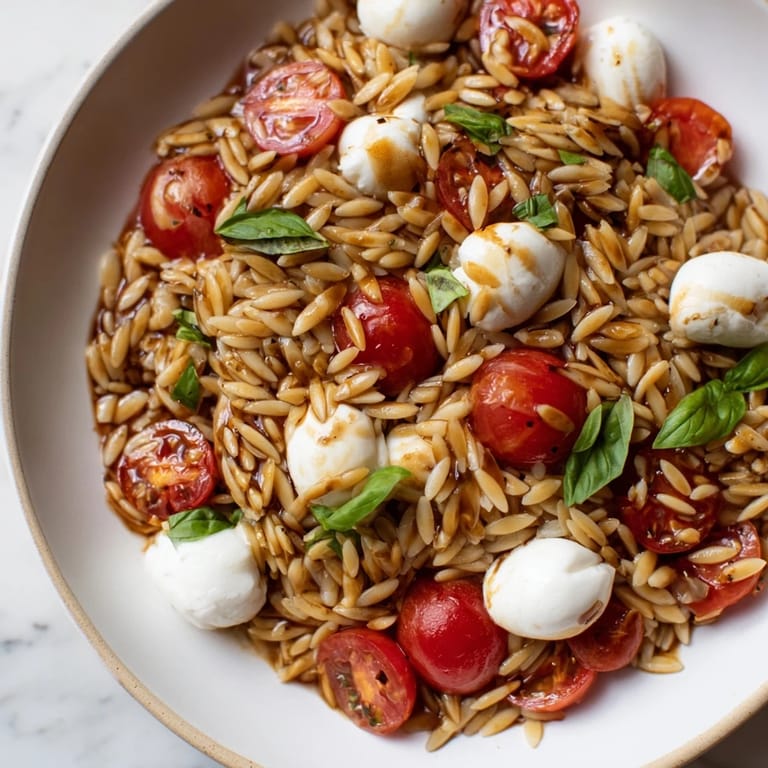 Save
Save This salad has become my answer to almost every warm-weather gathering, and I've never had someone come back asking for seconds of something they weren't looking for. It's proof that you don't need a long list of ingredients or fancy techniques to make something people actually want to eat.
Recipe FAQs
- → How do I cook orzo perfectly for this salad?
Boil salted water and cook the orzo until al dente, about 8–10 minutes. Drain and rinse with cold water to stop cooking and cool the pasta for mixing.
- → Can I prepare this dish ahead of time?
Yes, chilling the salad for 30 minutes enhances the flavors. Keep it covered in the fridge and toss gently before serving.
- → What can I use instead of fresh mozzarella balls?
Diced fresh mozzarella works well as a substitute, maintaining the creamy texture and mild flavor.
- → How can I add extra flavor or texture?
Adding arugula or toasted pine nuts provides additional freshness and crunch, complementing the main ingredients.
- → What type of vinegar is best for the dressing?
Balsamic vinegar gives a tangy sweetness that balances the olive oil and mustard, enhancing the overall taste.