 Save
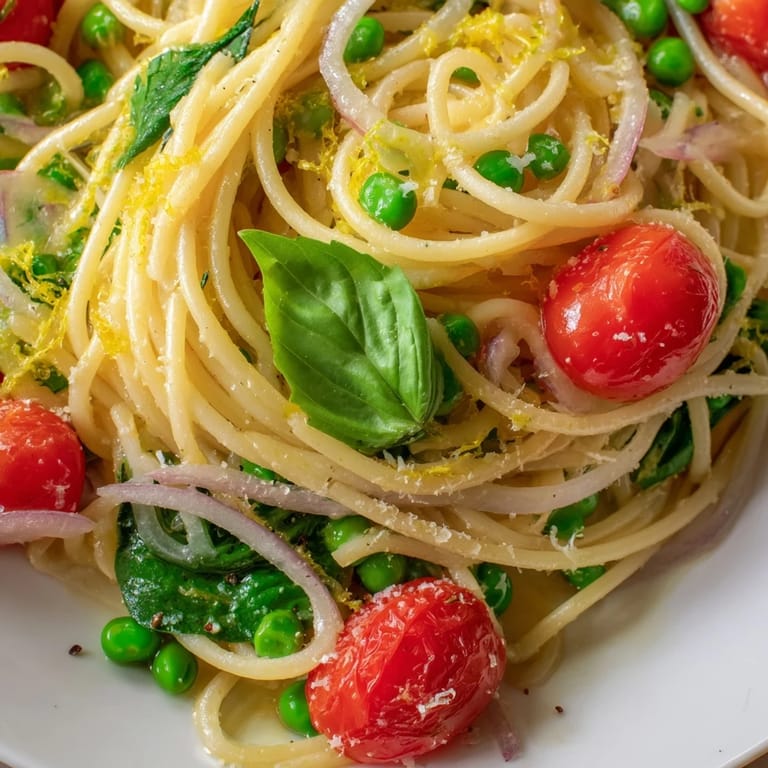
Save The first time I made this one-pot pasta, I was genuinely skeptical about tossing everything in together. But watching the spaghetti transform in that bubbling broth, absorbing all those bright spring flavors, completely changed my mind about weeknight cooking. My kitchen filled with the most incredible aroma of garlic and tomatoes, and I found myself literally leaning over the pot, inhaling deeply. It was one of those rare moments when something incredibly simple tasted absolutely extraordinary.
Last spring, my sister dropped by unexpectedly on a Tuesday evening when I had zero energy to cook. I threw this together in twenty minutes while we caught up about her new job, and she literally stopped mid-sentence after her first bite to ask what kind of magic happened in that pot. Now she requests it every time she visits, and Ive stopped apologizing for how effortless it is.
Ingredients
- Dried spaghetti: The pasta releases starch into the broth, creating a natural creamy sauce that clings perfectly
- Vegetable broth: Use a high-quality broth since it reduces down and becomes the base of your sauce
- Cherry tomatoes: They burst during cooking, releasing sweet juices that balance the savory elements
- Baby spinach: Add it toward the end so it wilts just enough without becoming mushy
- Fresh or frozen peas: They add little bursts of sweetness that make every bite interesting
- Red onion and garlic: Thinly sliced so they soften quickly and distribute flavor evenly
- Lemon zest: This bright, floral finish is what makes the whole dish sing
Tired of Takeout? 🥡
Get 10 meals you can make faster than delivery arrives. Seriously.
One email. No spam. Unsubscribe anytime.
Instructions
- Build your flavor base:
- Heat the olive oil in your largest pot over medium heat, then add the sliced garlic and red onion. Let them sizzle gently for 2-3 minutes until theyre fragrant and starting to turn translucent, but not browned.
- Add everything but the garnish:
- Toss in the spaghetti, peas, spinach, and cherry tomatoes, then pour in the vegetable broth. The liquid should almost cover the pasta. Bring it to a rolling boil, then season with salt, pepper, and those red pepper flakes if you like a little warmth.
- Let it work its magic:
- Cook uncovered for about 10-12 minutes, stirring every couple of minutes to keep the pasta from sticking. Youll watch the broth thicken and the tomatoes collapse into the sauce. The pasta is done when its al dente and most of the liquid has been absorbed into a glossy coating.
- Finish with brightness:
- Remove from heat and stir in the lemon zest, letting its oils perfume the entire dish. Let it rest for just a minute before serving so the sauce settles.
- Serve it up:
- Divide among warm bowls and shower generously with grated Parmesan and fresh basil leaves. The residual heat will slightly melt the cheese and release the basils aroma.
 Save
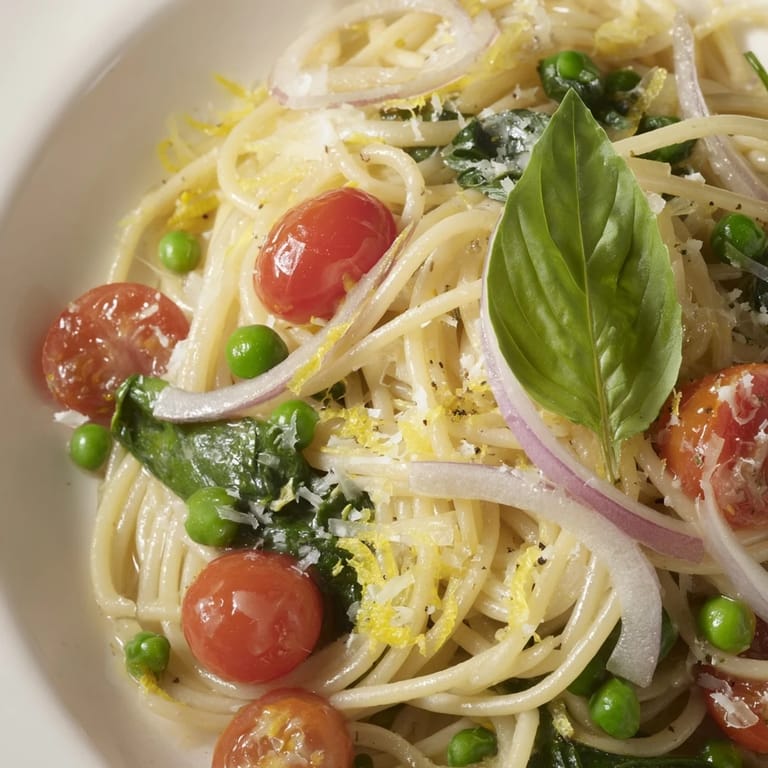
Save This pasta became my go-to for those nights when I want something nourishing but absolutely cannot face doing dishes. Theres something deeply satisfying about watching a handful of fresh vegetables transform into something so comforting.
Making It Your Own
Sometimes I swap the spinach for arugula when I want a peppery kick, or add dollops of ricotta right before serving for extra creaminess. The beauty of this dish is how forgiving it is with substitutions.
Perfecting the Technique
The key is stirring frequently during the first few minutes of cooking, before the starches release. Once you see the broth start to thicken and turn cloudy, you can step back and let it do its thing.
Serving Suggestions
A crisp white wine like Sauvignon Blanc cuts through the richness beautifully, and a simple green salad with a vinaigrette balances the meal. Crusty bread is never a bad idea for soaking up any remaining sauce.
- Let the pasta rest for 2-3 minutes before serving to let the sauce cling properly
- Grate extra Parmesan at the table for those who love it cheesy
- Sprinkle the basil leaves right before eating so they stay bright and fresh
 Save
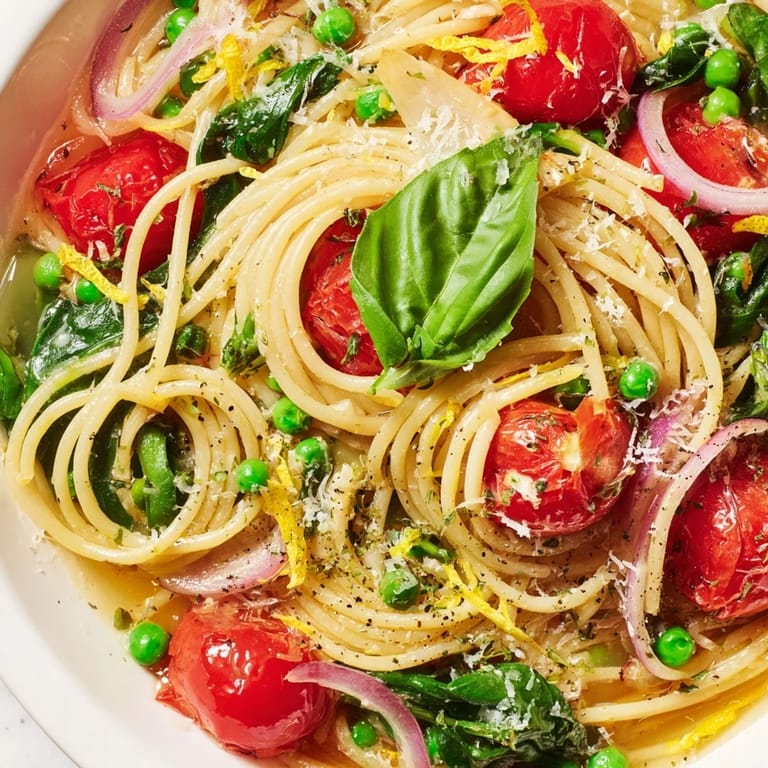
Save There is something so honest about a dish that lets simple vegetables shine. Every bowl reminds me that good food does not need to be complicated.
Recipe FAQs
- → Can I use fresh vegetables instead of frozen peas?
Yes, fresh vegetables work beautifully. Use fresh shelled peas or substitute with other spring vegetables like asparagus or snap peas, adjusting cooking time slightly if using firmer vegetables.
- → How do I prevent the pasta from sticking together?
Stir occasionally throughout cooking, especially during the first few minutes. The consistent stirring helps break down starch and prevents clumping while distributing vegetables evenly.
- → What can I add for extra protein?
A drained can of chickpeas works wonderfully, as suggested in the notes. White beans, lentils, or crumbled tofu are excellent plant-based options that complement the spring vegetables.
- → Is this dish suitable for meal prep?
Yes, this one-pot pasta stores well in the refrigerator for up to three days. Reheat gently with a splash of vegetable broth to restore moisture, then add fresh basil and Parmesan before serving.
- → How do I make this gluten-free or dairy-free?
Swap regular spaghetti for gluten-free pasta and use vegan cheese or nutritional yeast instead of Parmesan. Always check product labels for allergens and follow package instructions for cooking times.
- → Can I double this for a larger crowd?
Absolutely. Double all ingredients and use a larger pot. You may need to add a few extra minutes to cooking time to ensure the pasta cooks through and liquid reduces properly.