 Save
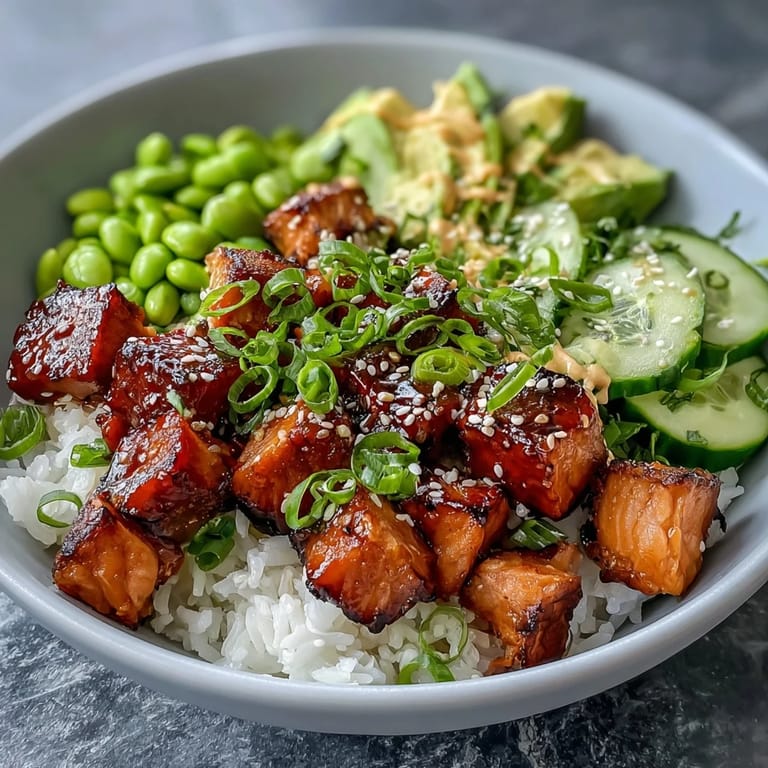
Save I stumbled onto this salmon rice bowl during a lazy Sunday afternoon when my fridge had exactly three things going for it: a beautiful salmon fillet, jasmine rice, and an almost-empty jar of sriracha mayo. What started as making do with what I had turned into something so vibrant and satisfying that I've made it at least once a week since. The magic isn't in complexity—it's in how the warm, silky salmon contrasts with cool cucumber and creamy avocado, all tied together by that spicy-tangy drizzle that makes you reach for another bite before you've even finished the first.
I made this for my sister when she was visiting and claimed she was too tired to cook after a long drive. She sat at my kitchen counter, and within twenty minutes, she was leaning over her bowl with this look of surprise on her face—the kind you get when something simple turns out to be genuinely delicious. She's since made it three times and texted me photos of her variations, which somehow means more than any compliment could.
Ingredients
- Salmon fillet, skinless, cut into 2 cm cubes (500 g or 1.1 lb): Look for salmon with firm, bright flesh and ask your fishmonger to cut it into even cubes if you're not confident with your knife skills—consistency in size means even cooking.
- Soy sauce (2 tbsp): This is your umami anchor, so don't skimp on quality; good soy sauce tastes deep and complex rather than just salty.
- Sesame oil (1 tbsp): Use toasted sesame oil for that nutty depth—it's what makes people ask what you did to make it taste so good.
- Honey (1 tbsp): This rounds out the marinade with subtle sweetness and helps the salmon caramelize beautifully in the oven.
- Rice vinegar (1 tsp): The acid brightens everything and prevents the marinade from tasting one-dimensional.
- Garlic, minced (1 clove): Fresh garlic, always—the minced stuff from a jar just won't carry the same punch.
- Ginger, grated fresh (1 tsp): Use a microplane if you have one; it releases more of that sharp, peppery bite than a box grater.
- Jasmine rice (2 cups): This fragrant rice is the quiet hero that absorbs all those flavors dripping down from your toppings.
- Water (2½ cups): The ratio matters here—too much water and your rice turns mushy, too little and it stays crunchy.
- Salt (½ tsp): Season your rice water generously; you're flavoring the rice from the inside out.
- Edamame, cooked and shelled (1 cup): Buy them frozen and thawed, or fresh if you can find them—they add protein and a pop of green that makes the bowl feel abundant.
- Cucumber, medium, sliced (1): The coolness and crunch are essential to this dish, so don't skip it or replace it with something softer.
- Avocado, large, sliced (1): Add this right before serving or it'll brown; a squeeze of lime juice on the cut surface buys you a few extra minutes.
- Sesame seeds, toasted (2 tsp): Toast them yourself in a dry pan if you can—they taste infinitely better than the pre-toasted ones that have been sitting in a container for months.
- Green onions, thinly sliced (2, optional): They add a mild onion bite and freshness, but if you don't have them, the bowl is still wonderful without.
- Mayonnaise (⅓ cup): Use a good-quality mayo because you're going to taste it—cheap mayo tastes like regret in a spoonful.
- Sriracha sauce (1–2 tbsp, to taste): Start with 1 tablespoon and taste as you go; sriracha heat varies wildly between brands.
- Lime juice (1 tsp): Fresh lime, squeezed right in—bottled lime juice tastes tinny by comparison.
Tired of Takeout? 🥡
Get 10 meals you can make faster than delivery arrives. Seriously.
One email. No spam. Unsubscribe anytime.
Instructions
- Heat your oven and prepare your workspace:
- Preheat your oven to 200°C (400°F) and line a baking tray with parchment paper so your salmon doesn't stick. This small step saves you from scrubbing burnt-on fish later.
- Build the marinade and coat your salmon:
- Whisk soy sauce, sesame oil, honey, rice vinegar, minced garlic, and grated ginger together in a medium bowl until the honey dissolves. The mixture should smell deeply savory and slightly sweet—that's how you know the balance is right. Add your salmon cubes and gently fold them until everything is coated, then let them sit for 10 to 15 minutes while you handle the rice.
- Rinse and cook the jasmine rice:
- Hold your rice in a fine-mesh strainer and rinse it under cold running water, swirling it with your fingers until the water runs clear—this removes excess starch so your rice stays fluffy instead of turning gluey. Combine the rinsed rice, water, and salt in a saucepan, bring to a boil over high heat, then immediately reduce to low, cover with a lid, and let it steam for 12 to 15 minutes without peeking. When the time is up, fluff it gently with a fork, and you'll hear a soft crackle as the steam releases.
- Bake the salmon until caramelized:
- Spread your marinated salmon cubes in a single layer on the prepared tray—don't crowd them or they'll steam instead of bake. Slide the tray into the oven and bake for 10 to 12 minutes until the edges are slightly golden and the center is just cooked through; if you cut into the thickest piece, it should look barely opaque, still slightly translucent in the very middle.
- Mix the sriracha mayo:
- While the salmon bakes, combine mayonnaise, sriracha sauce (start with 1 tablespoon), and lime juice in a small bowl and whisk until smooth and evenly colored. Taste it and add more sriracha if you want more heat—this is your moment to customize it exactly how you like it.
- Assemble your bowls with intention:
- Divide the fluffy jasmine rice among four bowls, creating a small well in the center with the back of your spoon. Top each mound of rice with a portion of the warm salmon, then arrange the edamame, cucumber slices, and avocado slices around it in sections. Drizzle each bowl generously with sriracha mayo, then scatter sesame seeds and sliced green onions over the top—the ritual of assembly makes the eating feel more intentional.
 Save
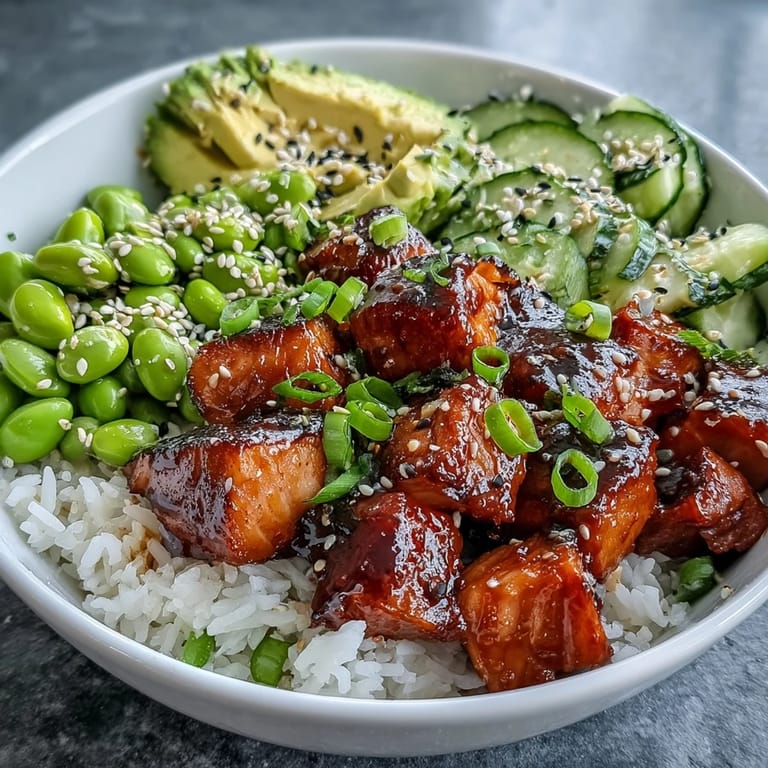
Save I made this bowl for myself on a Wednesday night when I'd had a genuinely awful day, the kind where nothing went right and I felt hollowed out. I ate it standing at my kitchen counter, and somewhere between the warm salmon and the cool avocado and that hit of sriracha heat, something in me reset. It's strange how the right bowl of food can feel like a small act of self-care, like you're telling yourself you're worth feeding well.
Why the Marinade Makes All the Difference
The first time I made this, I skipped the marinade and baked the salmon plain, thinking I'd save time. The salmon was fine, technically edible, but it tasted like just salmon—pale and one-note. The next time, I committed to the ten-minute marinade, and the salmon came out of the oven tasting like it had spent hours absorbing flavor. The soy sauce and sesame oil sink into the fish and get caramelized by the heat, creating this glossy, complex coating that makes you understand why people care about marinades. Now I view that ten minutes as non-negotiable time that transforms something good into something memorable.
Building Flavor Through Temperature Contrast
This bowl works because of temperature play—the warm rice and hot salmon against the cool cucumber and creamy avocado create this textural and temperature conversation that keeps your palate interested through every bite. If you serve everything at the same temperature, it becomes flat and forgetful. The warmth of the salmon wilts the edge of the avocado just slightly, releasing more of its richness, while the cold vegetables provide contrast and freshness that keeps the dish from feeling heavy even though it's quite filling. This is the kind of detail that separates a bowl you eat because you're hungry from one you crave.
Customization Without Losing Identity
The architecture of this bowl is forgiving in the best way. You can add pickled ginger if you want more acid and brightness, swap the edamame for roasted chickpeas if you're out of them, or add a soft-boiled egg if you want more richness and protein. I've also made it with leftover roasted vegetables in winter and extra herbs in summer, and it never stops tasting right. The core components—the marinated salmon, the fluffy rice, the sriracha mayo—stay the same, but everything else is negotiable based on what you have and what you're craving.
- Tamari instead of soy sauce makes this entirely gluten-free if that matters for your table.
- Prep your toppings before the salmon goes in the oven so assembly happens quickly while everything is still at the right temperature.
- Make extra sriracha mayo and keep it in the fridge—it's incredible on grilled vegetables, fried rice, or even as a sandwich spread.
 Save
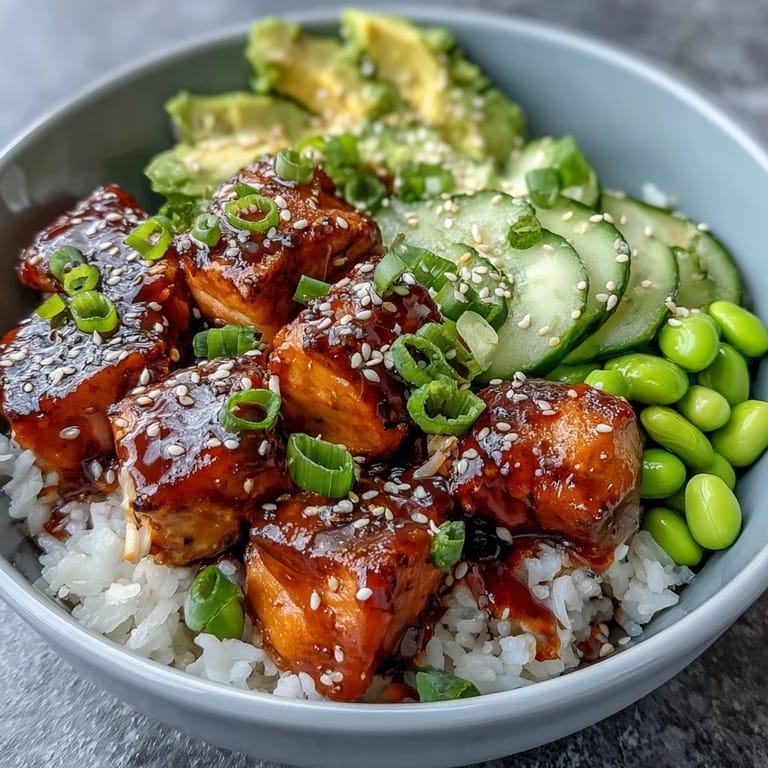
Save This bowl has become my answer to the question of what to cook when you want something that feels both nourishing and exciting. It's the kind of dish that tastes like you tried, even when you're just following a straightforward formula.
Recipe FAQs
- → Can I use other types of fish?
Yes, you can substitute salmon with other firm fish like tuna, cod, or halibut. Adjust cooking time as thinner fillets may cook faster than salmon cubes.
- → How do I store leftovers?
Store components separately in airtight containers in the refrigerator for up to 2 days. Keep the sriracha mayo in a separate container and add fresh toppings when serving.
- → Can I make this ahead of time?
You can marinate the salmon and cook the rice up to a day in advance. Bake the salmon fresh and assemble bowls just before serving for the best texture and flavor.
- → What can I substitute for sriracha mayo?
Try spicy mayo with gochujang, ponzu sauce, or a simple mixture of soy sauce and sesame oil. For a creamy option without heat, use plain mayonnaise with lime juice.
- → Is this bowl gluten-free?
Replace soy sauce with tamari to make this bowl gluten-free. Ensure all other ingredients, including the sriracha, are certified gluten-free.