 Save
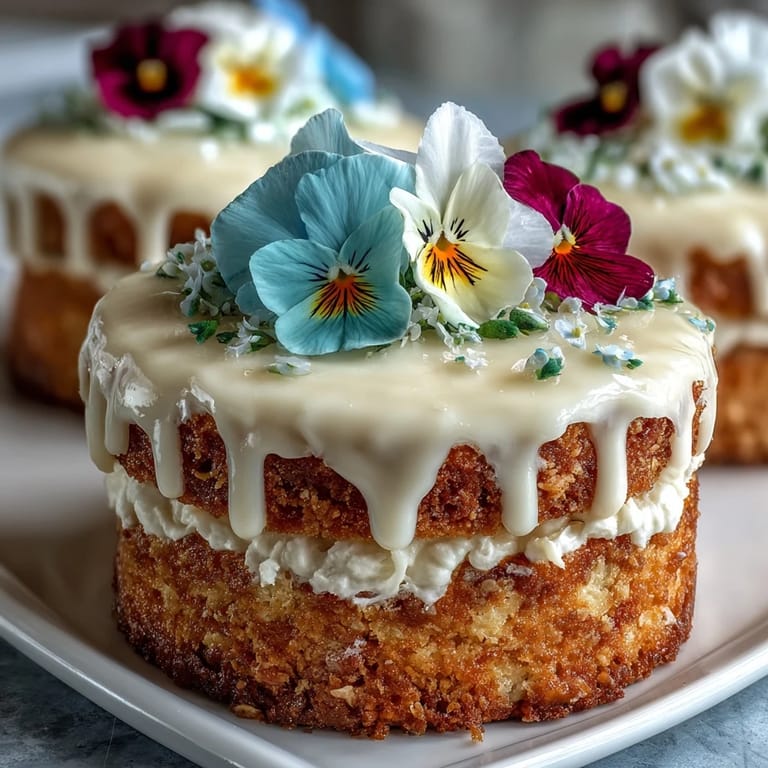
Save My sister called me three weeks before her birthday with an impossible request: she wanted something delicate, something that tasted like spring, something that would make her guests actually gasp when they saw it. I was standing in my kitchen at six in the morning, coffee barely touched, when the idea hit—mini layer cakes crowned with real edible flowers, each one a tiny work of art. The combination of vanilla and lemon felt right, like sunshine in cake form, and suddenly I understood exactly what she needed.
That birthday party happened on a Saturday in May, and I'll never forget watching my sister's face light up when she saw the table. The soft pastel buttercream caught the afternoon light, and guests kept saying they were too pretty to eat—until they did, and then they asked for the recipe immediately. One woman even told me the buttery crumb and delicate citrus notes reminded her of her grandmother's kitchen, and that's when I knew these cakes were something special.
Ingredients
- All-purpose flour (1 1/4 cups): The foundation of your tender crumb—make sure to spoon and level it rather than scooping directly, or you'll accidentally add too much and end up with a dense cake.
- Baking powder (1 tsp): This gives the cakes their delicate lift without making them feel airy or spongy.
- Salt (1/4 tsp): A pinch enhances the vanilla and lemon while keeping sweetness from feeling one-dimensional.
- Unsalted butter for the cake (1/2 cup): Room temperature is non-negotiable here—cold butter won't cream properly and you'll lose that fluffy texture.
- Granulated sugar (3/4 cup): This creams with the butter to create tiny air pockets that keep the cake tender and moist.
- Eggs (2 large, room temperature): Cold eggs won't emulsify smoothly into the butter mixture, so pull them out before you start mixing.
- Pure vanilla extract (1 tsp): Use the real thing—imitation extracts taste hollow and thin against the lemon brightness.
- Lemon zest (1/2 tsp): Fresh zest from an unwaxed lemon is essential; dried zest loses its personality.
- Whole milk (1/2 cup, room temperature): Room temperature milk incorporates evenly and won't shock the batter.
- Unsalted butter for buttercream (3/4 cup): Again, softened butter is the secret—it whips into clouds of creaminess.
- Powdered sugar, sifted (2 cups): Sifting removes lumps and makes the buttercream silky rather than gritty.
- Edible flowers (1 cup loosely packed): Source these from reputable suppliers who grow them without pesticides—they're the crown jewel of these cakes.
Tired of Takeout? 🥡
Get 10 meals you can make faster than delivery arrives. Seriously.
One email. No spam. Unsubscribe anytime.
Instructions
- Ready your oven and pan:
- Preheat to 350°F and line a 9x13 inch baking sheet with parchment, then give it a light grease so nothing sticks. This shallow pan is perfect for the thin, tender cake layer you need for stacking.
- Combine the dry ingredients:
- Whisk flour, baking powder, and salt together in a medium bowl—this distributes the leavening evenly so you get an even rise.
- Cream butter and sugar:
- Beat them together for a full three minutes until the mixture looks pale and fluffy, like wet sand. This creaming is where the magic happens; those tiny air pockets become your cake's structure.
- Add eggs one at a time:
- Beat well after each addition so the eggs fully incorporate rather than sit in little yellow pockets. This ensures a smooth, emulsified batter.
- Mix in vanilla and lemon zest:
- Beat just until combined so the citrus flavor is evenly distributed throughout.
- Alternate wet and dry ingredients:
- Add half the flour mixture, then the milk, then the remaining flour, mixing gently after each step—overmixing develops gluten and toughens the cake. Think of it as folding rather than beating.
- Spread and bake:
- Pour the batter onto your prepared sheet and smooth it evenly with an offset spatula. Bake for 18 to 22 minutes until a toothpick inserted in the center comes out clean and the top is just lightly golden.
- Cool the cake completely:
- Let it sit at room temperature on the baking sheet for at least 30 minutes—warm cake crumbles when you cut it.
- Cut out your cake rounds:
- Using a 2.5 to 3 inch round cutter, press straight down and lift straight up to get clean edges; you'll get 12 circles from one sheet. Save the scraps for cake pops or crumbs for the base of other desserts.
- Make the buttercream:
- Beat softened butter until creamy, then gradually add sifted powdered sugar, vanilla, salt, and one tablespoon of milk. Continue beating until it's light and fluffy, adding a bit more milk if it's too stiff.
- Tint if desired:
- Add a tiny drop of pastel food coloring and beat until the color is even; pastel shades feel more elegant than bright ones.
- Assemble each mini cake:
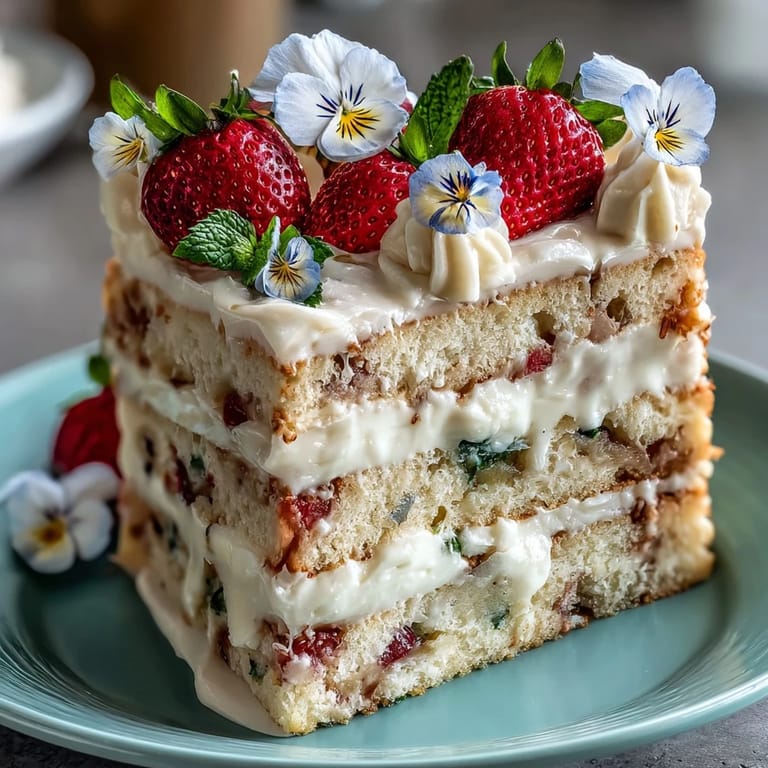
- Place one cake round on a plate, spread a thin layer of buttercream on top, then crown it with a second round. Add another thin layer of buttercream on top of that.
- Decorate with flowers and refrigerate:
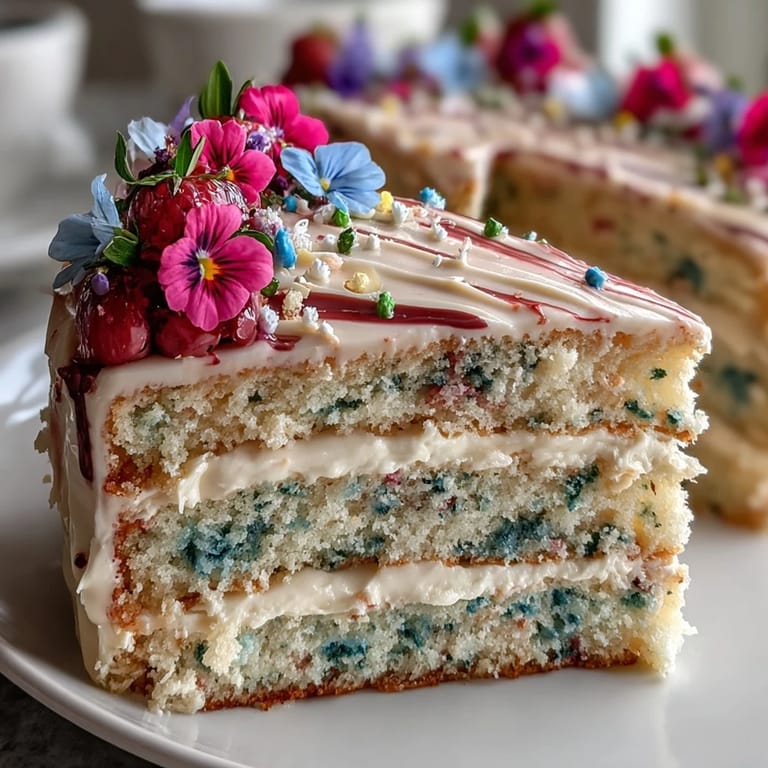
- Top each cake with a generous dollop of buttercream, then arrange your edible flowers artfully on top. Chill for 15 minutes so the buttercream sets and the cakes hold their shape.
 Save
Save The moment I placed the first finished cake on my sister's dessert plate—buttercream piped just so, a single viola positioned perfectly on top—I realized this wasn't just about making something delicious. It was about creating a memory, something small and beautiful that would outlast the party itself. She still talks about those cakes and tells people they're the prettiest thing she's ever eaten.
The Magic of Miniature Desserts
There's something almost architectural about making mini layer cakes—each one is a tiny, edible structure that requires precision and care. When you make individual cakes instead of one large one, you're not just changing the size; you're changing the whole experience. Everyone gets their own perfect cake, their own moment of celebration, and that shifts the emotional weight of the dessert entirely.
Why Edible Flowers Matter
Edible flowers do something that frosting alone cannot—they bridge the gap between what looks like art and what tastes like cake. The first time I used them, I was skeptical about whether they'd actually add flavor or just look pretty. Turns out, flowers like violas and nasturtiums have subtle, almost peppery notes that play beautifully against the sweet buttercream and bright lemon cake. They're not just decoration; they're part of the flavor story.
Timing and Temperature Secrets
The fifteen-minute chill before serving isn't optional—it's when the magic stabilizes. I've made these cakes at room temperature and they wobbled slightly when moved; the chilled versions held their structure with confidence and dignity. This cooling time also lets the flavors settle and meld together, so each bite tastes more cohesive than if you served them warm.
- Always use a gentle hand when alternating dry and wet ingredients, mixing just until combined to keep the crumb tender.
- If you're making these ahead, store them in an airtight container in the refrigerator for up to two days—the buttercream actually improves as it sits.
- Bring them to room temperature for twenty minutes before serving so the lemon flavor really shines through.
 Save
Save These mini cakes transformed what could have been a standard birthday dessert into something people still remember and ask about. Make them with care, choose your flowers thoughtfully, and watch as something small and delicate becomes the highlight of your celebration.
Recipe FAQs
- → What type of flour is best for these cakes?
All-purpose flour provides the ideal balance of structure and softness necessary for tender mini layer cakes.
- → Can I substitute the edible flowers?
Yes, choose food-safe, pesticide-free edible flowers such as violas, pansies, or nasturtiums to maintain both flavor and visual appeal.
- → How do I ensure the buttercream is smooth?
Beat softened butter until creamy before gradually adding sifted powdered sugar and vanilla, adding milk a little at a time to reach a light and fluffy consistency.
- → Is it necessary to chill the cakes before serving?
Chilling for 15 minutes firms the buttercream and enhances texture, making the mini cakes easier to handle and more enjoyable to eat.
- → Can I prepare these mini layer cakes in advance?
Yes, assembling ahead and refrigerating helps flavors meld, but apply edible flowers just before serving to keep them fresh.