 Save
Save The first time I baked with blood oranges, their ruby juice stained my hands a bright magenta, and I started laughing at the colorful mess all over the counter. The tart, floral scent drifted up as I zested and juiced, and the kitchen filled with the kind of hopeful energy that fresh citrus always brings. This cake, bursting with polenta and almonds, has since become my favorite destination each winter whenever I spot blood oranges at the market. There’s something playful about whisking together sunshine-yellow batter and vivid juice—every step a little unexpected. Somehow, the pink glaze never fails to delight me, no matter how many times I make it.
Once, on a drizzly Saturday afternoon, I made this cake for a friend’s small birthday tea—her surprised grin as she saw the pink glaze is still etched in my mind. We ended up eating thick wedges with spoons, standing in the kitchen, the sun finally breaking through at the window just as we cut the first slice. Baking for someone I care about made the whole process, from whisking to glazing, feel even more special.
Ingredients
- Unsalted butter: Room temperature butter creams beautifully, giving the cake a soft, even crumb—if you forget to soften it, a quick pop in a warm spot does the trick.
- Caster sugar: The fine crystals dissolve quickly, making the batter light and fluffy; if you only have granulated, blitz it in the food processor for a minute.
- Eggs: Large eggs help the cake rise and hold together, so try to use them at room temperature for the best texture.
- Blood orange zest: Zesting straight over the bowl catches all the fragrant oils; scrub your oranges first for the brightest, cleanest flavor.
- Fine polenta (cornmeal): The polenta is what gives the cake its gentle sweetness and unique bite—don’t be tempted to use coarse, as it can make the cake gritty.
- Ground almonds: Almonds lend richness and moisture; I sometimes grind my own for an extra-nutty aroma, but store-bought works just as well.
- Gluten-free baking powder: Always double-check your powder for gluten-containing fillers; it’s a tiny ingredient but crucial for a fluffy result.
- Salt: Just a pinch sharpens all the other flavors, so don’t skip it.
- Blood orange juice: Squeeze just before using—the fresher, the zingier, and don’t forget to strain for a smooth glaze.
- Vanilla extract: Adds a background warmth that ties everything together.
- Powdered sugar: Sift it well for a lump-free, glossy glaze.
- Blood orange juice (for glaze): Start with less and add as needed, stirring to a thick-yet-pourable consistency for beautiful drips.
- Blood orange slices & edible flowers (optional): Decorating adds drama and a pop of citrus—but even naked, this cake tastes fantastic.
Tired of Takeout? 🥡
Get 10 meals you can make faster than delivery arrives. Seriously.
One email. No spam. Unsubscribe anytime.
Instructions
- Set the stage:
- Fire up the oven to 170°C (340°F), grease a 20 cm cake tin, and press parchment into the base—nothing sticks worse than almond batter.
- Cream and dream:
- In a large bowl, beat butter and sugar until it’s almost cloud-like; don’t rush, as this step promises fluffiness later on.
- Add the eggs:
- Crack in eggs one by one, beating well after each—if it looks a bit curdled at any point, don’t worry, it will smooth out when you add the dry mix.
- Bring in the citrus:
- Fold in the zest and vanilla, breathing in as the aroma rises—this is where the cake starts to sing.
- Combine the dry goods:
- Tip polenta, ground almonds, baking powder, and salt into another bowl; stir them so every spoonful of batter will bake up tender.
- Unite the batters:
- Add dry to wet, mixing with a gentle hand so the cake stays tender, not tough.
- Juicy finish:
- Pour in blood orange juice, stir just until combined—overmixing here would flatten your cake’s spirit.
- Bake:
- Spoon the batter into the tin, smoothing the top before sending it into the oven; your kitchen will soon smell impossibly sunny.
- Cool it off:
- Bake 40–45 minutes until golden and a skewer poked in the center emerges clean; cool in the tin for 10 minutes, then finish cooling on a rack.
- Mix the glaze:
- For the glaze, sift powdered sugar in a bowl, then slowly stir in blood orange juice until it’s thick, glossy, and prettily pink.
- Dress and serve:
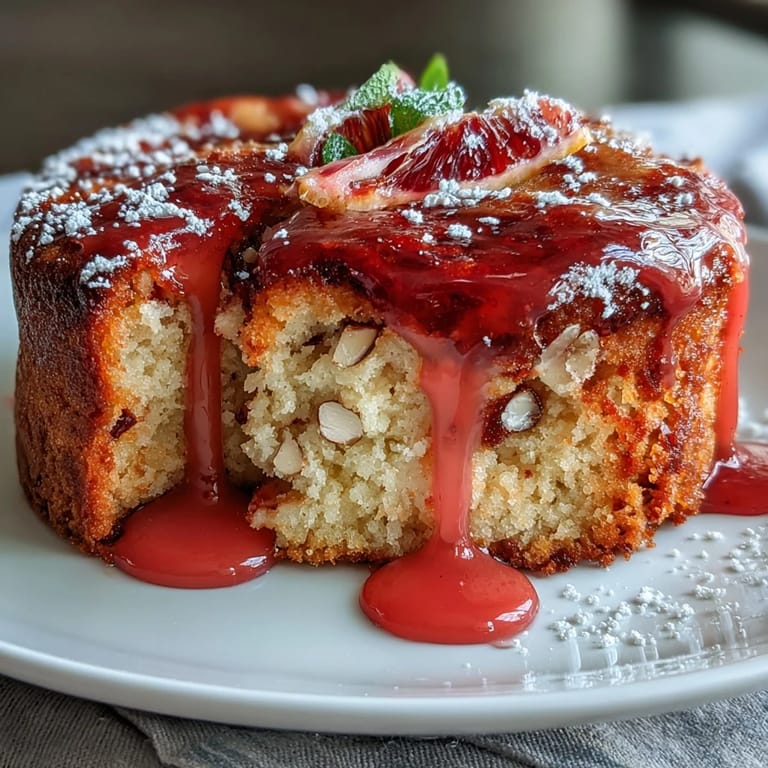
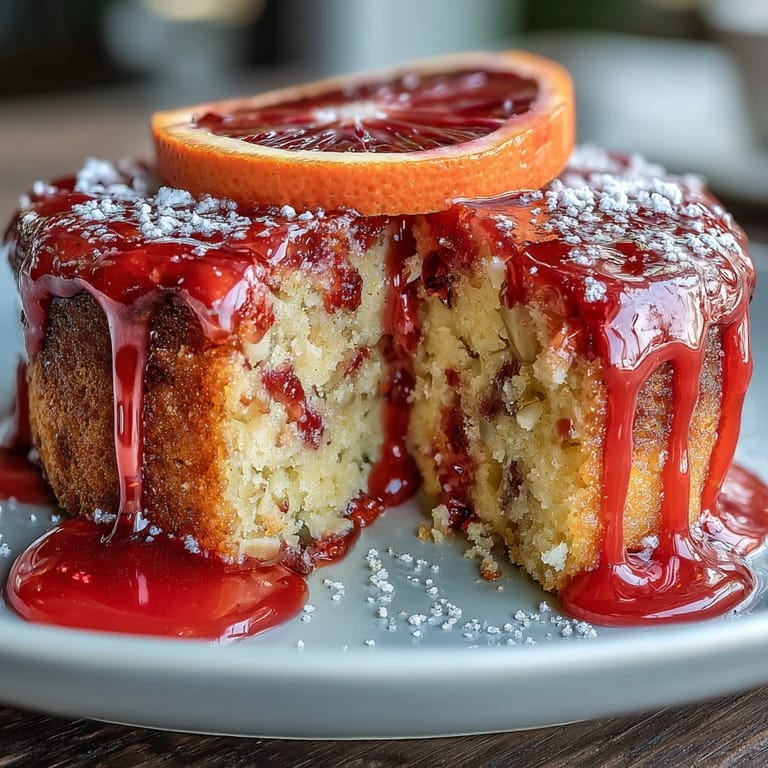
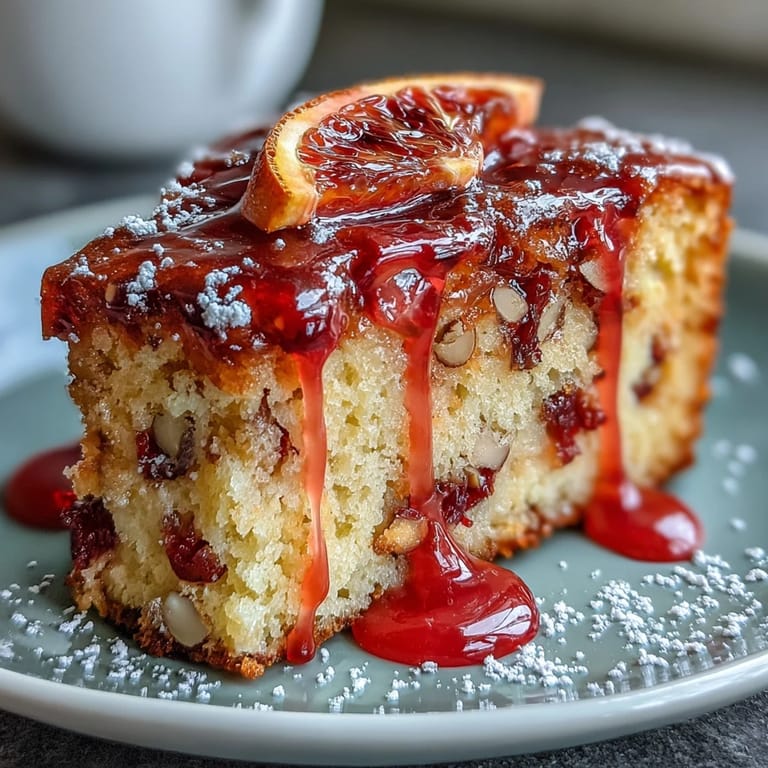
- Once cooled, pour glaze across the top so it drips invitingly; decorate with orange slices and flowers if you feel like going all out.
 Save
Save 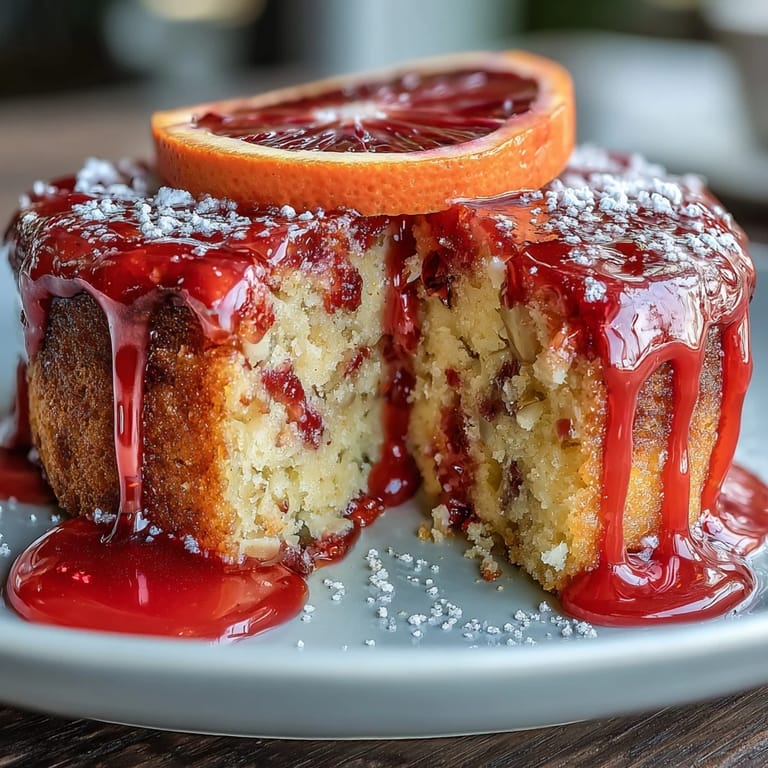 Save
Save I’ll never forget the time I brought this cake to a rooftop picnic—someone called it “sunshine in a slice,” and strangers kept asking what made the glaze so pink. It marked the moment I realized how much joy a simple cake could spread far beyond my own kitchen.
Choosing and Handling Blood Oranges
Blood oranges can be tricky—they’re sometimes more tart, sometimes sweet, and the color ranges from blush to deep crimson. I always choose fruit that feels heavy for its size, which means it’s full of juice, and zest it before cutting to avoid wrestling slippery peels. If you see any with a bit of green on the rind, that’s fine—their inside is still beautiful. To get the most juice, gently roll each orange on the counter before slicing. For glaze, always strain out the pulp so your icing flows smoothly.
Making the Perfect Polenta Texture
I’ve learned that using fine polenta matters more than you might think: coarse cornmeal leaves a gritty crumb, while fine ground gives you a tender, almost melting bite. If you’re uncertain, rub the polenta between your fingers—it should feel like soft sand, not chunky. Don’t be tempted to substitute with corn flour unless you want a denser result. If you’re out of ground almonds, pulsing whole blanched almonds in a food processor works in a pinch—just don’t overdo it or you’ll end up with almond butter. The secret is respecting the cake’s simplicity for that light polenta feel.
Decorating with Style and Ease
The first time I decorated this cake, I piled on too many orange slices and nearly hid the lovely glaze. Now I arrange just a few, sometimes with edible flowers or even a sprinkle of pistachios for color. Don’t worry if your glaze isn’t perfectly even—drips look delightfully homemade. If slicing oranges for the top, cut them thin so they don’t weigh down the cake. Above all, remember you’re after joy, not perfection.
- If your glaze thickens too fast, zap it for a few seconds in the microwave and stir well.
- Always let guests see the pink drizzle before cutting into the cake—it's a showstopper.
- Store leftovers in an airtight container so the crumb stays moist and lovely.
 Save
Save  Save
Save I hope this cake brings the same pop of brightness and pleasure to your day—no matter the weather outside, it always feels like a little celebration on a plate.
Recipe FAQs
- → How does polenta affect the cake texture?
Fine polenta gives a delicate, slightly grainy crumb that stays moist and adds a subtle corn flavor; using fine rather than coarse polenta keeps the texture tender.
- → Can I swap the ground almonds for something else?
Ground almonds add moisture and a rich mouthfeel; swap for ground hazelnuts or extra gluten-free flour plus a touch of oil if nuts must be avoided, but texture will differ.
- → How do I get a bright pink glaze?
Sift powdered sugar and add strained blood orange juice a little at a time until pourable; blood oranges give the rosy hue—regular oranges will yield a paler glaze.
- → Any tips to keep the cake moist?
Avoid overbaking and remove when a skewer comes out mostly clean with a few crumbs. Brushing the warm cake with extra blood orange juice before glazing adds extra moisture.
- → How should I store leftovers?
Keep tightly covered at room temperature for up to 2 days or refrigerated for 4–5 days; bring to room temperature before serving to revive the crumb.
- → Best ways to serve and garnish?
Top with strained glaze, arrange thin blood orange slices and edible flowers for presentation, and offer crème fraîche or Greek yogurt to balance the citrus brightness.