 Save
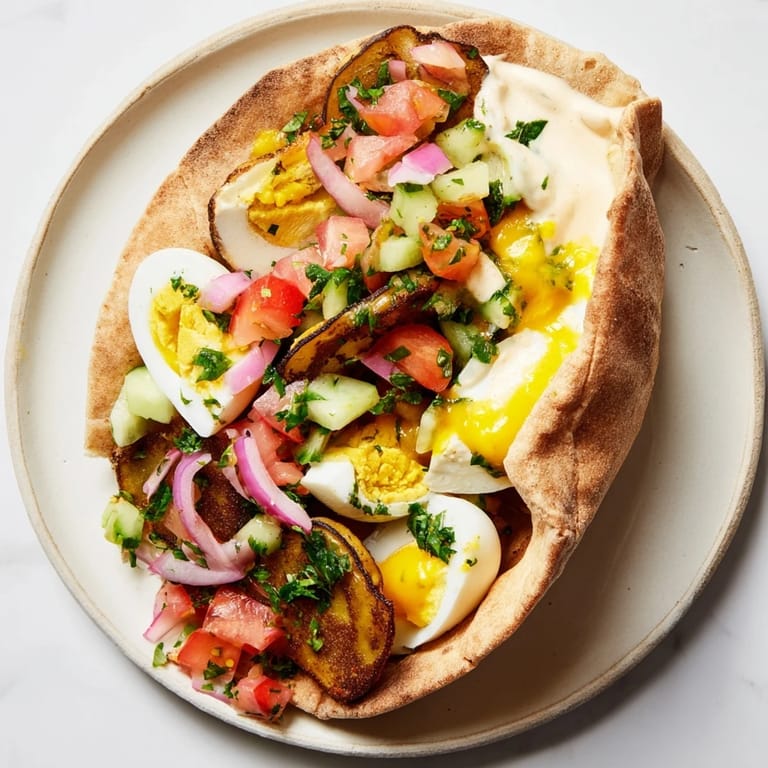
Save The first time I bit into a proper sabich was on a sweaty Tel Aviv afternoon, standing at a cramped counter with juice running down my wrist and the vendor grinning like he'd just performed magic. That warm pita, split open to reveal crispy fried eggplant still crackling slightly, soft egg slices, and that impossibly silky tahini sauce pooling at the bottom—it felt like the entire Mediterranean had been folded into bread. I've been chasing that moment ever since, and somewhere along the way, I learned to make it at home.
I made this for friends on a random Tuesday evening, and what struck me was how quiet the kitchen got once they started eating—the kind of focused, happy silence that means you've done something right. Someone asked for seconds before finishing their first one, and another friend texted me the recipe request before they'd even left. That's when I knew this wasn't just a recipe; it was something I'd want to make again and again.
Ingredients
- Eggplant: Two medium ones, sliced into half-inch rounds—thickness matters here because too thin and they fall apart, too thick and they stay soft in the middle. Salt them and let them sit; it sounds like extra work but it pulls out water and makes them fry up golden instead of soggy.
- Eggs: Four large eggs, boiled until the yolk is just set with that tiny bit of creaminess in the center, not chalky hard-boiled.
- Israeli Salad base: Two tomatoes and one cucumber, both diced small enough that they nestle into the pita without falling out, plus a quarter red onion for bite and two tablespoons of fresh parsley because it's not the same without it.
- Salad dressing: One tablespoon each of fresh lemon juice and extra-virgin olive oil with salt and pepper—simple enough that the vegetables taste like themselves.
- Tahini sauce: Half a cup of tahini paste, which is where the soul of this dish lives; one small minced garlic clove, a quarter cup of water, and two tablespoons of lemon juice to wake it all up and keep it from tasting flat.
- Pita breads: Four large ones, warmed so they're pliable and almost steaming when you stuff them.
- Optional finishing touches: Amba (pickled mango sauce) if you can find it and want that funky, tangy depth; sliced pickles for crunch; fresh cilantro; and hot sauce for anyone who needs heat.
Tired of Takeout? 🥡
Get 10 meals you can make faster than delivery arrives. Seriously.
One email. No spam. Unsubscribe anytime.
Instructions
- Salt and rest the eggplant:
- Slice your eggplants into thick rounds, sprinkle them generously with salt, and let them sit on paper towels for 15 minutes. You'll see the moisture beading up on the surface—that's the magic happening. Pat them dry before they meet the pan; this step alone makes the difference between crispy and greasy.
- Fry the eggplant golden:
- Dust the slices lightly in flour, then slide them into hot vegetable oil in a large skillet over medium-high heat. You want them to sizzle immediately but not violently. Fry for about two to three minutes per side until they're deep golden and crispy, then drain on fresh paper towels while they're still warm.
- Boil the eggs:
- While the eggplant is frying, cover your eggs with water, bring them to a rolling boil, then reduce the heat and let them simmer for exactly nine minutes. This timing gives you a set white with that creamy, almost jammy yolk. Ice bath them immediately to stop the cooking, then peel and slice.
- Build the Israeli salad:
- Combine your diced tomatoes, cucumber, red onion, and fresh parsley in a bowl. Add lemon juice, olive oil, salt, and pepper, then toss everything together gently so it stays bright and doesn't turn into mush. Taste it—adjust the lemon if needed.
- Make the tahini sauce smooth:
- Whisk tahini, lemon juice, minced garlic, and salt together, then slowly add water until you reach a pourable consistency that still coats the back of a spoon. It should taste bright and garlicky, not flat or bitter, so taste as you go and add a pinch more salt if it needs it.
- Warm the pita:
- Heat your pita breads briefly in a dry skillet or directly over a flame until they're warm and pliable, then carefully slice open to create a pocket without tearing through the bottom.
- Assemble with confidence:
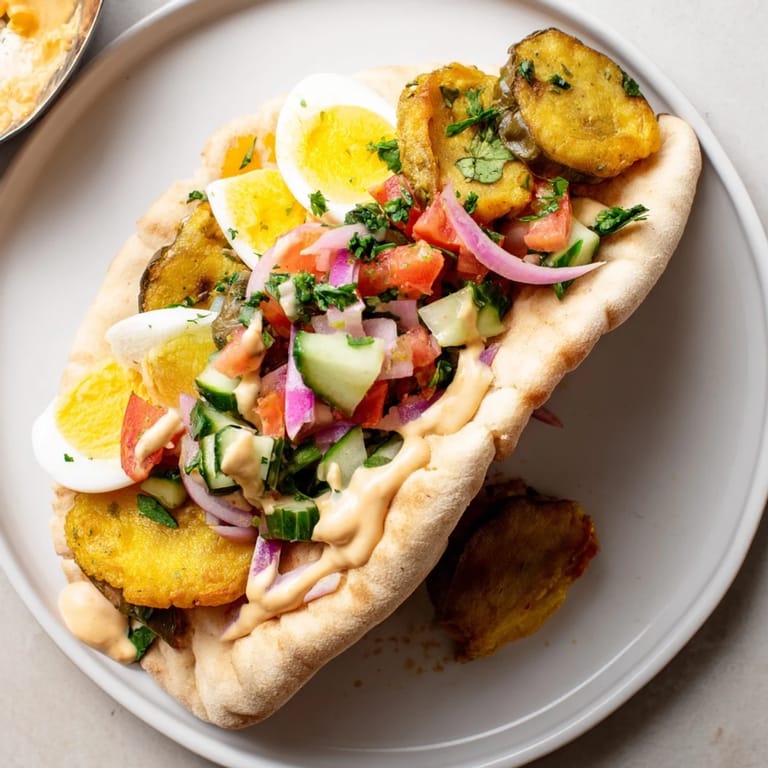
- This is where it all comes together—spread a layer of tahini sauce inside each pita, then layer in crispy eggplant, sliced eggs, and the Israeli salad. Drizzle more tahini, add amba if you have it, scatter cilantro, tuck in pickles, and finish with hot sauce if that's your style.
- Eat immediately:
- Don't wait, don't let it sit—the pita should still be warm and everything should still have texture. That contrast is the whole point.
 Save
Save There's a moment after the first bite when people stop talking, and you realize you've created something that tastes like a place, like a memory, like the kind of food that makes you feel less alone. That's what this dish does—it brings that Jerusalem street feeling into your kitchen, and somehow it works.
Why the Fried Eggplant Changes Everything
Sabich lives and dies by the eggplant, and I spent an embarrassing amount of time learning this. The salt step might feel like fussiness, but it's what transforms a vegetable into something crispy and alive instead of just soft and oil-soaked. When you bite into a properly fried eggplant slice, it should crackle slightly, then give way to tender inside—that contrast is what makes you reach for a second pita. Skip the salting or the frying step, and you've got a different sandwich entirely, and not in a good way.
The Tahini Sauce is Your Secret Weapon
A good tahini sauce tastes nothing like the grainy, bitter paste in the jar—it transforms when you add the right amount of water, lemon juice, and garlic. I started out making it too thick, thinking I was being careful, and ended up with something that wouldn't drizzle. Then I went too thin and it all leaked out. Now I know to start with less water and add it slowly, whisking constantly, tasting after each addition. The sauce should be silky enough to coat a spoon but still fall in ribbons—once you get it right, you'll want it on everything.
Building Your Perfect Sabich
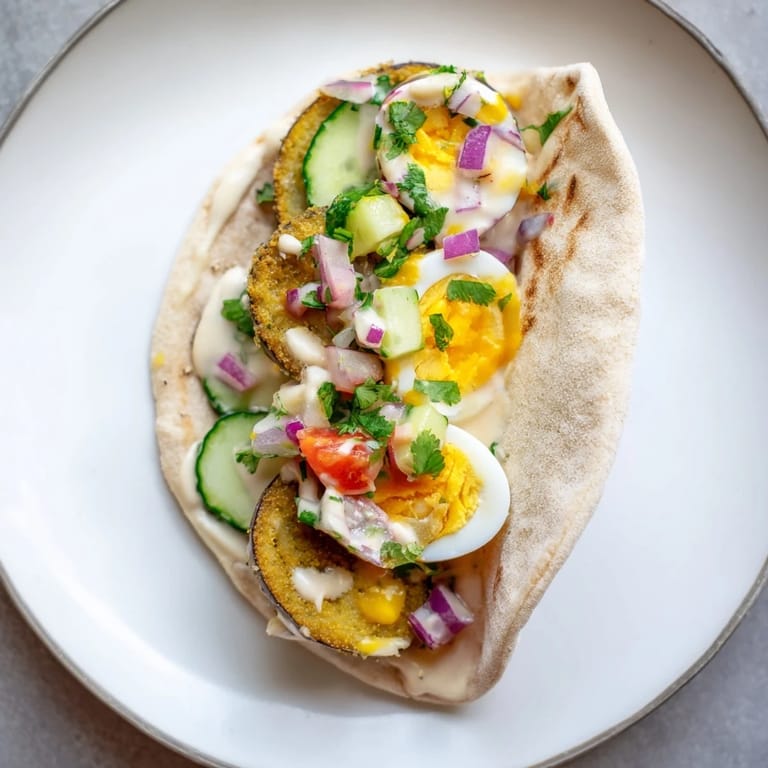
Everyone assembles their sabich differently, and that's the beauty of it—you're not following rules, you're creating. Some people pile the eggplant high, others are generous with the salad, and a few obsessives layer things in a specific order to prevent sogginess. There's no wrong way, only preferences, and the best part is you get to discover yours. Make it once the way the recipe says, then experiment.
- If you can't find amba, a spoonful of harissa mixed with a little tahini gives you similar depth and heat.
- Toast the pita in a dry pan for a minute on each side if you want extra texture and flavor, not just warmth.
- Keep paper towels nearby because this is a eat-with-your-hands situation and there's no shame in that.
 Save
Save Sabich isn't precious or complicated—it just asks for good ingredients treated with a little care, and maybe a pinch of the kind of joy that comes from eating something that tastes like somewhere else. Make this for people you like, and watch what happens.
Recipe FAQs
- → How do I get crispy eggplant slices?
Salt the eggplant slices and let them rest to draw out moisture, then coat lightly with flour before frying in hot oil until golden brown on each side.
- → What makes the tahini sauce creamy and smooth?
Whisking tahini paste with water, fresh lemon juice, minced garlic, and salt until well blended creates a smooth, creamy sauce to drizzle over the filling.
- → Can I prepare the Israeli salad ahead of time?
Yes, the salad of diced tomatoes, cucumber, red onion, parsley, lemon juice, and olive oil can be made in advance and kept chilled to enhance flavors.
- → What are some common add-ons to enhance the flavor?
Pickled mango sauce (amba), fresh cilantro, pickles, and hot sauce add tangy, spicy, and herbal notes that complement the main ingredients beautifully.
- → Is there a vegan alternative for this dish?
To make a vegan version, omit the hard-boiled eggs or replace them with tofu, and ensure pita bread and other components suit a vegan diet.