 Save
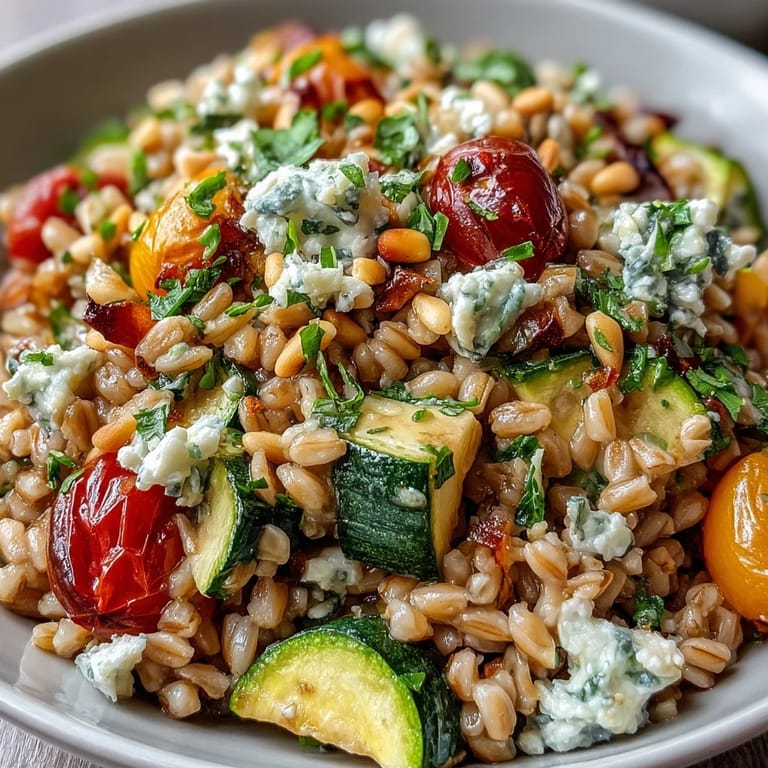
Save My neighbor handed me a bowl of this farro pasta on a warm Thursday evening, still steaming, and I was skeptical at first—farro sounded so deliberately wholesome. But the moment I tasted it, something clicked: the nutty grain, the way the vegetables held their color and crunch, how the lemon dressing brought everything into focus. It's become my go-to when I want something that feels substantial but doesn't leave me sluggish, and honestly, it's hard to mess up.
I made this for my sister's book club last month, and she ate two full bowls before realizing it was vegetarian—she kept looking for hidden chicken. What struck me was how nobody pushed it to the side to make room for something heavier. The colors alone made people linger over their bowls, and someone asked for the recipe before dessert arrived.
Ingredients
- Farro pasta, 250 g: Farro grains have a tender, slightly chewy bite that feels more alive than regular pasta, and it holds onto the dressing beautifully without getting mushy.
- Zucchini, 1 medium diced: The key is not overthinking it—rough dices work fine, and they soften just enough to absorb flavor without turning into mush.
- Red and yellow bell peppers, 1 each diced: Buy them a day or two ahead and they'll have a deeper sweetness; use them fresh if that's all you have.
- Cherry tomatoes, 150 g halved: These are non-negotiable for bursts of brightness, and halving them (not quartering) keeps them intact as they cook.
- Baby spinach, 100 g: A handful goes such a long way—it wilts to almost nothing but adds an earthy layer you'll notice.
- Red onion, 1 small finely sliced: The thin slices stay a bit raw, which adds sharpness; if you prefer them softer, give them an extra minute in the pan.
- Garlic, 2 cloves minced: Mince it just before cooking so the aroma hits you—that's when you know it's releasing its best flavor.
- Extra virgin olive oil, 60 ml: This is where you can taste the quality difference, so grab a bottle you actually enjoy.
- Lemon juice, 2 tbsp freshly squeezed: Bottled works in a pinch, but fresh juice brightens the whole dish in a way the other can't match.
- Dried oregano, 1 tsp: Don't skip this—it's subtle but it's what makes it feel Mediterranean rather than just salad.
- Sea salt and black pepper, 1/2 tsp and 1/4 tsp: Taste as you go; you might find you want a pinch more.
- Feta cheese, 60 g crumbled: The creamy tang pulls everything together; buy it in a block and crumble it yourself if possible.
- Fresh parsley, 2 tbsp chopped: A last-minute addition that wakes everything up with a hint of freshness.
- Toasted pine nuts, 2 tbsp optional: These add a buttery crunch that makes it feel intentional rather than thrown together.
Tired of Takeout? 🥡
Get 10 meals you can make faster than delivery arrives. Seriously.
One email. No spam. Unsubscribe anytime.
Instructions
- Set your water to boil:
- Fill a large pot most of the way with water, salt it generously so it tastes like the sea, and get a rolling boil going before you do anything else. This is your foundation.
- Cook the farro:
- Drop the pasta in and set a timer for whatever the box says, checking a minute before so it's tender but still has a little resistance when you bite it. Drain it into a colander but don't rinse—you want some of that starch to help the dressing stick.
- Build flavor in the skillet:
- Heat two tablespoons of olive oil over medium heat and listen for that gentle sizzle, then add your sliced onion and minced garlic. The smell alone tells you when they're ready—about two minutes, when the garlic stops being raw-edged and smells almost sweet.
- Add the heartier vegetables:
- Toss in the zucchini, both bell peppers, and the cherry tomatoes all at once. Stir them around for six to eight minutes, letting them soften while keeping their color—you're looking for tender but still bright, not tired-looking.
- Wilt the spinach:
- Add the baby spinach and give everything a good stir; it collapses into almost nothing in about a minute, and that's exactly when you turn the heat off. Don't let it keep cooking or it'll turn army-green.
- Make the dressing:
- While the vegetables cook, pour the remaining olive oil into a small bowl with the lemon juice, oregano, salt, and pepper, then whisk it together until it looks emulsified and smells impossibly good. Taste it on a spoon and adjust if you need more lemon or salt.
- Bring everything together:
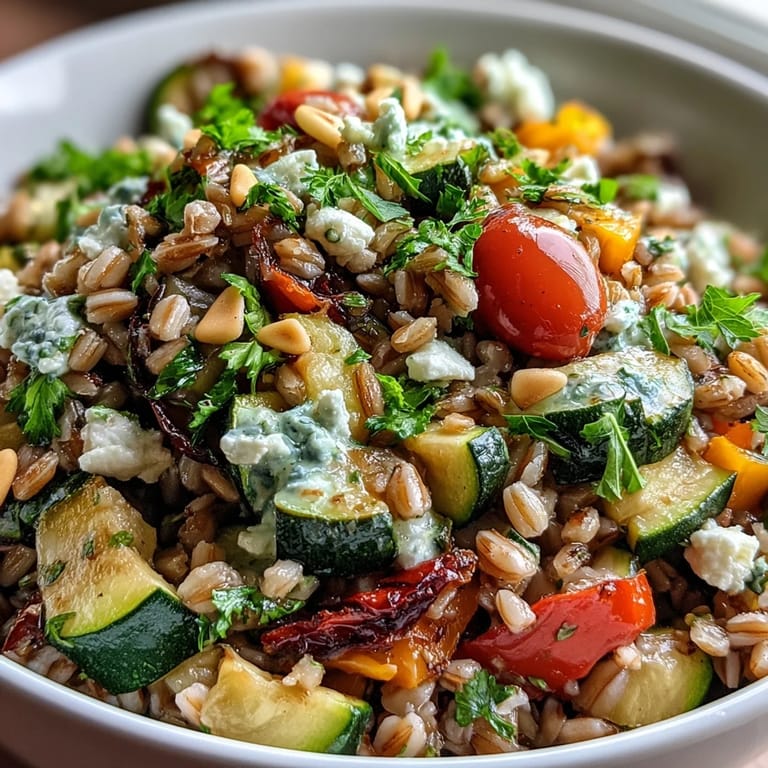
- In a large bowl, combine the cooked farro and sautéed vegetables, then pour the dressing over everything and toss gently but thoroughly so every piece gets coated. This is where the magic happens—the flavors start to meld.
- Serve and garnish:
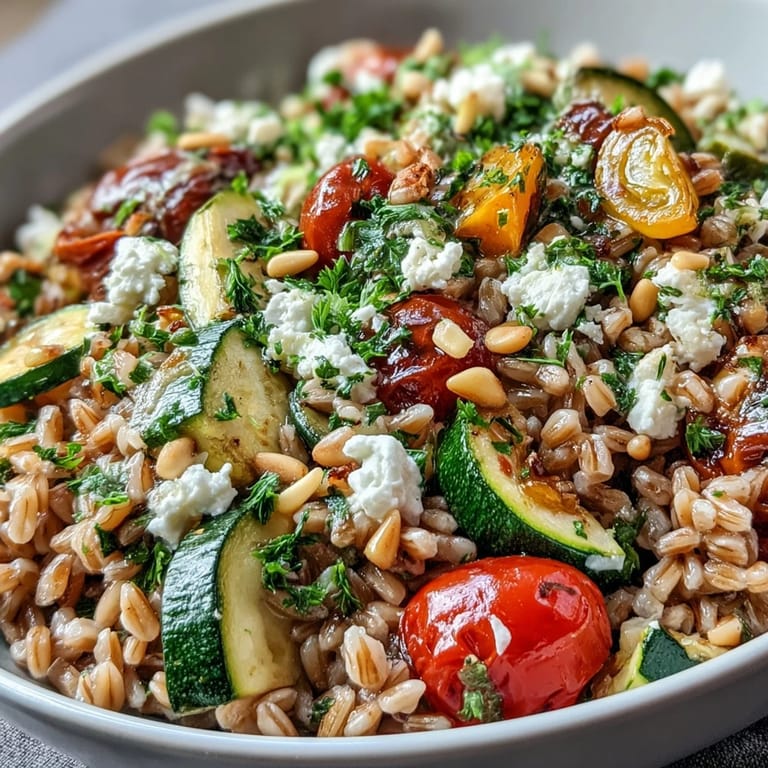
- Divide among bowls and top each one with a crumble of feta, a small handful of parsley, and a scatter of pine nuts if you have them. Serve it warm, at room temperature, or even straight from the fridge the next day.
 Save
Save My sister texted me a photo of this bowl three days later with the caption 'making it again,' and something about that simple message felt like the highest compliment. It reminded me that the best recipes aren't the fanciest ones—they're the ones you actually want to make again when nobody's watching.
Why Farro Deserves Your Attention
Farro shows up in Mediterranean cooking for a reason: it has personality. Unlike regular pasta, which sometimes feels like a blank canvas, farro carries a subtle nuttiness that adds depth without demanding attention. The first time I tried it, I almost felt like I was eating something more substantial than carbs, which is probably why it keeps me satisfied through the afternoon without that energy crash. It's also forgiving—it can handle sitting in the fridge for days without getting mushy or flavorless.
The Right Way to Build a Vegetable Bowl
There's an art to layering flavors in a bowl like this, and I learned it mostly through trial and error. The order matters: you want your hearty vegetables going into the pan first so they have time to develop some caramelization, then your delicate ones like spinach at the very end so they keep their character. The dressing is what ties everything together, so don't skimp on the olive oil or lemon juice—these are the ingredients that make someone say 'wow, what did you do differently' when you make it for them.
Flexibility and Variations That Actually Work
I've made this dish at least a dozen different ways depending on what I had in the fridge, and it's been good every single time—that's the gift of a well-balanced recipe. Swap the vegetables around based on the season, add chickpeas or grilled chicken if you want more protein, or even crumble some goat cheese instead of feta if that's what you're in the mood for. The core of the recipe—the farro, the bright dressing, the quality olive oil—that's what makes it work no matter what.
- Cold leftovers make an excellent next-day lunch, so consider doubling the recipe if you're cooking for one.
- If you can't find farro pasta, whole farro grains work beautifully and take about twenty to twenty-five minutes to cook tender.
- Toast your pine nuts in a dry skillet for two minutes right before serving so they're warm and smell incredible.
 Save
Save This bowl has become my answer to the question 'what should I make tonight' because it's nourishing without being precious, colorful without being fussy, and honestly, it tastes like summer no matter what season it actually is. Make it once and I promise you'll make it again.
Recipe FAQs
- → Can I use regular farro instead of farro pasta?
Yes, whole farro works beautifully. Cook it for 20–25 minutes until tender, then proceed with the recipe as written. The texture will be slightly chewier but equally delicious.
- → Is this dish good for meal prep?
Absolutely. The flavors actually improve after sitting. Store components separately or toss everything together—it keeps well refrigerated for 3–4 days. Serve cold or gently reheated.
- → What vegetables can I substitute?
Eggplant, artichoke hearts, or roasted red peppers work wonderfully. Add fresh cucumbers or kalamata olives for extra Mediterranean flair. Use whatever looks fresh at your market.
- → How do I make this vegan?
Simply omit the feta cheese or replace it with a plant-based alternative. The dish remains satisfying and protein-rich without dairy, especially if you add chickpeas or white beans.
- → Can I serve this cold?
Yes, it makes an excellent grain salad. Chill thoroughly before serving and consider adding fresh herbs like basil or mint. The flavors brighten as the dish sits, making it perfect for picnics or packed lunches.
- → What protein additions work well?
Grilled chicken, shrimp, or chickpeas complement the Mediterranean profile. Poached salmon or white beans also pair nicely with the nutty farro and zesty dressing.