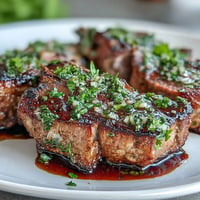
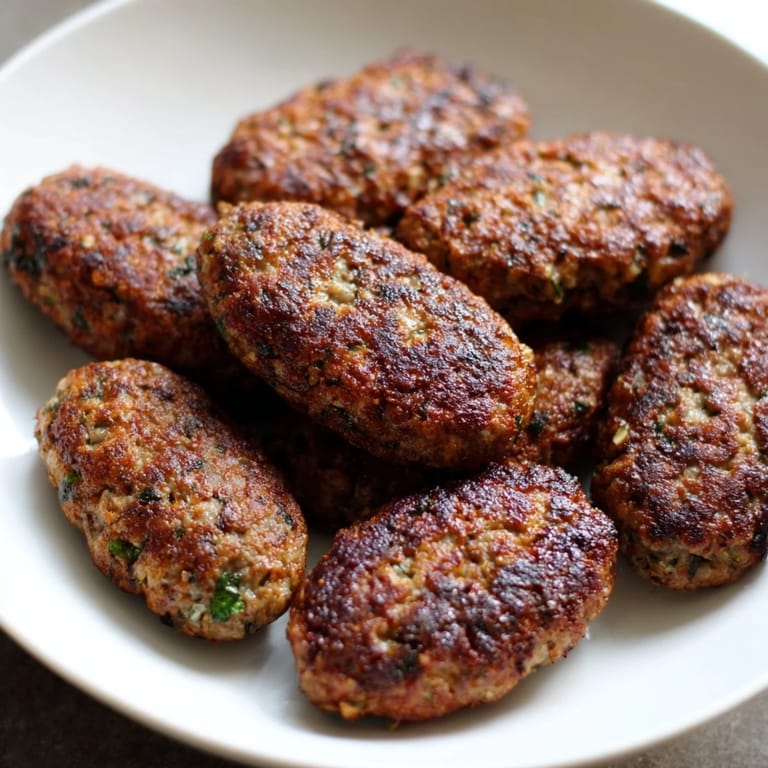
 Save
Save My first bite of proper Turkish köfte happened at a neighborhood gathering where a friend brought them still warm from her kitchen, and I couldn't stop eating them straight from the platter. There was something almost magical about how the herbs seemed to bloom on my tongue, while the bulgur kept everything impossibly tender inside with that golden-crisp exterior. I spent the rest of that evening peppering her with questions until she finally promised to teach me, and now I understand why these meatballs have been a staple across Turkey for generations.
I made these for my partner one weeknight when we both needed something comforting, and I'll never forget how they dove into the plate with such genuine satisfaction that I knew I'd cracked something. There's this particular moment when you're forming the meatballs with damp hands and you realize how therapeutic the whole process feels, like you're building something that matters even though it's just dinner.
Ingredients
- Ground beef or lamb (500g): A blend of both gives you richness without being too heavy, but pure lamb is equally delicious if that's what you prefer.
- Fine bulgur (100g): This absorbs moisture as it softens, which keeps the meatballs tender and helps bind everything together without needing a ton of egg.
- Small onion, finely grated: Grating instead of chopping releases the onion's juices, which adds moisture and spreads the flavor evenly through the meat.
- Garlic, minced (2 cloves): Fresh garlic matters here because it adds a brightness that dried can't quite capture.
- Fresh parsley and mint, finely chopped: These aren't just garnish flavors, they're the soul of the dish, so fresh versions really do make a noticeable difference.
- Ground cumin and paprika (1 tsp each): Warm, aromatic spices that feel almost comforting rather than aggressive.
- Black pepper and chili flakes (½ tsp each): Just enough heat to keep things interesting without overpowering anyone at the table.
- Salt (1 tsp): Taste as you mix since some ground meats are saltier than others.
- Large egg: The binder that keeps everything together, especially important if your meat is very lean.
- Olive oil (2-3 tbsp): Use something you actually enjoy tasting, since it contributes to the final flavor.
Tired of Takeout? 🥡
Get 10 meals you can make faster than delivery arrives. Seriously.
One email. No spam. Unsubscribe anytime.
Instructions
- Soften the bulgur:
- Pour the bulgur into a bowl and add 3 tablespoons of warm water, then let it sit untouched for 10 minutes. You'll notice it gradually absorbs the water and becomes tender, almost like it's breathing.
- Combine everything:
- Dump all your ingredients into the bowl with the softened bulgur and use your clean hands to mix thoroughly. The mixture should feel slightly sticky and well-combined, like a cohesive paste rather than loose crumbles.
- Shape with damp hands:
- Wet your hands before forming each meatball so the mixture doesn't stick to your skin. They should be roughly the size of a walnut, though I sometimes make mine slightly larger because I like more surface area to get crispy.
- Pan-fry for golden perfection:
- Heat olive oil in a large skillet over medium heat until it shimmers, then add meatballs in a single layer without crowding the pan. Let them cook untouched for 3 to 4 minutes per side until they develop a deep golden crust, then check that the inside is cooked through.
- Or grill for charred edges:
- Preheat your grill to medium-high and oil the grates well so the meatballs don't stick. Grill them for 3 to 4 minutes per side, rotating carefully so they char evenly without falling apart.
- Serve while they're still warm:
- These are best eaten fresh, either nestled into rice, wrapped in warm flatbread, or served alongside a crisp salad.
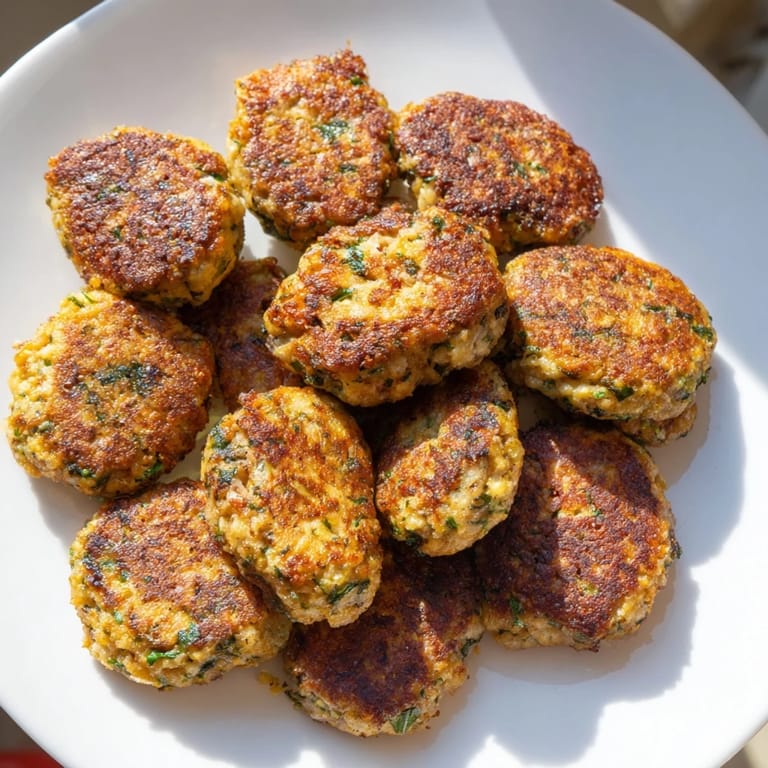 Save
Save There was an afternoon when I made these for friends who'd never tried Turkish food before, and watching them experience that moment when all the flavors clicked into place, when they realized this humble-looking meatball was so much more complex than they expected, reminded me why cooking for people matters. It's not about showing off or proving anything, it's about giving someone a taste of something authentic.
Why These Matter in Turkish Cuisine
Köfte aren't just a recipe in Turkey, they're part of everyday life, served at family dinners and street markets with equal pride. The combination of bulgur and meat creates a texture that's distinctly different from meatballs made with breadcrumbs, something more complex and satisfying. The herbs aren't an afterthought either, they're what separates a good köfte from one that tastes like any other seasoned meatball you've had.
Serving Suggestions That Actually Work
I've found that these meatballs don't need much to shine, but pairing them with the right sides makes the whole meal feel more intentional. A cool yogurt sauce cuts through the richness beautifully, while grilled vegetables or a bright tomato salad adds freshness without competing for attention. Rice pilaf soaks up any pan juices and feels almost ceremonial, while flatbread wraps let everyone assemble their own plates and feel involved in the experience.
Make Ahead and Storage Tips
Raw meatballs freeze brilliantly, which means you can spend 20 minutes on a Sunday shaping them and then forget about the work until you're ready to cook. Arrange them on a tray and freeze until solid, then transfer to a bag so they don't get freezer burn, and you can cook them straight from frozen without thawing. They'll take maybe a minute longer per side, but the results are just as good as if you'd cooked them fresh.
- Cooked meatballs keep in the fridge for three days and reheat gently in a warm skillet with a splash of olive oil.
- Freeze shaped raw meatballs on a tray before bagging them so they maintain their shape and don't stick together into a solid block.
- You can make the mixture a few hours ahead and refrigerate it, which actually helps the flavors meld together before cooking.
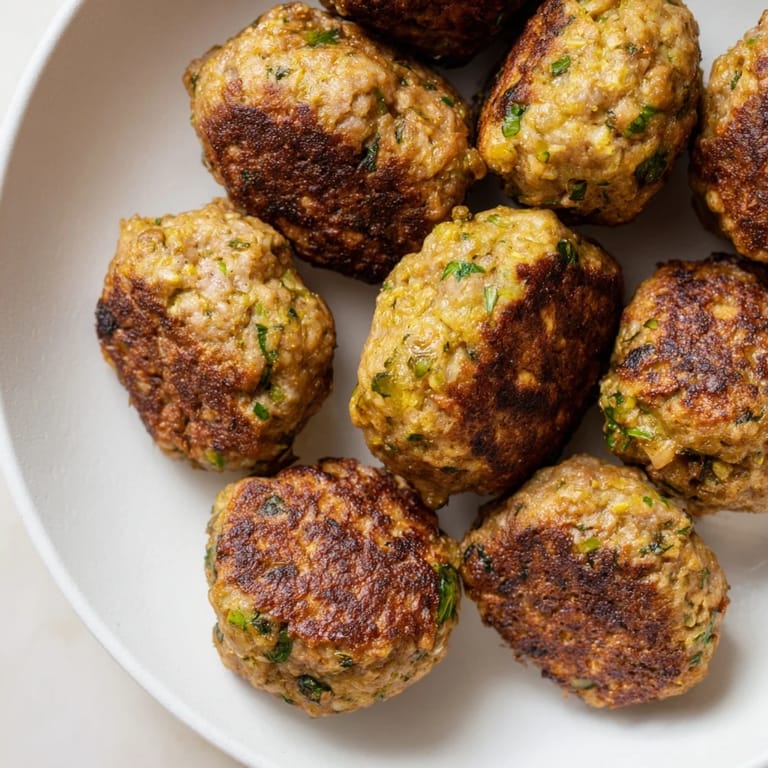 Save
Save These meatballs have become one of my go-to recipes whenever I want to feel connected to someone else's kitchen tradition without needing to travel anywhere. They're proof that the simplest ingredients, treated with respect and a little bit of attention, can taste like home to someone.
Recipe FAQs
- → What type of meat is best for Turkish köfte?
A blend of ground beef and lamb offers the most authentic flavor, but using only beef or lamb works well too.
- → Can I prepare the köfte mixture in advance?
Yes, the mixture can be prepared and refrigerated for several hours to enhance the flavors before cooking.
- → What are the cooking options for these meatballs?
You can either pan-fry them in olive oil or grill them to achieve a crispy outside with a tender interior.
- → How does bulgur affect the texture?
Bulgur adds a subtle nutty flavor and a slightly chewy texture, helping bind the meatballs while keeping them moist.
- → Which herbs and spices complement köfte?
Parsley, mint, cumin, paprika, and garlic combine to create the signature aromatic and flavorful profile of köfte.