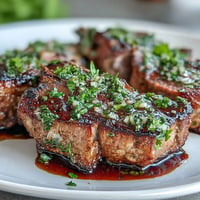
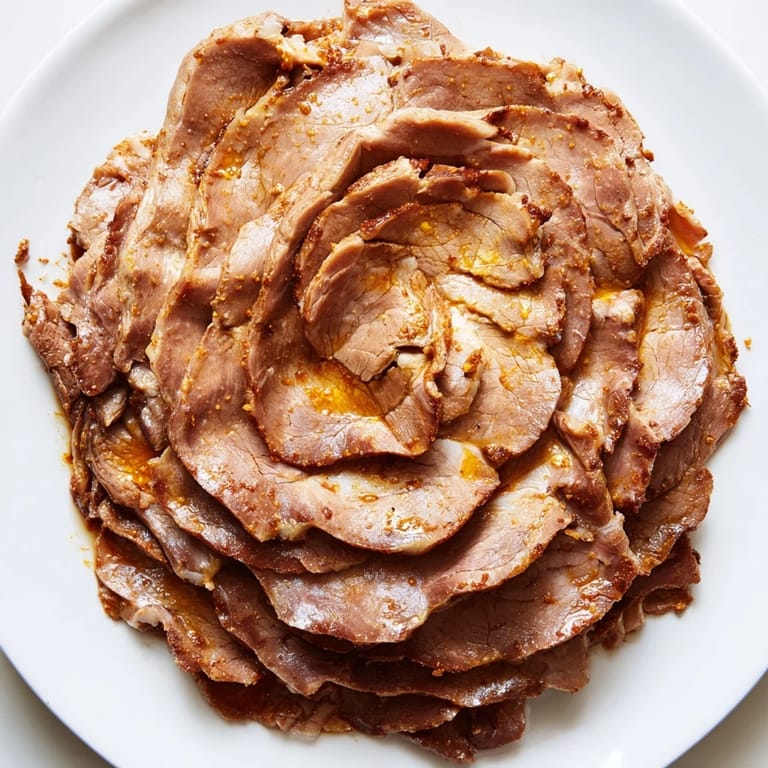
 Save
Save The first time I tasted authentic döner, I was standing in a narrow Istanbul street at dusk, watching a vendor work a vertical spit with the precision of someone who'd done it ten thousand times. The meat had been cooking all day, layers upon layers building up their edges into crispy, caramelized corners while staying impossibly tender inside. Years later, I realized I could recreate that magic at home, and the key was understanding that döner isn't rushed—it's built slowly, seasoned deeply, and cooked with patience.
I made this for a dinner party once, and my friend arrived early asking what smelled like a Turkish street market had somehow appeared in my kitchen. She sat on the counter while the meat roasted, and by the time I pulled it out, golden and glistening, she was already mentally planning her next visit around my cooking schedule. That's the thing about döner—it's not fancy or complicated, but it tastes like you've invited people into something special.
Ingredients
- Boneless lamb shoulder or beef sirloin, thinly sliced (1 kg): Lamb gives you that authentic, slightly gamey depth that makes döner taste like döner, but beef sirloin works beautifully if that's what you prefer or have on hand—just slice it against the grain for maximum tenderness.
- Lamb fat or beef fat, thinly sliced (100 g): This is optional but transforms the dish; those fat layers crisp up and flavor everything around them, creating those irresistible charred edges.
- Plain Greek yogurt (150 g): This is your tenderizer and flavor base—it keeps the meat moist while the spices do their work.
- Olive oil (3 tbsp): Choose good quality; it carries the spice flavors and helps everything cook evenly.
- Garlic, minced (3 cloves): Mince it small so it distributes evenly throughout the marinade.
- Large onion, grated (1): Squeeze out the excess juice before adding—you want the flavor, not the liquid.
- Ground cumin (2 tsp): This is your backbone spice; it's warm, slightly earthy, and unmistakably döner.
- Ground coriander (2 tsp): It adds brightness and a subtle citrus note that keeps things from feeling heavy.
- Sweet paprika (2 tsp): This gives color and a gentle sweetness without heat.
- Smoked paprika (1 tsp): If you can't find this, use a bit more sweet paprika, but the smoke is worth seeking out.
- Ground black pepper (1 tsp): Fresh is better; black pepper brings sharpness that balances the warm spices.
- Salt (1 ½ tsp): Taste the marinade before refrigerating and adjust if needed—salt levels vary by yogurt brand.
- Ground cinnamon (½ tsp): Just a whisper; too much reads as dessert, but the right amount adds complexity.
- Chili flakes (½ tsp, optional): Add this if you want heat, or skip it entirely if your crowd prefers mild.
Tired of Takeout? 🥡
Get 10 meals you can make faster than delivery arrives. Seriously.
One email. No spam. Unsubscribe anytime.
Instructions
- Build your marinade:
- Combine yogurt, olive oil, minced garlic, grated onion, and all the spices in a large bowl, stirring until everything is evenly mixed and fragrant. This should smell like a spice market and taste bold—almost aggressively seasoned.
- Coat the meat:
- Add your thinly sliced meat and fat (if using) to the marinade, making sure every piece is covered. Use your hands to massage it gently; this helps the marinade penetrate the meat.
- Marinate patiently:
- Cover and refrigerate for at least 4 hours, but overnight is where the magic happens—the yogurt tenderizes, the spices meld, and you'll notice the meat releases a little liquid.
- Thread or layer the meat:
- If using a rotisserie (lucky you), thread the marinated meat onto the spit, pressing firmly so layers bond. If using an oven, thread meat tightly onto metal skewers pressing it into a compact stack, or layer it tightly in a loaf pan—the tighter you pack it, the more it will hold together as it cooks.
- Roast low and slow:
- Place your skewers on a rack over a baking tray (to catch those precious drippings) and roast at 200°C (400°F) for about 1 hour, basting occasionally with the pan juices—this keeps it moist and builds flavor. After an hour, increase heat to 220°C (430°F) for the last 15 minutes to create those crispy, caramelized edges.
- Rest and slice:
- Let it rest for 10 minutes before slicing; this keeps the meat from falling apart. Use a sharp knife and slice as thin as you can manage—this is what separates döner from just roasted meat.
- Serve with purpose:
- Warm your flatbread, pile on the meat, add fresh tomatoes, onions, lettuce, and cucumber, then finish with a generous dollop of yogurt or garlic sauce.
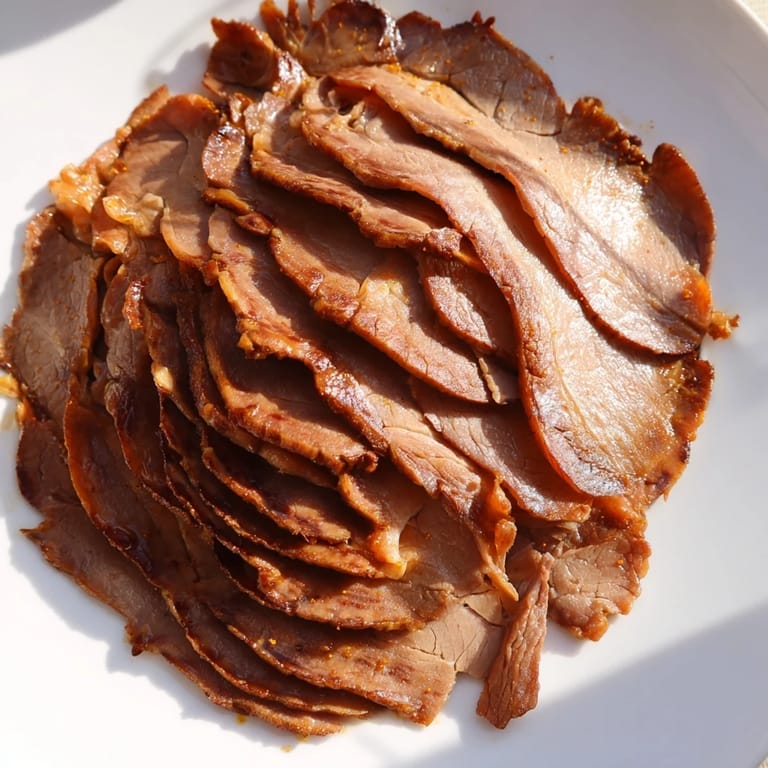 Save
Save Years after that Istanbul moment, I realized döner isn't really about the spit or the restaurant—it's about how meat, spices, and time create something that tastes like comfort and adventure at the same time. Every time I make it now, someone asks for the recipe, and I know I've done something right.
The Spice Balance That Changes Everything
The spice ratio here is deliberately warm and complex, built on cumin and coriander as anchors with paprika for color and depth. I learned early on that döner fails when people skimp on spices or use old, dusty jars—the spices should smell bright and alive when you open them. If your cumin smells like old leather instead of warm earth, it's time for a replacement.
Texture Secrets from the Spit
What makes döner special isn't magic; it's the interaction between meat layers, fat, and direct heat over time. When you layer tightly and roast, the edges crisp while the interior stays tender, and the fat renders out, creating richness. Basting matters because it prevents drying while building glossy, caramelized surfaces. The difference between okay roasted meat and actual döner often comes down to that 15-minute high-heat finish—it darkens the outside without drying the inside.
Serving and Storage Wisdom
Döner is best served immediately while the meat is still warm and the flatbread can absorb its juices without getting soggy. Leftovers actually improve overnight as the flavors meld, and reheating gently in a low oven or pan keeps everything tender. Pair it with crisp Turkish white wine if you're being formal, or Ayran—that salty, tangy yogurt drink—if you're honoring tradition.
- Slice extra thin for authentic texture, even if it takes a few extra minutes with a sharp knife.
- Keep the pan drippings warm on the stovetop to pour over the finished döner for maximum flavor.
- Refrigerate leftovers in an airtight container for up to 4 days and reheat gently.
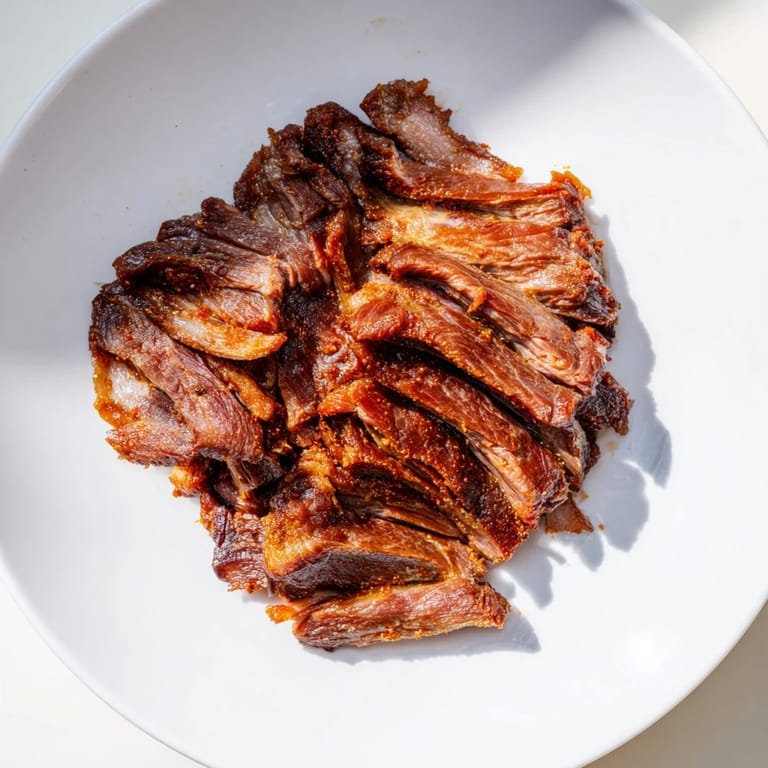 Save
Save Making döner at home means having Istanbul in your kitchen whenever you want it, without the street noise or the crowds. That's worth every bit of patience the marinade requires.
Recipe FAQs
- → What cuts of meat work best for this dish?
Boneless lamb shoulder or beef sirloin, thinly sliced, deliver tender and flavorful layers perfect for marinating and slow cooking.
- → How long should the meat marinate?
For optimal tenderness and spice infusion, marinate the meat for at least 4 hours or preferably overnight.
- → Can the dish be prepared without a vertical rotisserie?
Yes, layering the meat tightly on skewers or in a loaf pan and roasting in the oven replicates the slow-cooked texture well.
- → What spices are key to the flavor profile?
Ground cumin, coriander, sweet and smoked paprika, black pepper, cinnamon, and optional chili flakes create the characteristic aromatic and mildly spicy taste.
- → What are suitable accompaniments for serving?
Warm flatbreads such as pita, fresh sliced tomatoes, onions, lettuce, cucumber, and sauces like yogurt or garlic sauce complement the meat beautifully.