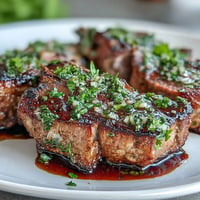
 Save
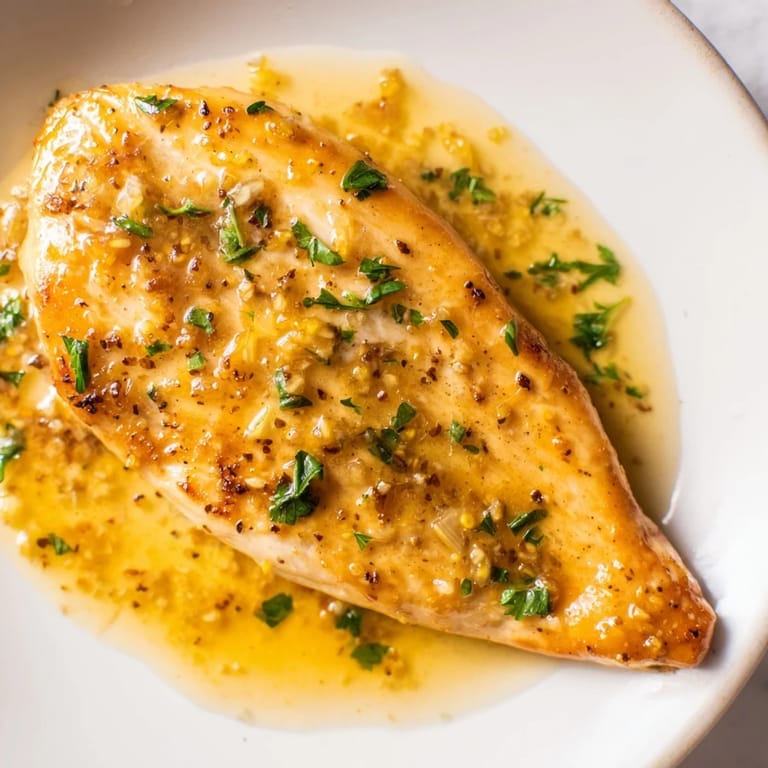
Save The skillet was still warm from breakfast when I decided to try this on a Tuesday night with no plan and a pound of chicken thawed too late. I squeezed half a lemon into the pan, tossed in some butter, and the smell alone made my neighbor knock to ask what I was cooking. That night taught me that bright, peppery, buttery flavor doesn't need a occasion, it just needs twenty minutes and a willingness to let the pan do the work.
I made this for my sister after she moved into her first apartment with a kitchen smaller than a closet. She stood next to me, phone in hand, filming every step because she swore she'd never remember it otherwise. When we plated it over some boxed rice and she took her first bite, she looked at me and said it tasted like something she'd order on a date. That moment made me realize how much power a little lemon and pepper can hold.
Ingredients
- Boneless, skinless chicken breasts: These cook fast and soak up the sauce beautifully, but make sure they are similar in size so they finish at the same time.
- Salt and black pepper: Season generously, the pepper especially builds the backbone of the whole dish and should not be skimped on.
- All-purpose flour: A light dredge gives the chicken a golden crust and helps the sauce cling instead of sliding off.
- Olive oil: Use enough to coat the pan well, it prevents sticking and adds a subtle richness before the butter arrives.
- Unsalted butter: This is where the sauce gets its silky body, and using unsalted lets you control the saltiness perfectly.
- Garlic: Mince it fine so it melts into the butter without burning, those thirty seconds of fragrance are worth watching closely.
- Lemon zest and juice: The zest brings aromatic oils and the juice adds the sharp tang that balances all the richness.
- Freshly ground black pepper: More pepper goes into the sauce itself, doubling down on that peppery punch that makes this dish so craveable.
- Fresh parsley: Optional but worth it for a pop of green and a hint of freshness that cuts through the butter.
Tired of Takeout? 🥡
Get 10 meals you can make faster than delivery arrives. Seriously.
One email. No spam. Unsubscribe anytime.
Instructions
- Prep the Chicken:
- Pat each breast completely dry with paper towels so the flour sticks and the sear gets crispy. Season both sides with salt and black pepper, then dredge lightly in flour and shake off anything extra.
- Sear Until Golden:
- Heat olive oil in a large skillet over medium-high until it shimmers, then lay the chicken in without crowding. Cook undisturbed for five to six minutes per side until deeply golden and the internal temperature hits 165 degrees Fahrenheit, then transfer to a plate and cover loosely.
- Build the Sauce:
- Lower the heat to medium and add butter to the same skillet, letting it melt and foam. Toss in minced garlic and stir for thirty seconds until the smell fills your kitchen.
- Add Lemon and Pepper:
- Stir in lemon zest, lemon juice, and black pepper, then let it simmer for a minute or two while you scrape up all those browned bits stuck to the pan. Those bits are pure flavor and should not be left behind.
- Finish and Serve:
- Return the chicken to the skillet and spoon the sauce over each piece, letting everything warm together for a minute or two. Sprinkle with parsley if you have it and serve immediately while the sauce is glossy and hot.
 Save
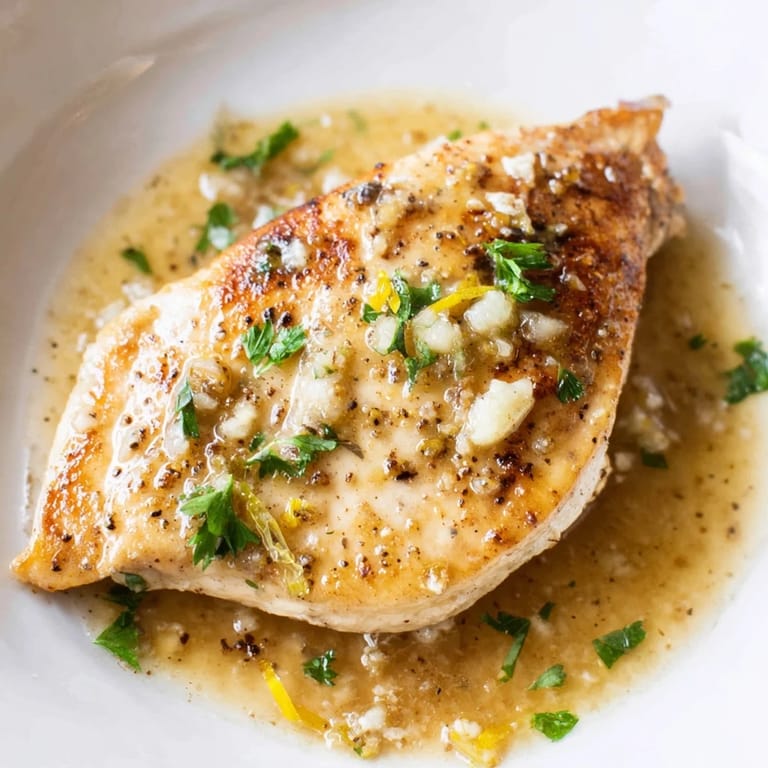
Save One night I served this to a friend who claimed she hated chicken because it was always dry and boring. She finished her plate, then asked if there was more, and admitted maybe it was not the chicken, maybe it was just how everyone else cooked it. Watching her change her mind over one pan of lemony, peppery butter made me feel like I had won something small but important.
What to Serve It With
This chicken shines alongside anything that can soak up the extra sauce puddling on the plate. I have piled it over buttery mashed potatoes, served it next to herbed rice, and laid it on a bed of garlicky spinach with equally good results. A simple green salad with a sharp vinaigrette cuts through the richness and keeps the meal feeling light even when you are tempted to lick the plate.
Swaps and Adjustments
If you prefer dark meat, chicken thighs work beautifully here and stay even juicier, just add a minute or two to the cooking time. For a gluten-free version, swap the all-purpose flour for a gluten-free blend or even cornstarch, the crust will still form and the sauce will still cling. If you want a little heat, a pinch of red pepper flakes in the sauce adds a gentle warmth that plays nicely with the lemon.
Storage and Reheating
Leftovers keep well in an airtight container in the fridge for up to three days, though the chicken may lose a bit of its crispy edge. Reheat gently in a skillet over low heat with a splash of water or chicken broth to loosen the sauce, microwaving tends to make the chicken rubbery and the sauce separate. If you are meal prepping, store the chicken and sauce separately and combine them when you are ready to eat for the best texture.
- Freeze cooked chicken in the sauce for up to two months, then thaw overnight in the fridge before reheating.
- Slice leftover chicken and toss it with pasta, lemon zest, and a bit of the reheated sauce for an easy next-day lunch.
- Serve cold slices over a grain bowl with roasted vegetables and a drizzle of the sauce for a completely different meal.
 Save
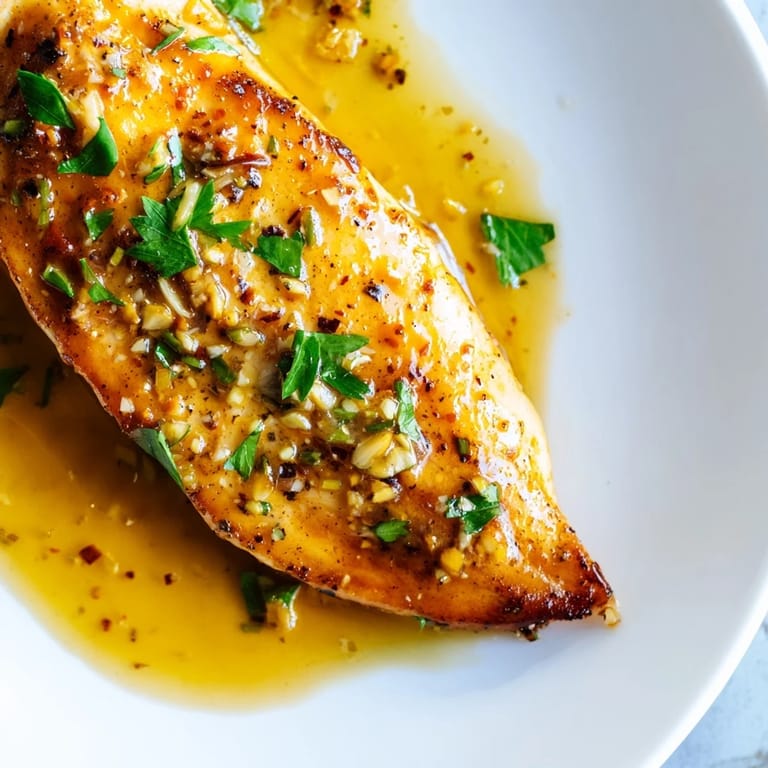
Save This is the kind of recipe that becomes muscle memory after the second time you make it, and soon you will be eyeballing the lemon and tossing in garlic without a second thought. It is proof that simple food, done right, never gets old.
Recipe FAQs
- → How do I ensure the chicken stays juicy?
Pat the chicken breasts dry before cooking to achieve a golden crust. Avoid overcooking by monitoring the internal temperature—aim for exactly 74°C (165°F). Using a meat thermometer takes the guesswork out. Once cooked, remove the chicken from the pan before making the sauce, then return it briefly to warm through rather than continuing to cook.
- → Can I use chicken thighs instead of breasts?
Yes, chicken thighs work wonderfully and stay incredibly moist due to their higher fat content. They require slightly longer cooking—approximately 7–8 minutes per side depending on thickness. Thighs are more forgiving and won't dry out as easily as breasts, making them ideal if you're new to cooking poultry.
- → What's the best way to zest a lemon?
Use a microplane zester or box grater to remove just the yellow exterior, avoiding the bitter white pith underneath. A vegetable peeler also works—peel thin strips and mince finely with a knife. Zesting before juicing makes the process easier since the lemon stays intact longer.
- → How do I make this gluten-free?
Simply substitute all-purpose flour with a one-to-one gluten-free flour blend when dredging the chicken. The coating will be equally crispy and golden. Always verify all ingredient labels for hidden gluten sources, particularly in broths or pre-made seasonings if you're adding extras.
- → What wine pairs well with this dish?
Crisp, acidic whites complement the bright lemon flavors beautifully. Sauvignon Blanc offers herbaceous notes that echo fresh parsley, while Chardonnay provides richness that balances the butter sauce. If red wine is preferred, a light Pinot Noir won't overpower the delicate chicken and citrus.
- → Can I prepare this ahead of time?
Season and flour the chicken up to 4 hours beforehand, refrigerating until ready to cook. The lemon-pepper butter sauce is best made fresh just before serving to preserve the bright citrus flavors. The finished dish reheats gently in a low oven, though fresh preparation delivers superior texture and taste.